

Managing a medical franchise requires control over processes, teams, locations, and information. As the operation grows without the right tools, issues such as rework, communication failures, management difficulties, and productivity loss become increasingly common.
In this article, you will learn what a medical franchise management system should include to help standardize operations, monitor key performance indicators, and manage multiple locations efficiently.
Why does managing a medical franchise become more complex as the network grows?
As new locations are added, the number of healthcare professionals, patients, schedules, and processes also increases. What was once simple to manage begins to require greater organization, visibility, and standardization.
Without centralized management, information often becomes scattered, processes are carried out differently across locations, and managers struggle to monitor important performance indicators. Beyond operational challenges, this can affect the franchise's growth, patient experience, and decision-making capabilities.
For this reason, choosing the right medical franchise management system becomes increasingly important as the organization expands.

What are the main challenges faced by medical franchises?
Lack of standardization across locations
When each location operates differently, the network loses efficiency and predictability. This can lead to operational errors, management difficulties, and inconsistent patient experiences. Therefore, it is essential to centralize processes and information.
Difficulty monitoring performance in real time
Without up-to-date indicators, managers may take longer to identify problems and opportunities for improvement. This slows decision-making and reduces visibility into the network's overall performance.
Decentralized financial management
Managing revenue, expenses, and payouts separately for each location increases operational complexity. As a result, financial analyses become slower and less reliable.
Lack of change tracking and auditability
In operations with many users, it can be difficult to determine who made a specific change. The absence of this control increases operational risks and makes internal audits more challenging.

Inadequate access control
When all users have unrestricted access, sensitive information may be exposed unnecessarily. Defining permissions by role and location helps strengthen operational security.
What features are essential in a medical franchise management system?
Multi-location management
A medical franchise management system should allow multiple locations to be managed within a single platform. In Ninsaúde Clinic, for example, it is possible to centralize the administration of the entire network while maintaining each location's organizational structure.
Integrated electronic signatures for contracts and documents
Medical franchises handle contracts, consent forms, and documents that need to be signed by healthcare professionals, patients, and business partners on a daily basis. When this process is managed manually, delays and tracking difficulties can occur.
For this reason, it is important that the system offers integrated electronic signature capabilities. Within the Ninsaúde ecosystem, for example, Ninsaúde Sign allows documents to be signed digitally, helping simplify processes and keep information organized in a digital environment.

Shared electronic health records across locations
Access to patient records across different locations helps ensure continuity of care. This functionality is available in Ninsaúde Clinic through its shared electronic health record system.
Open API for Integrations
As a franchise grows, it often becomes necessary to connect different tools to the operation, such as Business Intelligence platforms, patient communication solutions, financial systems, proprietary applications, ERPs, and automation tools.
For this reason, a medical franchise management system should offer an open API, allowing integration with other technologies used across the network. Ninsaúde Clinic provides an open API to facilitate data exchange between systems and support operations that require a higher level of customization.
White-Label Capability
Some healthcare franchises want to deliver a more standardized experience across their locations, including applications and platforms that feature their own visual identity.
In these cases, white-label capabilities can be an important differentiator. This approach allows the franchise to strengthen its brand while maintaining centralized and standardized processes throughout the entire operation.

Dashboards, reports, and management charts
Effective decision-making depends on reliable information. For this reason, it is important to have reports and visual dashboards that allow managers to monitor key operational indicators.
Some of the most relevant metrics include:
- Number of appointments
- Schedule occupancy rate
- Revenue by location
- Provider performance
- Business growth trends
Ninsaúde Clinic provides a variety of management reports and performance dashboards to support these analyses.

Access control by location
Not every employee needs access to the same information. Ninsaúde Clinic allows administrators to configure permissions by user role and restrict access to specific locations when necessary.
Audit logs and activity tracking
Tracking user actions improves security and operational transparency. Ninsaúde Clinic includes audit logs that allow administrators to identify changes made within the system.
Patient relationship management tools
In addition to operational management, medical franchises need to strengthen relationships with their patients.
Important resources include:
- CRM
- Email marketing
- Online scheduling
- Patient interaction history
- Integrated communication tools
Ninsaúde Clinic brings these resources together within a single platform, making it easier to manage the patient journey.
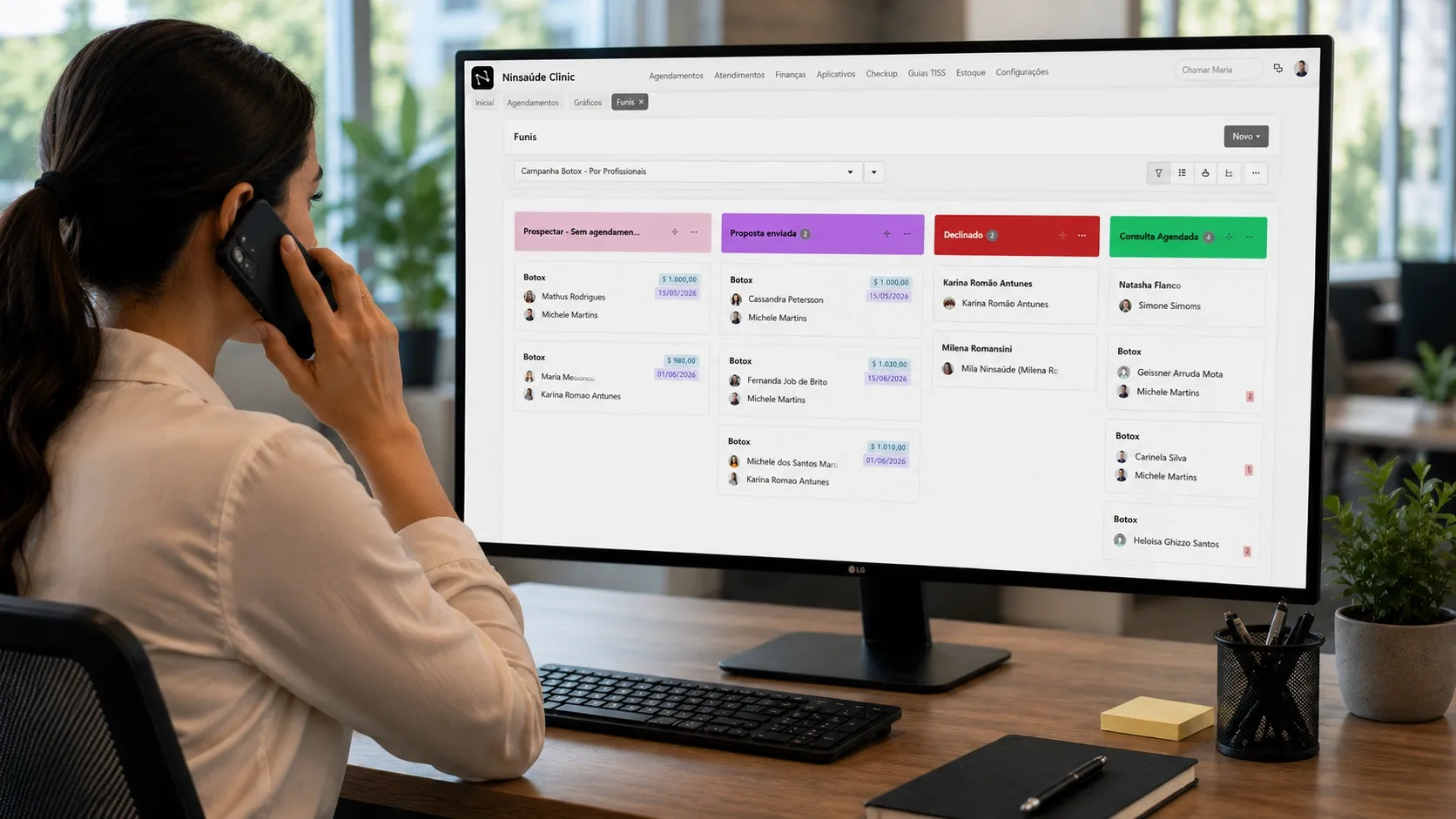
Centralized financial management
A medical franchise needs to monitor revenue, expenses, payouts, and financial performance across multiple locations without relying on separate tools. Ninsaúde Clinic offers financial management features that help consolidate information and simplify operational oversight.
How to choose a medical franchise management system?
The ideal solution should be capable of supporting the network's growth without increasing operational complexity.
Before selecting a platform, consider whether it provides:
- Multi-location management
- Multi-provider scheduling
- Shared electronic health records
- Management reports and dashboards
- Access control
- Audit logs
- Patient relationship management tools
- Integrated financial management
The more processes that can be centralized within a single platform, the greater the operational efficiency tends to be.
Frequently asked questions about medical franchise management systems
What should a medical franchise management system include?
A medical franchise management system should provide multi-location management, shared health records, integrated scheduling, management reports, centralized financial control, access permissions, and auditing features. These capabilities help keep operations organized and scalable.
Why is access control important in medical franchises?
Access control ensures that employees can only view the information necessary for their roles. This improves data security, reduces operational risks, and strengthens governance across the network.
Why are reports and performance indicators important for healthcare franchises?
Reports and performance indicators allow managers to monitor location performance in real time. With organized information, it becomes easier to identify bottlenecks, compare results, and make informed decisions.
Are shared electronic health records important for medical franchises?
Yes. Shared health records allow patient information to follow individuals across different locations within the network, improving continuity of care and reducing duplicate work.
How can medical franchises improve standardization across locations?
The most effective approach is to centralize information and use tools that provide integrated operational oversight. This makes it easier to apply consistent processes across the entire network.
What is the difference between a standard management system and a medical franchise management system?
A medical franchise management system includes features specifically designed for multi-location operations, such as centralized reporting, access controls, and integrated management across locations. These capabilities help support growing healthcare networks.
Did you enjoy this information?
Keep following our blog for more content about healthcare management, medical marketing, and healthcare innovation.
Are you a healthcare professional and still unfamiliar with Ninsaúde Clinic? Discover how the platform can optimize processes and improve the quality of patient care.
