

For many years, working with paper-based registration forms, contracts, consent forms, prescriptions, and medical records was the reality for most healthcare clinics.
Today, however, this model is beginning to show its limitations. As a clinic grows, so does the volume of documents, the time required to locate them, the risk of loss, and the difficulty of maintaining organized and secure processes.
In this article, you'll learn why physical documents have become an obstacle for modern clinics and healthcare franchises, how they impact daily operations, and how digitalization can improve operational efficiency, information security, and the patient experience.
Why do physical documents make operations slower and more vulnerable?
Every clinic handles important information on a daily basis. Contracts, medical exams, signed consent forms, prescriptions, financial documents, and patient care records all need to be readily available whenever they are needed.
When this information remains on paper, several recurring problems tend to arise.
Information stored in physical files
When all documentation depends on filing cabinets and folders, daily operations become dependent on the team's manual organization, making small mistakes common. The problem is that these small mistakes tend to accumulate over time.
Maintaining print-based processes
Even after receiving documents digitally, many clinics still print contracts, consent forms, and other documents simply to file them away again.
In addition to the costs associated with paper and printing, this creates unnecessary steps and occupies valuable physical storage space that could be used more efficiently.

Relying exclusively on in-person signatures
Traditional handwritten signatures require printing, transportation, storage, and later organization of documents. This process increases administrative time, creates additional bureaucracy, and is not viewed favorably by all patients.
Keeping documents separate from the electronic medical record
Another common mistake is storing contracts, prescriptions, and documents across different systems—or even in separate physical files—which makes information harder to retrieve and increases the risk of inconsistencies.
What modern clinics do instead
Digitalization is much more than simply replacing paper with PDF files. It represents a complete transformation in how clinics organize their processes.
Centralize documents in a single system
When all files are stored within a single platform, locating any document takes only a few seconds.
In addition, authorized professionals can access information simultaneously while respecting the access permissions established by the clinic.
With Ninsaúde Clinic, important documents can be stored digitally and linked directly to the patient's registration and medical history, making them easily accessible whenever needed.
Eliminate unnecessary printing
Most documents generated throughout the patient journey can remain entirely digital.
This reduces printing costs, physical storage requirements, and file management efforts while also simplifying audits and future record retrieval.

Use electronic signatures
Many documents require signatures, and when this process is performed electronically, clinics eliminate manual steps and significantly reduce the time spent on administrative procedures.
Ninsaúde Sign allows documents to be signed electronically, simplifying document delivery, storage, and management without relying on printed copies.
Integrate documents into the electronic medical record
Another major improvement is keeping prescriptions, clinical documents, and patient care records organized directly within the electronic medical record (EMR).
With Ninsaúde Clinic's electronic medical record, electronic prescriptions become part of the patient's medical history, keeping all information centralized in a single environment. This reduces rework and improves continuity of care.
How digitalization impacts overall clinic management
The benefits go far beyond organizing documents.
From a financial perspective, administrative processes become faster while reducing costs related to printing, physical storage, and rework.
In terms of productivity, the team spends less time searching for documents and can focus on activities that truly add value to patient care.
For patients, the experience also improves because processes become faster, more organized, and more reliable, reducing wait times and eliminating the need to repeatedly provide information that has already been recorded.
In addition, keeping digital documents organized facilitates access control and strengthens practices related to data protection and compliance with HIPAA.
Does your clinic still depend on filing cabinets to find important information?
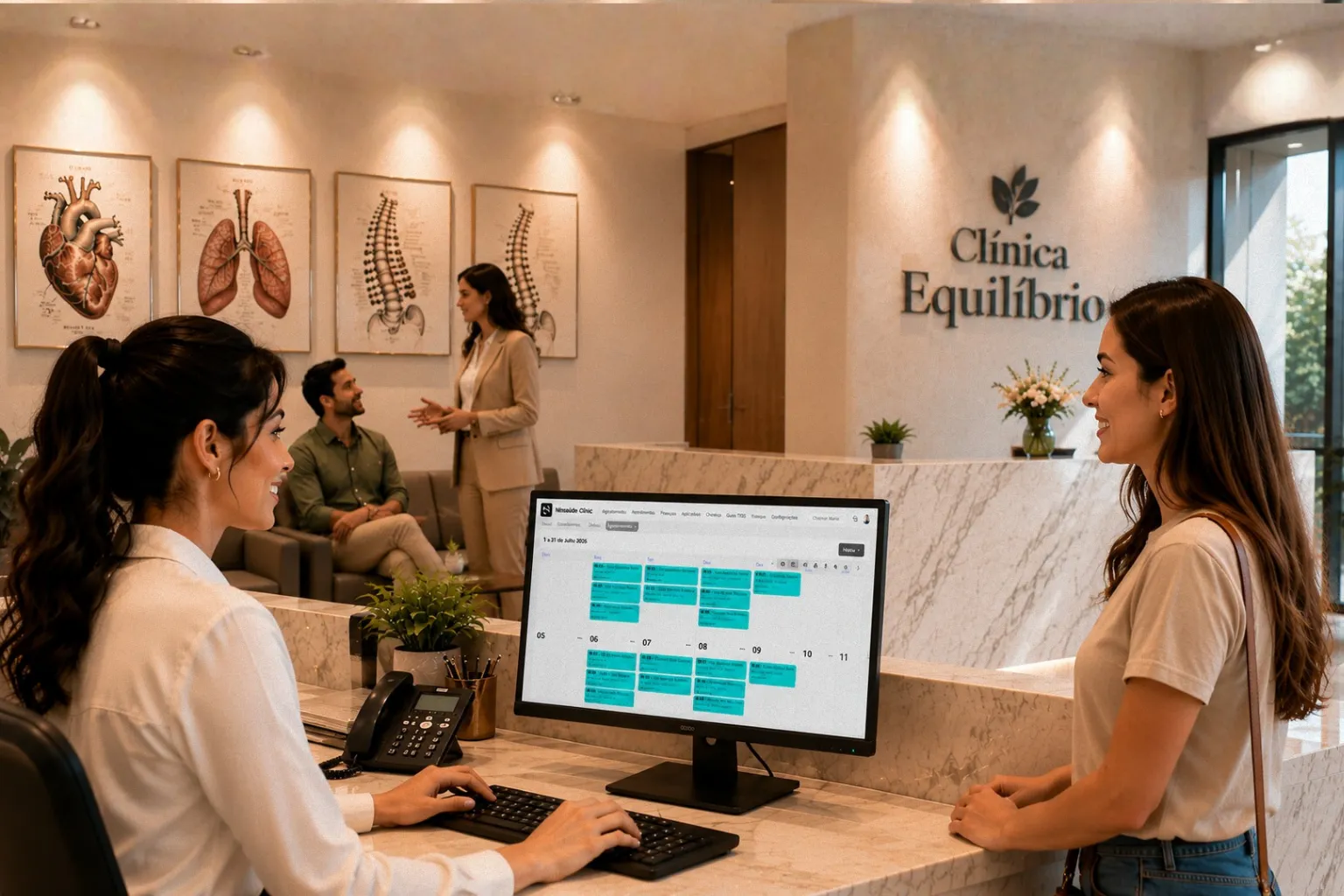
If your clinic already uses an electronic medical record or is considering making this transition, it's also worth exploring content about electronic signatures for healthcare clinics, electronic medical records, and how to reduce paper usage in clinics through an online management system, creating a complete digital transformation strategy.
How Does Ninsaúde Clinic Help Manage Documents?
Ninsaúde Clinic allows healthcare organizations to store documents digitally, integrate them with patient registration records and electronic medical records, use electronic prescriptions, and complement these processes with Ninsaúde Sign for electronic signatures, centralizing all this information in a single environment.

Did you find this information helpful?
Keep following our blog for more content about healthcare management, medical marketing, and healthcare innovation.
Are you a healthcare professional who hasn't discovered Ninsaúde Clinic yet? Learn how the platform can optimize your processes and help improve the quality of patient care.
