
Managing a gastroenterology clinic involves organizing appointments, examinations, follow-up visits, and patient instructions. When these activities rely on disconnected tools, they lead to duplicated work, communication failures, and difficulties managing operations.
Software for gastroenterology clinics helps integrate clinical and administrative processes, making daily operations more organized. In this article, you'll learn how to optimize scheduling, centralize patient records, and increase team productivity with the support of technology.
What are the main challenges in managing gastroenterology clinics?
Gastroenterology clinics have specific needs, especially when performing procedures such as upper gastrointestinal endoscopy and colonoscopy.
In addition to provider availability, clinics must consider procedure duration, room and equipment usage, and patient preparation instructions.
According to the Brazilian Society of Digestive Endoscopy (SOBED), inadequate bowel preparation can compromise colonoscopy quality and require the procedure to be repeated.
From a management perspective, this reinforces the importance of organizing appointments, confirmations, and instructions to prevent issues that affect daily operations and the patient experience.
Common mistakes that compromise clinic organization
Certain practices make clinic operations more difficult, especially as patient volume increases.
- Disorganized schedules: Failing to distinguish between consultations, follow-up visits, and procedures can cause scheduling conflicts and delays.
- Decentralized information: Using separate tools for reception, medical records, and financial management increases duplicated work.
- Manual processes: Relying exclusively on individual contacts for appointment confirmations and examination instructions places an additional burden on staff.
- Lack of performance indicators: Failing to monitor no-shows, revenue, and productivity makes strategic decision-making more difficult.
Addressing these issues requires well-defined processes and tools that facilitate communication between departments.
How does software for gastroenterology clinics improve daily operations?
An integrated management system connects information and reduces repetitive tasks, allowing staff to work more efficiently.
Integrated scheduling for consultations and examinations
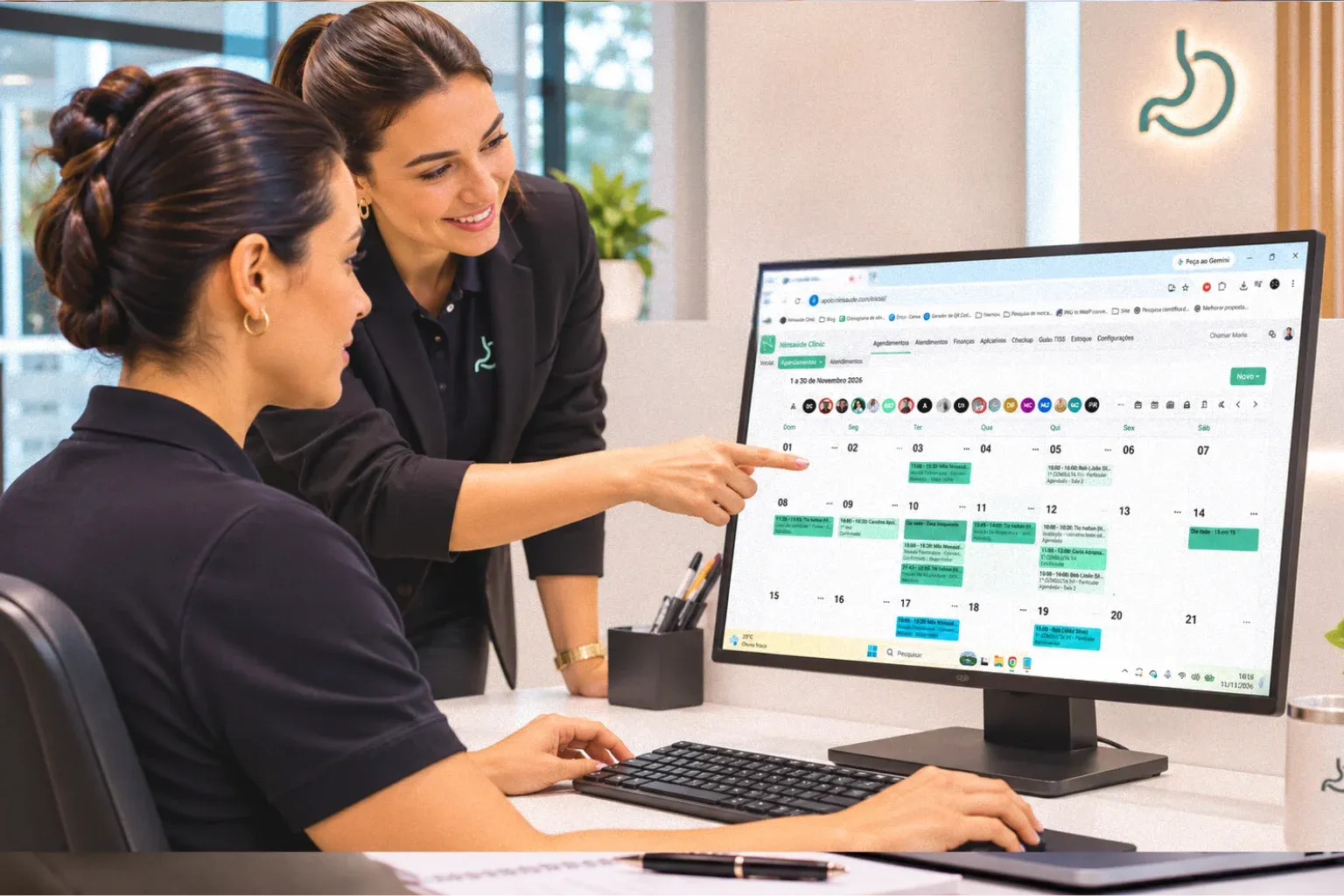
A digital scheduling system makes it easier to organize appointments, view provider availability, and track consultations, examinations, and follow-up visits.
With Ninsaúde Clinic, reception staff can manage multiple schedules in one place and use automated appointment confirmations via WhatsApp or email, reducing manual tasks.
For procedures that require preparation, clinics can also establish standardized workflows for patient instructions and verification.
Electronic health records for tracking patient history
Gastroenterology patients may require ongoing care, including records of symptoms, examinations, prescriptions, and treatment progress.
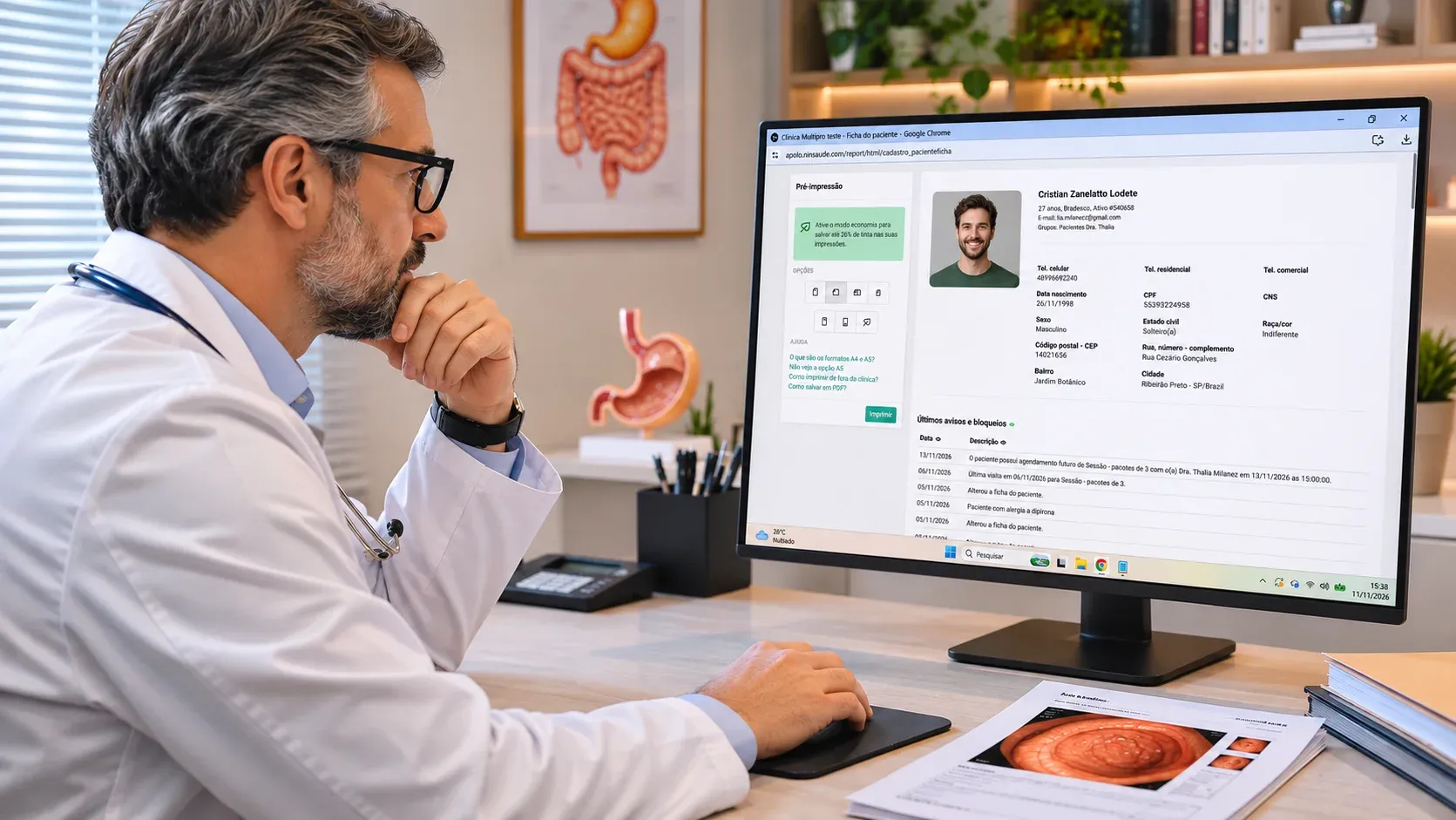
Electronic health records (EHRs) help organize this information and make patient histories more accessible to authorized healthcare professionals.
With Ninsaúde Clinic, records are centralized, supporting continuity of care and reducing reliance on scattered documents.
Artificial intelligence to optimize clinical documentation
During a consultation, gastroenterologists need to document information such as symptoms, medical history, treatments, and clinical decisions. Manual documentation can take up a significant portion of the appointment.
Ninsaúde Safe uses artificial intelligence to record and transcribe consultations, assisting with clinical documentation.
This allows physicians to focus more attention on patients and spend less time typing. Generated records must be reviewed and validated by the healthcare professional, in accordance with privacy and data protection requirements.

Quick summary: what should you prioritize in clinic management?
- Scheduling: organize consultations, examinations, and appointment confirmations.
- Electronic health records: centralize patient information and medical histories.
- Productivity: reduce manual tasks through automation and artificial intelligence.
How can you improve your clinic's management in practice?
Technology delivers better results when supported by well-structured internal processes. To get started:
- Map the patient journey: Identify difficulties from appointment scheduling to follow-up care after a consultation or examination.
- Standardize processes: Establish routines for confirmations, instructions, documentation, and communication between departments.
- Centralize information: Use an integrated system and monitor indicators such as no-shows, schedule utilization, revenue, and outstanding payments.
These measures help reduce operational issues and make clinic management more predictable.
What impact does integrated management have on clinic performance?
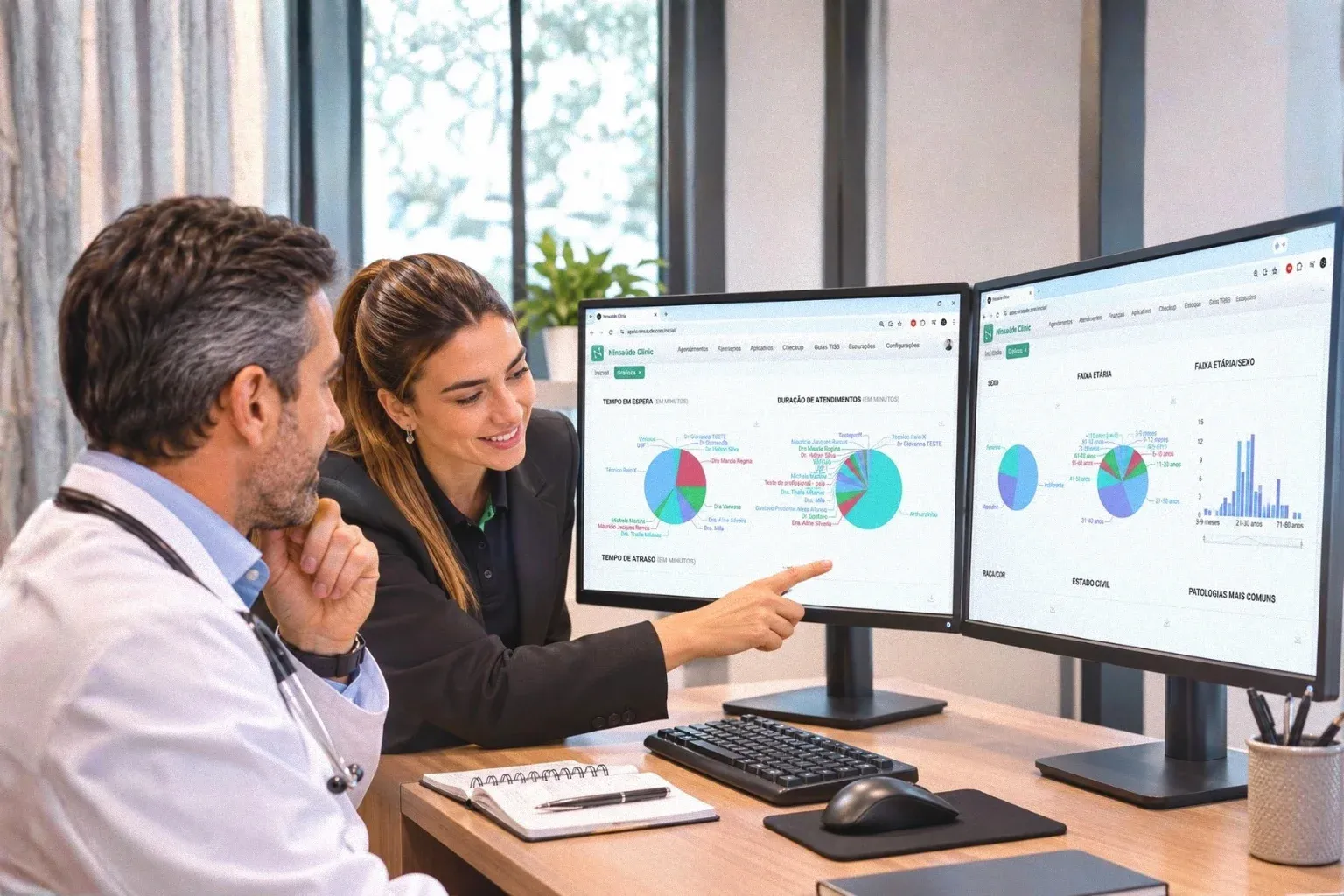
Integrating scheduling, electronic health records, and financial management provides a more complete view of clinic operations.
In financial management, it makes tracking revenue, billing, and service performance easier. In productivity, it reduces duplicate records and unnecessary administrative tasks.
For patients, an organized workflow supports more efficient scheduling, clear instructions, and continuity of clinical care.
With centralized information, clinic managers can also identify bottlenecks and make data-driven decisions.
A better clinic management starts with connected processes
Growing a gastroenterology clinic requires more than increasing the number of appointments. It is essential to maintain operational control, preserve quality of care, and provide good working conditions for staff.
With Ninsaúde Clinic, your clinic can integrate scheduling, electronic health records, and financial processes into a single platform, while also using Ninsaúde Safe to support AI-powered medical documentation.
Is your clinic ready to operate with greater organization and productivity? Discover Ninsaúde Clinic and learn how to simplify the management of your appointments.

Did you find this information helpful?
Keep following our blog for more content about healthcare management, medical marketing, and healthcare innovation.
Are you a healthcare professional who hasn't discovered Ninsaúde Clinic yet? Learn how the platform can optimize your processes and help improve the quality of patient care.
