

Managing a healthcare practice with separate systems for electronic health records, scheduling, and financial management often leads to duplicate work, administrative delays, and communication errors. Staff may need to enter the same information multiple times, making day-to-day operations less efficient and reducing the time available for patient care.
In this article, you'll learn how to evaluate an EHR with integrated financial management, why system integration improves operational efficiency, and which features help healthcare organizations reduce manual work, improve financial visibility, and support long-term growth.
Why does integrating an EHR with financial management matter?
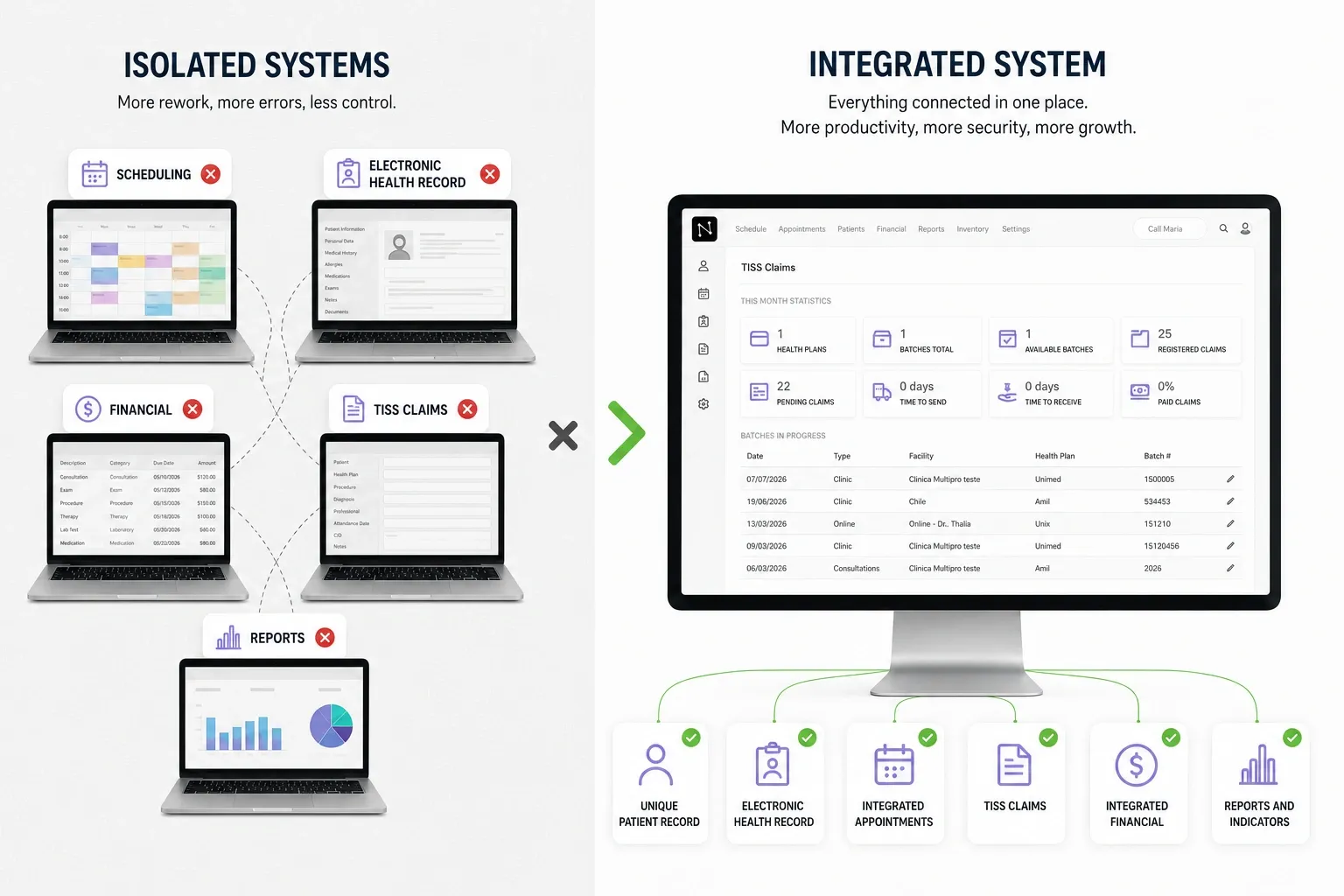
An integrated system connects clinical and administrative workflows into a single platform. Instead of moving information between different software solutions, healthcare providers can manage patient records, appointments, and financial processes in one place.
When these areas operate independently, practices often face challenges such as:
- duplicate patient records;
- repeated data entry;
- communication gaps between clinical and administrative teams;
- billing errors;
- delays in financial reporting;
- difficulty tracking operational performance.
Beyond increasing administrative costs, disconnected systems make it harder to scale operations while maintaining efficiency and consistency.

What is integrated financial management in healthcare?
Integrated financial management refers to the ability to manage financial operations alongside clinical workflows within the same software platform.
Instead of relying on multiple disconnected tools, healthcare organizations can centralize information such as:
- accounts payable;
- accounts receivable;
- financial reports;
- patient payment records;
- operational dashboards;
- administrative workflows.
Keeping financial and clinical information connected reduces manual processes and provides managers with a clearer view of the organization's performance.
Manual processes vs. integrated systems: what's the difference?
The difference goes far beyond convenience. Integration directly impacts productivity, operational visibility, and financial organization.
| Traditional workflow | Integrated system |
|---|---|
| Information entered multiple times | Information entered once and shared across departments |
| Separate software for clinical and financial tasks | Unified platform for clinical and administrative operations |
| Manual reconciliation of financial records | Centralized financial tracking |
| Higher risk of administrative errors | Reduced manual work |
| Difficult to locate information | Centralized patient and financial history |
| Limited visibility into practice performance | Real-time operational and financial insights |
The fewer manual steps involved, the more predictable and efficient daily operations become.
Why is integration important for growing healthcare practices?
As a practice grows, managing appointments, patient records, and finances becomes increasingly complex.
Without an integrated platform, organizations often experience:
- higher administrative workload;
- inconsistent information;
- slower internal processes;
- reduced operational visibility;
- difficulty standardizing workflows across teams.
An integrated EHR helps maintain consistency by allowing information to flow naturally between clinical and administrative functions.
In addition, healthcare organizations should ensure that their EHR complies with applicable privacy, security, and healthcare data regulations in the countries where they operate.
How can you identify a truly integrated EHR?
A truly integrated EHR allows information to move automatically between scheduling, patient records, and financial management without requiring duplicate data entry.
When evaluating a solution, consider whether it offers:
- centralized patient records;
- integrated appointment scheduling;
- financial management tools;
- accounts payable and receivable;
- operational dashboards;
- financial reporting;
- centralized patient history;
- an intuitive user interface;
- scalable workflows as the practice grows.
The less manual intervention required, the more productive the organization is likely to become.
What challenges arise when clinical and financial systems don't communicate?
Duplicate administrative work
When clinical information must be manually transferred to financial systems, staff spend unnecessary time repeating the same tasks.
This increases the likelihood of errors, slows internal processes, and reduces overall productivity.
Limited financial visibility
Without centralized financial information, managers often struggle to understand the organization's current financial situation.
This makes it more difficult to monitor revenue, expenses, and overall business performance.
Difficulty tracking operational performance
When data is spread across multiple systems, generating reports and identifying trends becomes more time-consuming.
As a result, managers spend more time collecting information than making strategic decisions.
Challenges scaling the organization
As more providers, patients, and locations are added, disconnected systems become increasingly difficult to manage.
This often results in:
- higher operational costs;
- inconsistent workflows;
- administrative bottlenecks;
- reduced efficiency.
Integrated platforms help maintain operational consistency as organizations expand.
What works in practice to reduce administrative work?
Healthcare organizations that improve efficiency usually focus on automation and centralized information.
Some of the most valuable capabilities include:
- automated data sharing;
- centralized patient records;
- financial dashboards;
- operational reports;
- alerts for pending administrative tasks;
- integrated scheduling;
- centralized financial information.
These features simplify routine activities, reduce repetitive work, and provide greater visibility across the organization.
How does an integrated EHR improve daily operations?
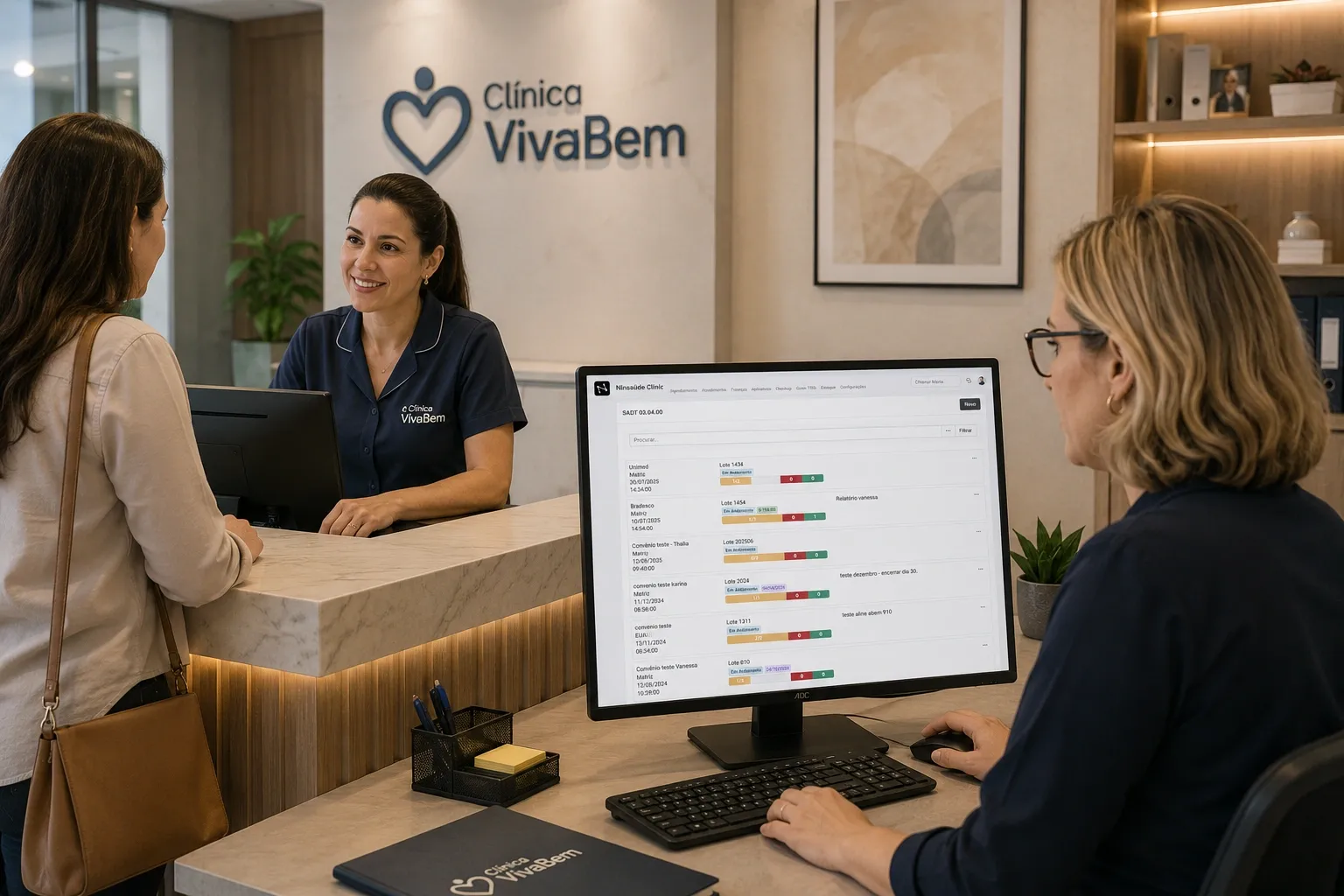
An EHR with integrated financial management allows healthcare providers to manage clinical and administrative activities within a single platform.
With Ninsaúde Clinic, for example, organizations can centralize:
- appointment scheduling;
- patient management;
- electronic health records;
- accounts payable;
- accounts receivable;
- financial organization;
- operational reporting.
By keeping these processes connected, practices reduce manual work, improve communication between departments, and gain better visibility into both patient care and financial performance.
Instead of switching between multiple systems, teams can access the information they need from one centralized environment, helping improve efficiency throughout the organization.
Which features should you prioritize when choosing an integrated EHR?
When evaluating an EHR, look beyond basic clinical documentation.
Prioritize solutions that include:
- integrated electronic health records;
- appointment scheduling;
- accounts payable and receivable;
- financial reporting;
- operational dashboards;
- centralized patient history;
- workflow automation;
- intuitive usability;
- scalability for future growth.
These capabilities help reduce repetitive tasks, improve operational control, and support better decision-making.
How does integration improve financial management?
When clinical and financial information is connected, organizations spend less time reconciling data and more time managing operations.
Integrated systems reduce duplicate work, improve financial visibility, and help managers make faster, more informed decisions based on real-time information.
How can you tell if an EHR is truly integrated?
Look for a platform that connects scheduling, patient records, financial management, and reporting within a single environment.
The best solutions allow information to flow naturally across departments, reducing manual work while improving operational consistency and financial oversight.
Frequently Asked Questions
What is an integrated EHR?
An integrated EHR combines clinical records with administrative and financial tools in a single platform. This allows healthcare organizations to manage patient information, appointments, and financial operations without relying on multiple disconnected systems.
Why is financial integration important in healthcare?
Financial integration reduces duplicate work, improves visibility into revenue and expenses, and helps managers make faster operational decisions using centralized information.
What features should an integrated EHR include?
Look for appointment scheduling, electronic health records, accounts payable and receivable, financial reporting, operational dashboards, workflow automation, and centralized patient information.
Can an integrated EHR improve productivity?
Yes. By reducing manual data entry and centralizing information, integrated systems help staff complete routine tasks more efficiently while improving collaboration between clinical and administrative teams.
How do integrated systems support practice growth?
Integrated platforms standardize workflows, improve operational visibility, and reduce administrative complexity, making it easier for healthcare organizations to expand without significantly increasing manual work.
Did you find this information helpful?
Keep following our blog for more content about healthcare management, medical marketing, and healthcare innovation.
Are you a healthcare professional who hasn't discovered Ninsaúde Clinic yet? Learn how the platform can optimize your processes and help improve the quality of patient care.
