

In neurodevelopmental clinics, a single patient may receive care from psychologists, speech-language pathologists, occupational therapists, and physicians. Coordinating schedules, organizing information, and maintaining communication among these professionals requires well-structured management. Without it, duplicated work, operational issues, and difficulties tracking patient care can arise.
In this article, you'll learn how to improve multidisciplinary team management in neurodevelopmental care, integrate processes, and organize your clinic's daily operations more efficiently.
The challenges of multidisciplinary management in neurodevelopmental care

Imagine a clinic with 15 professionals, where each patient receives care from three or four specialists. A simple schedule change may require room reassignment, communication with family members, and the rescheduling of other sessions.
Beyond scheduling, clinic management must also track clinical records, patient attendance, productivity, and payments to healthcare professionals.
The challenge is to keep these activities connected without compromising each professional's autonomy or continuity of care.
Common mistakes in multidisciplinary team management
Certain challenges become more apparent as a clinic increases its number of professionals and appointments.
1. Decentralized scheduling
When each professional manages their schedule separately, front desk staff face difficulties organizing recurring sessions, identifying availability, and rescheduling appointments.
How to improve: Centralize scheduling and establish rules for additional appointments, cancellations, and rescheduling.
2. Fragmented clinical information
Records scattered across documents, spreadsheets, and different systems make it difficult to track patient histories and maintain communication between specialties.
How to improve: Organize information in a secure environment, with access permissions appropriate to each professional's responsibilities.
3. Excessive manual processes
Individual appointment confirmations, separate tracking systems, and manual calculations of professional payments increase administrative workload and the risk of inconsistencies.
How to improve: Standardize recurring activities and identify opportunities for automation.
4. Lack of performance metrics
Without tracking no-shows, cancellations, schedule utilization, and completed appointments, clinic managers may struggle to identify operational and financial issues.
How to improve: Monitor performance indicators regularly and use them to support clinic planning.
What works in practice to integrate multidisciplinary teams?
Integration begins with clear processes and information accessible to authorized personnel.
Centralize appointment planning. An integrated scheduling system makes it easier to organize recurring sessions, allocate rooms, and identify scheduling conflicts.
Establish communication workflows. Regular meetings, organized records, and clearly defined responsibilities help professionals share relevant information for therapeutic follow-up while respecting confidentiality and each specialty's scope of practice.
Standardize administrative processes. Appointment confirmations, rescheduling, documentation, and appointment verification should follow procedures understood by the entire team. This does not mean standardizing treatment plans, which must consider each patient's individual needs.
Monitor results. Indicators such as schedule utilization rates, no-shows, completed appointments, and revenue by specialty help identify bottlenecks and guide decision-making.
Quick summary: three management priorities
- Integration: Connect schedules, clinical information, and administrative processes.
- Organization: Define responsibilities and standardize recurring activities.
- Monitoring: Track performance indicators to improve operational efficiency.
How to implement these improvements in your clinic
Reorganization can begin with three simple steps:
Step 1 — Identify bottlenecks. Bring together front desk staff, clinical coordinators, and the finance team to identify difficulties with scheduling, documentation, rescheduling, and billing.
Step 2 — Organize processes. Assign responsibilities, establish rules for recurring situations, and document key procedures.
Step 3 — Centralize and monitor. Evaluate tools that integrate information and review indicators such as schedule utilization, cancellations, and completed appointments each month.
These measures help reduce dependence on separate tracking systems and make daily operations more predictable.
How does integrated management impact clinic performance?

Well-organized operations directly benefit three areas:
- Financial management: Tracking completed appointments, no-shows, and payments to professionals makes revenue monitoring and financial planning easier.
- Productivity: Defined processes reduce duplicated work and help clinics make better use of staff availability and physical facilities.
- Patient experience: Organized schedules and clear communication simplify daily routines for families coordinating multiple therapies.
In neurodevelopmental clinics, these factors are especially important because of the frequency of appointments and the involvement of multiple professionals in each patient's care.
How can technology support multidisciplinary management?
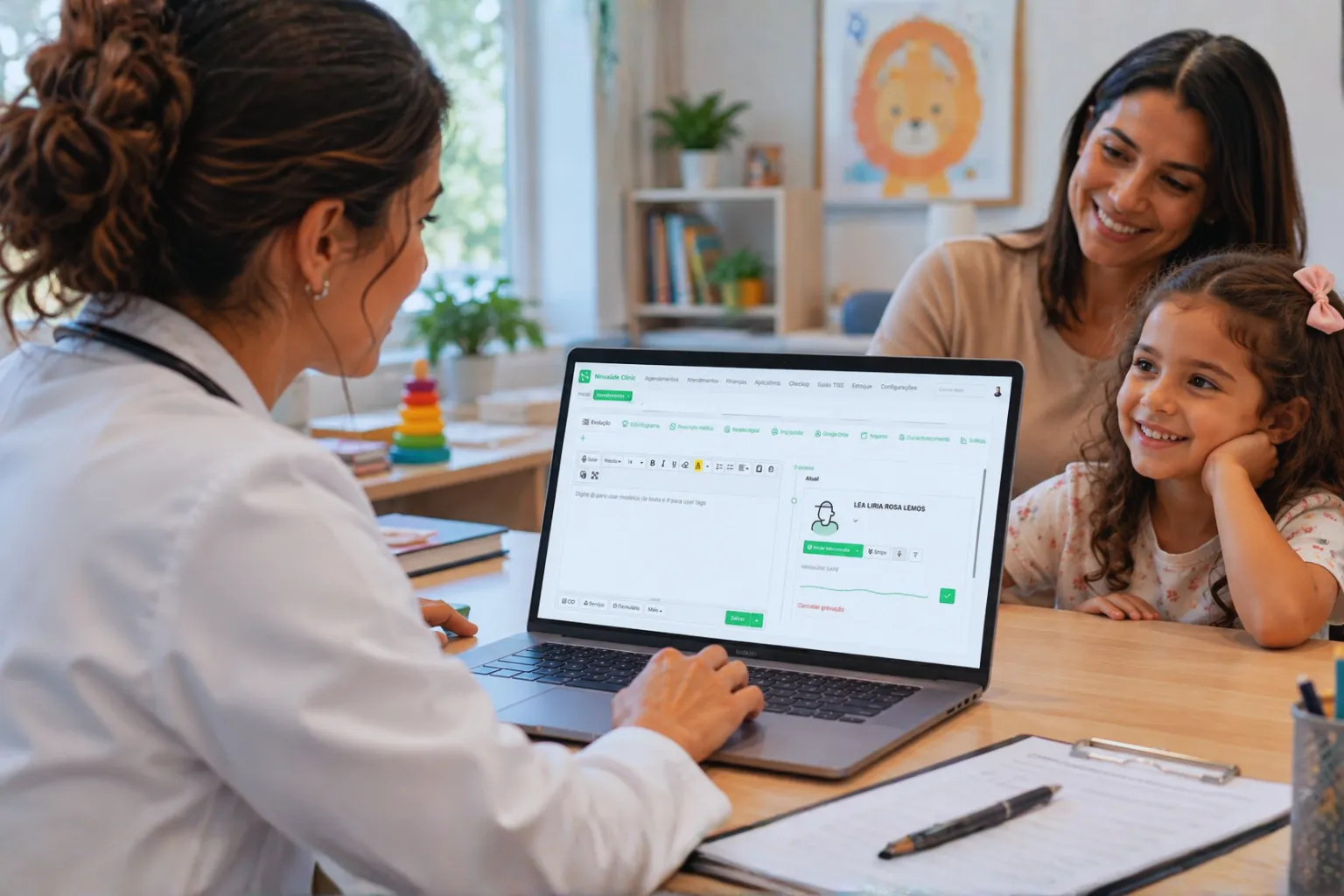
Clinic management software helps integrate processes and centralize administrative and clinical information.
Ninsaúde Clinic brings together features such as integrated scheduling, electronic health records (EHR), customizable forms, financial management, and management reports.
These features support appointment organization, information management, and financial monitoring while respecting each professional's access permissions.
Can your clinic track schedules, appointments, and financial results without relying on separate tracking systems?
Discover Ninsaúde Clinic and see how an integrated platform can support your multidisciplinary team's management.
Management that supports your clinic's growth
Managing multidisciplinary teams in neurodevelopmental care requires organization, communication, and continuous monitoring.
As a clinic expands its team and patient base, processes that were once considered simple begin to require greater coordination.
Therefore, sustainable growth means more than increasing appointment capacity. It requires developing a management structure capable of supporting that growth while preserving quality of care and operational efficiency.
Did you find this information helpful?
Keep following our blog for more content about healthcare management, medical marketing, and healthcare innovation.
Are you a healthcare professional who hasn't discovered Ninsaúde Clinic yet? Learn how the platform can optimize your processes and help improve the quality of patient care.
