

During a consultation, dividing attention between the patient and taking notes in the medical record can make the interaction less fluid and increase the workload after each appointment.
An AI-powered medical record helps reduce this effort by transcribing and organizing information from the consultation. In this article, you will learn how this technology works and how it can make clinical workflows faster and more efficient.
What are the main challenges of manual documentation during consultations?
1. Dividing attention between the patient and the medical record
Typing while the patient is speaking requires healthcare professionals to constantly shift their attention between the conversation and the screen. Even when this is already part of their routine, documentation still takes up valuable time during the appointment.
As a result, the interaction may become less fluid, and some information may need to be added later.
2. Completing the medical record after the consultation
Documenting information later helps avoid interruptions during the consultation, but creates another challenge: healthcare professionals need to set aside additional time to complete their records.
When several appointments accumulate, so does the volume of pending documentation. In addition, the longer the time between the consultation and documentation, the more professionals need to rely on memory to recall important details.
3. Spending too much time on clinical documentation
A consultation does not necessarily end when the patient leaves the room. If information still needs to be organized and documented, part of the healthcare professional's time remains dedicated to that appointment.

How does an AI-powered medical record for consultation transcription work?
An AI-powered medical record uses artificial intelligence to help transform the content of a consultation into structured clinical documentation. With transcription solutions, the conversation is recorded, converted into text, and then organized according to predefined criteria.
In simple terms, the process may follow these steps:
- the consultation is recorded with the applicable authorizations;
- the audio is converted into text;
- AI identifies and organizes the information;
- the content is structured to facilitate documentation;
- the healthcare professional reviews the information before adding it to the medical record.
The main difference is the reduction in manual work. Instead of creating the entire record from scratch, the healthcare professional can work from information that has already been transcribed and organized.
AI therefore serves as a clinical documentation support tool. Human review remains essential to verify the context, accuracy, and appropriateness of the information.
What are the benefits of AI for medical consultation transcription?
The main benefit of AI for medical consultation transcription is reducing the effort required to turn a clinical conversation into organized documentation.
This can improve several aspects of the clinical workflow:
- more fluid consultations: less need to interrupt the interaction to type;
- faster documentation: the transcript provides a foundation for the medical record;
- standardization: information can follow a predefined structure;
- less rework: reduces the need to reconstruct what was discussed after the consultation;
- better organized patient history: makes documented information easier to access;
- better use of time: reduces administrative tasks associated with patient care.

The benefit goes beyond simply “transcribing audio.” The operational value lies in transforming a lengthy conversation into organized information that supports more efficient clinical documentation.
How can recording a consultation improve information security?
Recording creates an additional record of the consultation, making it easier to review what was discussed and potentially helping clarify questions or disputes about the appointment.
Because recordings contain sensitive health data, their use must comply with applicable privacy, confidentiality, security, and data protection requirements. Recording does not guarantee legal protection, but it can contribute to the traceability of information related to the consultation.
How does Ninsaúde Clinic's AI-powered medical record work?
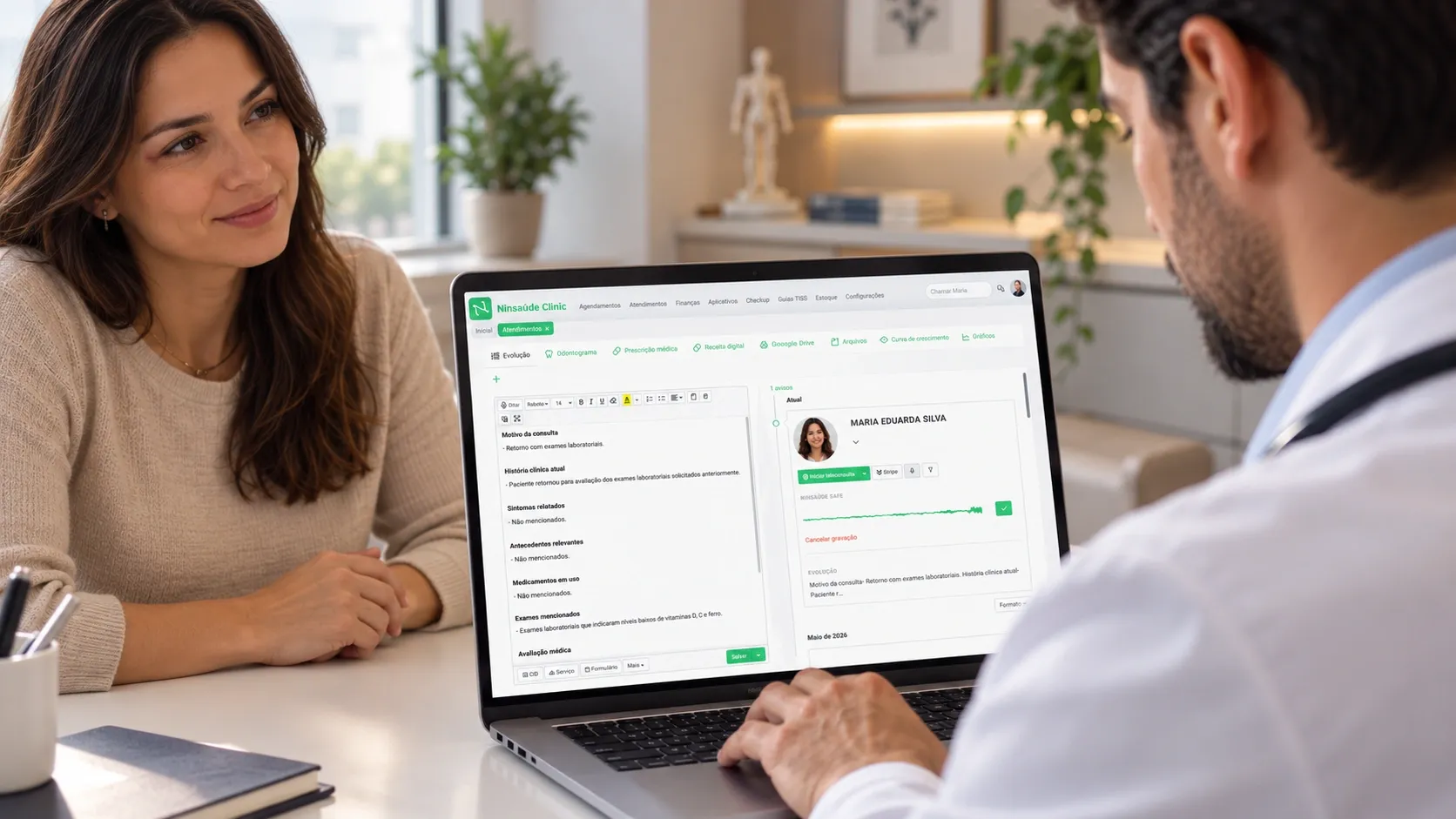
To reduce the time spent documenting information during and after consultations, Ninsaúde Clinic includes Ninsaúde Safe, an AI-powered tool that helps healthcare professionals document appointments with less typing and fewer interruptions for note-taking.
Ninsaúde Safe records and transcribes the consultation, turning the conversation into an organized foundation for the electronic medical record. Healthcare professionals can also configure a prompt to define how they want the content to be structured.
After processing the consultation, AI organizes the information into topics according to these instructions. Instead of reconstructing the appointment from notes or memory, the healthcare professional receives structured content to review and validate before adding it to the medical record.
Frequently asked questions about AI-powered medical records
What is an AI-powered medical record?
An AI-powered medical record uses artificial intelligence to support clinical documentation tasks. Depending on the solution, the technology can transcribe consultations, organize information into topics, and make documentation easier. AI-generated content should be reviewed by the healthcare professional before being added to the final medical record.
Can AI automatically transcribe a medical consultation?
Yes. Systems designed for this purpose can process audio from a consultation and convert it into text. Some solutions also use artificial intelligence to structure the transcription into topics, as is the case with Ninsaúde Safe, a tool available within Ninsaúde Clinic.

Does AI replace the healthcare professional when completing the medical record?
No. AI serves as a clinical documentation support tool. It can reduce typing, transcribe conversations, and organize information, but the healthcare professional remains responsible for reviewing the content and ensuring that the clinical record is accurate, complete, and appropriate for the care provided.
Is it permitted to record consultations for AI transcription?
Recording medical consultations involves sensitive personal data and must comply with the laws and regulations applicable to healthcare practice. Before using recordings for clinical documentation, healthcare organizations should assess their purpose, transparency requirements, legal basis, consent when applicable, security, access, and data storage practices.
What is the difference between consultation transcription and an AI-powered medical record?
Consultation transcription converts audio from the appointment into text. An AI-powered medical record can go beyond transcription by using artificial intelligence to organize the content, identify relevant information, and structure it to support clinical documentation. This gives healthcare professionals more organized information to review and document.
Did you find this information helpful?
Keep following our blog for more content about healthcare management, medical marketing, and healthcare innovation.
Are you a healthcare professional who hasn't discovered Ninsaúde Clinic yet? Learn how the platform can optimize your processes and help improve the quality of patient care.
