

Expanding a clinic usually brings a new type of operational challenge. What once worked with quick communication and manual control now depends on more people, more processes, and more information. All of this is natural, but without strategy and planning, it can lead to major problems.
In this article, you will understand how multi-location clinics operate different units with more organization, integration, and control, while also learning practical strategies to centralize management without losing productivity or quality of care.
The challenge of clinics operating multiple locations
The healthcare market has been experiencing a strong expansion movement. According to data from the Demografia Médica no Brasil 2025, a study conducted by the Faculdade de Medicina da Universidade de São Paulo (FMUSP), Brazil already has more than 635,000 physicians (Scheffer, 2025) — and projections indicate that this number could reach 1.15 million within the next 10 years. Where there is supply, there is demand.
But growing in size does not automatically mean growing in quality.
Many clinics realize this when they begin facing problems such as:
- misaligned teams
- internal communication issues
- excessive parallel spreadsheets
In practice, the lack of integration creates decentralized management. And when each location operates almost like a separate company, decision-making becomes slower and less reliable. This is exactly where centralized systems begin making a difference.
If operations grow, management must grow too
Business expansion is, in most cases, a reason to celebrate. However, one of the most common problems during expansion happens when management methods remain outdated.
In multidisciplinary clinics, the problem becomes even greater when patients need to move between different locations: teams cannot quickly find information, management needs to intervene repeatedly, and patient care is affected. In the end, the entire operation — and the patient — suffers.

Partial data analysis
Another common mistake is analyzing only the clinic’s overall results without understanding the individual performance of each location. This ignores extremely important information, such as:
- Which location is most profitable?
- Where are operational costs higher?
- Which location has the highest no-show rate?
- Which team is most productive?
- Where is there operational idle time?
Without this visibility, expansion stops being strategic and becomes merely quantitative.
What works for clinics with multiple locations
Centralizing schedules into one system
A multi-location scheduling system allows management to view:
- professionals across different locations
- real-time schedule status
- operational indicators
Besides improving internal organization, this also facilitates patient care, reduces conflicts, and speeds up front desk processes.
At Ninsaúde Clinic, for example, the multi-location scheduling feature helps teams operate different units within the same environment while maintaining centralized control and smoother communication.

Standardizing processes across locations
Another important point is ensuring that all locations operate similarly. This includes:
- appointment confirmations
- patient registration
- financial processes
- front desk workflow
- performance indicators
Standardization reduces errors, simplifies training, and improves the patient experience regardless of the location where care is provided.
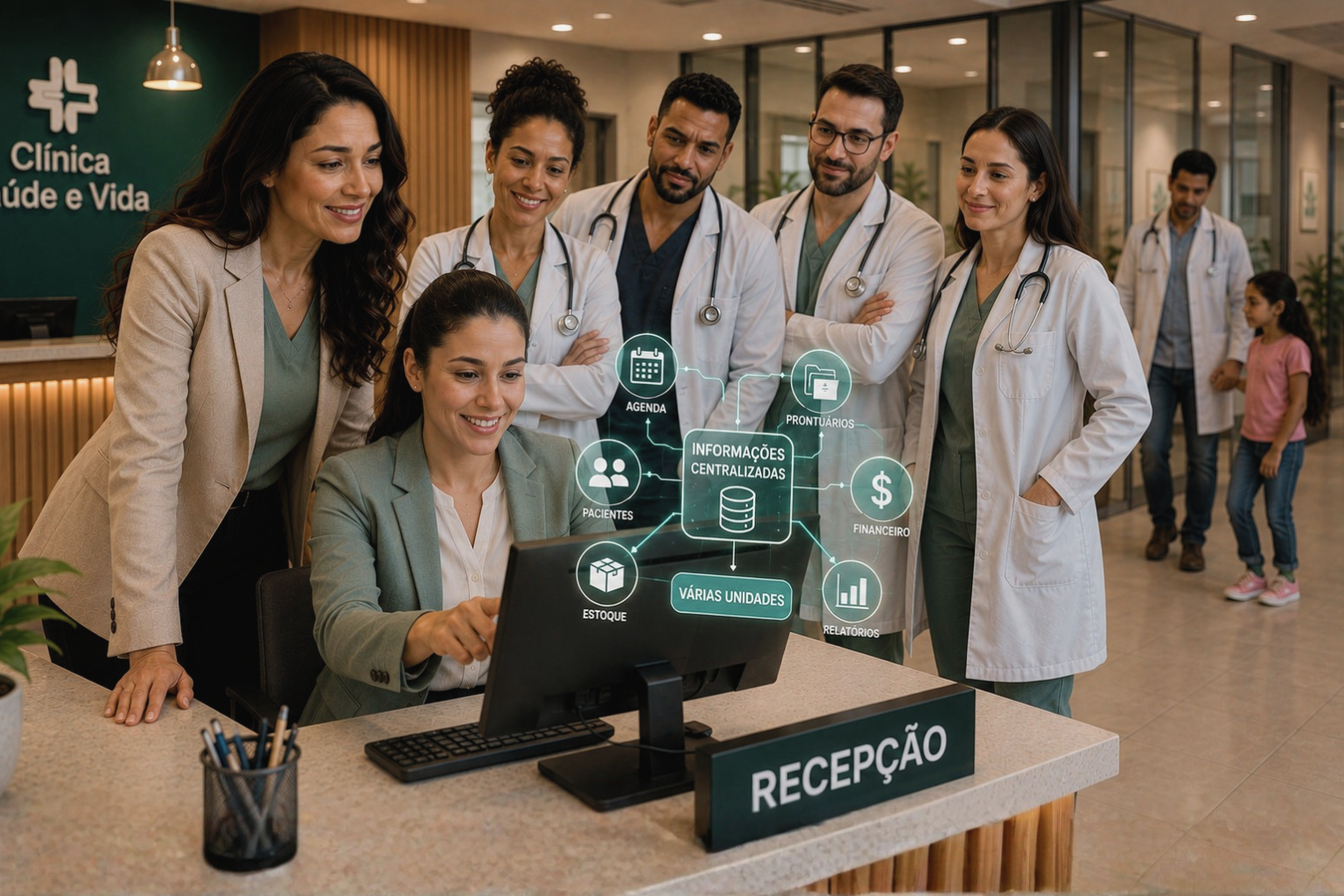
Tracking indicators by location
A growing clinic needs to clearly understand its numbers. Having access to each location’s income statement allows managers to identify:
- individual revenue
- operational expenses
- profit margins
- financial performance
- comparisons between locations
This makes management far more strategic, and managers who once made decisions based on perception begin making decisions based on data.
Reducing dependence on informal communication
When processes depend exclusively on WhatsApp messages or manual coordination, operations become vulnerable.
Organized clinics create clear workflows within the management system itself, reducing communication noise and improving activity tracking.
How to apply this in your clinic
Step 1: map bottlenecks between locations
Identify the clinic’s main problems:
- scheduling
- finances
- communication
- patient care
- reports
- productivity
This helps determine which processes need to be centralized first.
Step 2: standardize operations
Define unified processes for all locations. Even if there are operational differences between teams, the main structure must follow the same standard.
Step 3: use a centralized system
Using an integrated system makes it easier to manage:
- real-time access to information
- centralized financial management
- schedule monitoring
- reports by location
- operational standardization
Ninsaúde Clinic is a solution designed specifically for clinics that need to operate multiple locations without losing management control.
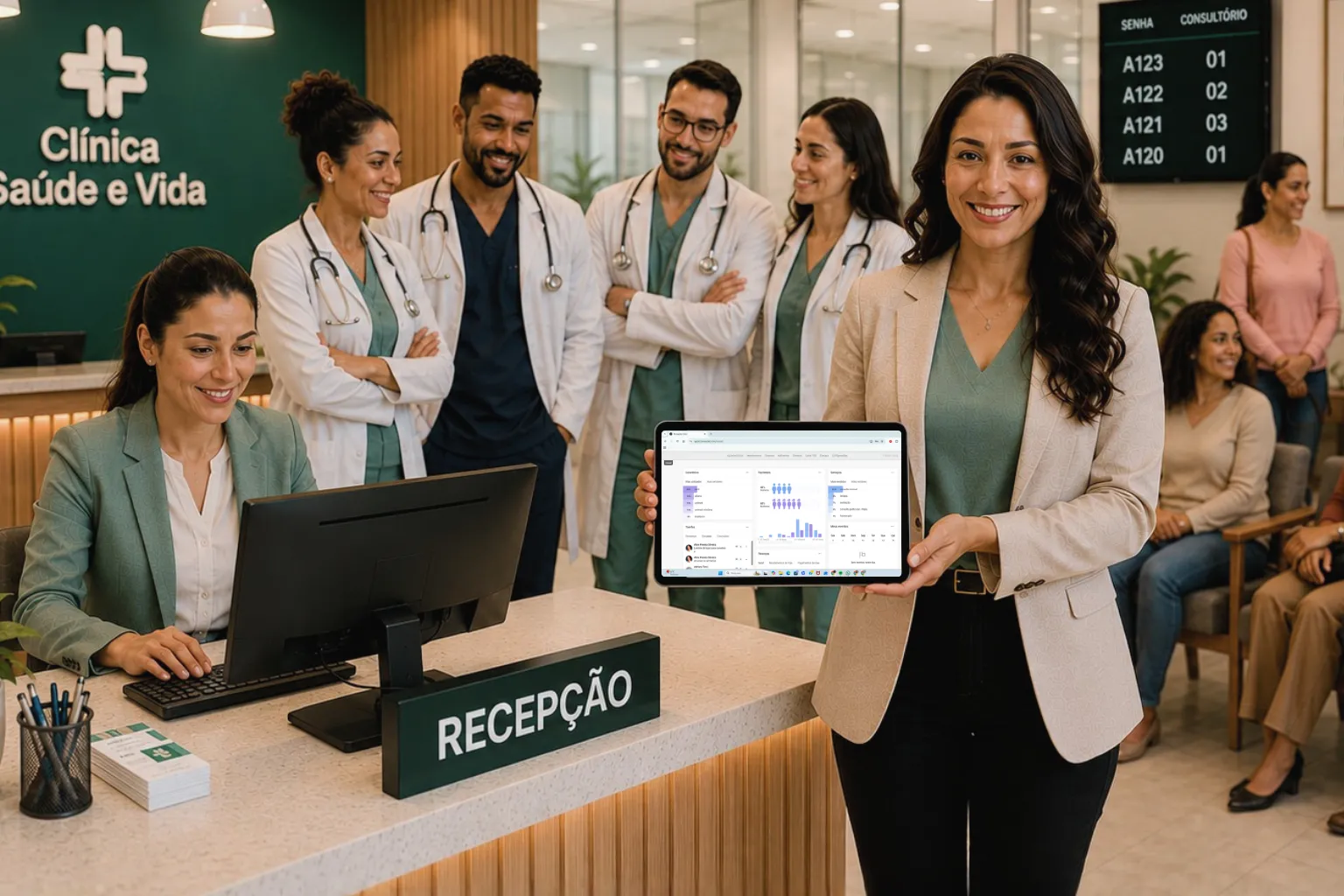
The impact of integration on clinic management
When management stops being fragmented, operations change completely. Communication between locations becomes smoother, the front desk becomes more productive, finances become clearer, and patients leave more satisfied.
Investing time and resources into improving clinic management directly influences the patient experience and their decision to return.
What changes when management becomes integrated
Multi-location clinics need visibility, standardization, and real-time control to maintain productivity and operational quality as they expand.
That is why centralized systems are no longer just administrative tools — they have become part of the growth strategy of modern clinics.
Is your clinic prepared to grow with organization?
Enjoyed these insights?
Keep following our blog for more content on clinic management, medical marketing, and healthcare innovation.
Are you a healthcare professional who hasn’t tried Ninsaúde Clinic yet? Discover how the platform can streamline processes and elevate the quality of patient care.
