

Managing a network of clinics or a healthcare franchise requires much more than simply controlling schedules and medical records. As new locations are added, operational complexity also increases. Decentralized information, different processes across locations, difficulties in tracking performance indicators, and a lack of standardization can compromise both financial results and the patient experience.
In this article, you'll learn which criteria truly matter when evaluating software for clinic networks and medical franchises, and how to identify a solution that is ready to grow alongside your organization.
What works when choosing a software
When evaluating different solutions, some criteria help identify which platforms were truly designed for larger operations.

Scalability
The system must be able to grow alongside your organization. This means allowing:
- the addition of new locations;
- an increase in the number of healthcare professionals;
- expansion of the patient base;
- higher patient volumes without sacrificing performance.
A scalable platform prevents technology from becoming an obstacle as your network expands.
Management by unit
Not every clinic operates in exactly the same way. That's why it's important for the system to allow each location to be managed individually while maintaining a consolidated view of the entire operation.
With Ninsaúde Clinic, for example, you can use features such as:
- reports by location;
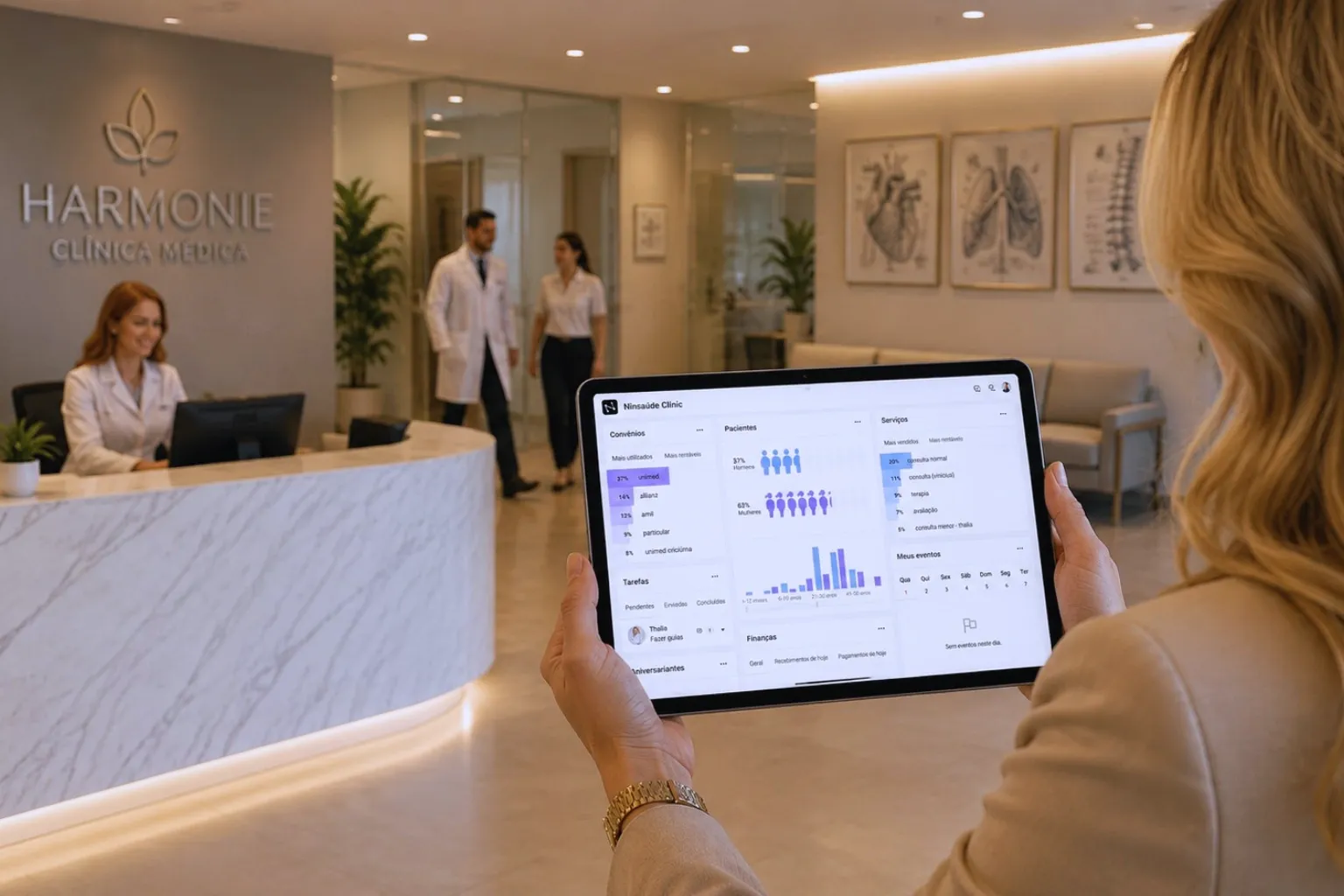
- individual or consolidated dashboards;
- profit and loss (P&L) statements by location;
- individual cash flow management;
- location-specific financial analysis filters.
This organization makes it easier to compare locations and quickly identify which operations are performing best.
Smart user access control
Within a clinic network, different teams access the system every day. A robust platform should allow administrators to define exactly what each user can view or modify.
With Ninsaúde Clinic, user permissions can be restricted by location, ensuring employees only have access to information related to their responsibilities. Additionally, healthcare professionals can be assigned to specific locations only, preventing scheduling errors and reducing operational mistakes.

Information security
When evaluating software, pay attention to aspects such as:
- encryption;
- automatic backups;
- access control;
- audit logs;
- compliance with applicable data protection regulations.
These features reduce risks and increase operational reliability.
Reports and performance indicators
Strategic decisions depend on reliable data. Therefore, the system should provide performance indicators that genuinely support management.
Among the features available in Ninsaúde Clinic are:
- management dashboards;
- financial indicators;
- productivity tracking;
- customized reports;
- location-based analyses;
- performance comparisons between clinics.
Integrated CRM
Attracting patients is important. Managing the entire sales process is equally essential.
An integrated CRM allows organizations to manage contacts, track negotiations, and monitor the stage of each business opportunity.
This improves oversight of commercial teams and provides better control over new patient acquisition.
Marketing tools
Clinic networks often run campaigns targeted at specific locations. In this scenario, properly segmenting communication makes a significant difference.
Ninsaúde Clinic allows email marketing campaigns to be filtered by location, making communications more relevant and targeted for each audience.
How to apply these criteria when evaluating software for your clinic
Step 1: list your operational needs
Before requesting demonstrations or scheduling meetings, identify the challenges your organization currently faces. Consider factors such as:
- number of locations;
- expected growth;
- financial management;
- performance indicators;
- required integrations.
Step 2: create an evaluation checklist
Create a comparison table that includes criteria such as scalability, security, support, infrastructure, CRM, reporting, financial management, user permissions, integrations, and marketing tools.
This way, your evaluation will be based on objective criteria rather than personal impressions.
Step 3: simulate real-world scenarios
During the software demonstration, ask to see common day-to-day scenarios, such as:
- creating a new location;
- restricting user access;
- generating a profit and loss (P&L) statement by location;
- comparing performance indicators across clinics;
- assigning a healthcare professional to specific locations only.
The closer the demonstration is to your daily reality, the easier it will be to identify potential limitations.
Is your clinic network ready to grow without increasing complexity?
Expanding an operation requires much more than simply opening new locations. It is essential to ensure that every location follows the same standards while working with reliable information and well-defined processes.
If the software can centralize information, provide strategic performance indicators, control user access, organize financial management, and support decision-making, it becomes much more than an operational tool—it becomes a strategic partner for growth.

Frequently asked questions
How can I tell if software is scalable for a clinic network?
Make sure it allows you to add new locations, increase the number of healthcare professionals and patients, manage user access by location, and maintain system performance as your organization grows.
Which financial features are important in software for medical franchises?
Financial reports, cash flow management, profit and loss (P&L) statements by location, consolidated performance indicators, and comparative analyses help monitor the financial health of the network and support strategic decision-making.
Why is user access control important?
Each employee should only have access to the information required for their role. This increases security, reduces the risk of unauthorized changes, and improves operational organization.
Does a CRM make a difference for clinic networks?
Yes. An integrated CRM helps track business opportunities, organize contacts, and strengthen relationships with patients throughout the entire care journey.
How should I compare different healthcare management software solutions?
Create an evaluation checklist based on your organization's needs, request practical demonstrations, and assess criteria such as scalability, security, support, reporting, integrations, ease of use, and features designed for managing multiple locations.
Did you find this information helpful?
Keep following our blog for more content about healthcare management, medical marketing, and healthcare innovation.

Are you a healthcare professional who hasn't discovered Ninsaúde Clinic yet? Learn how the platform can optimize your processes and help improve the quality of patient care.
