
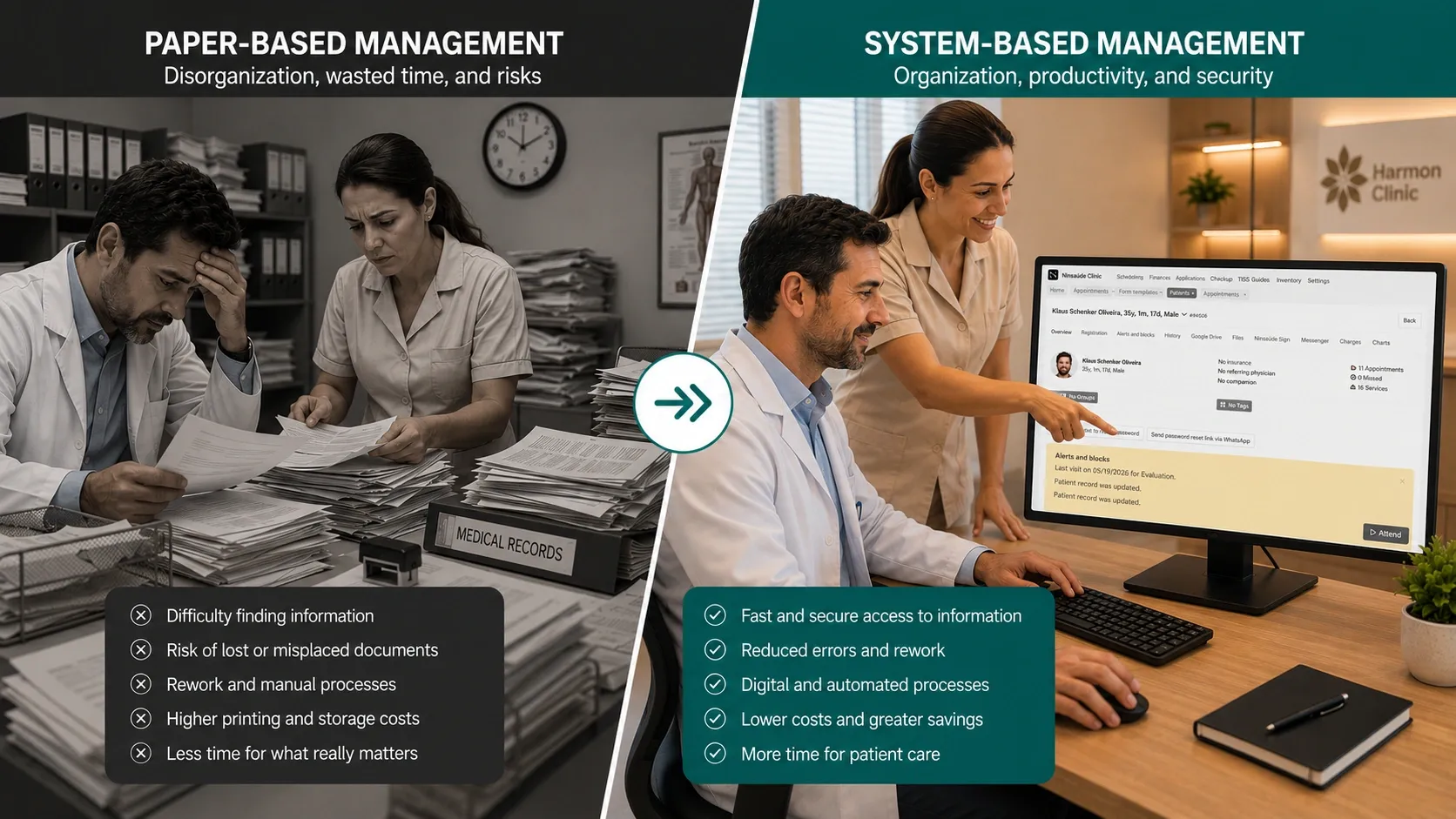
Managing a clinic that relies on paper documents throughout nearly every stage of patient care increases bureaucracy, creates rework, and makes information more difficult to access.
An online system reduces paper use in medical clinics by replacing printed documents with digital processes. Electronic health records, patient-completed digital forms, electronic signatures, and electronic prescriptions eliminate much of the daily printing while improving organization, productivity, and information security.
In this article, you'll learn how an online system helps medical clinics reduce paper consumption, which processes can be digitized, and how this transformation contributes to a more efficient operation that is ready to grow.
Why is there still so much paper in medical clinics?
Despite advances in healthcare technology, many clinics still rely on paper for tasks that could easily be performed digitally. In many cases, the problem is not simply the existence of paper documents, but the number of processes that still depend on them.
It is common to find clinics using paper for:
- patient registration;
- electronic health records;
- medical history forms;
- prescriptions;
- informed consent forms;
- contracts;
- patient satisfaction surveys;
- internal forms.
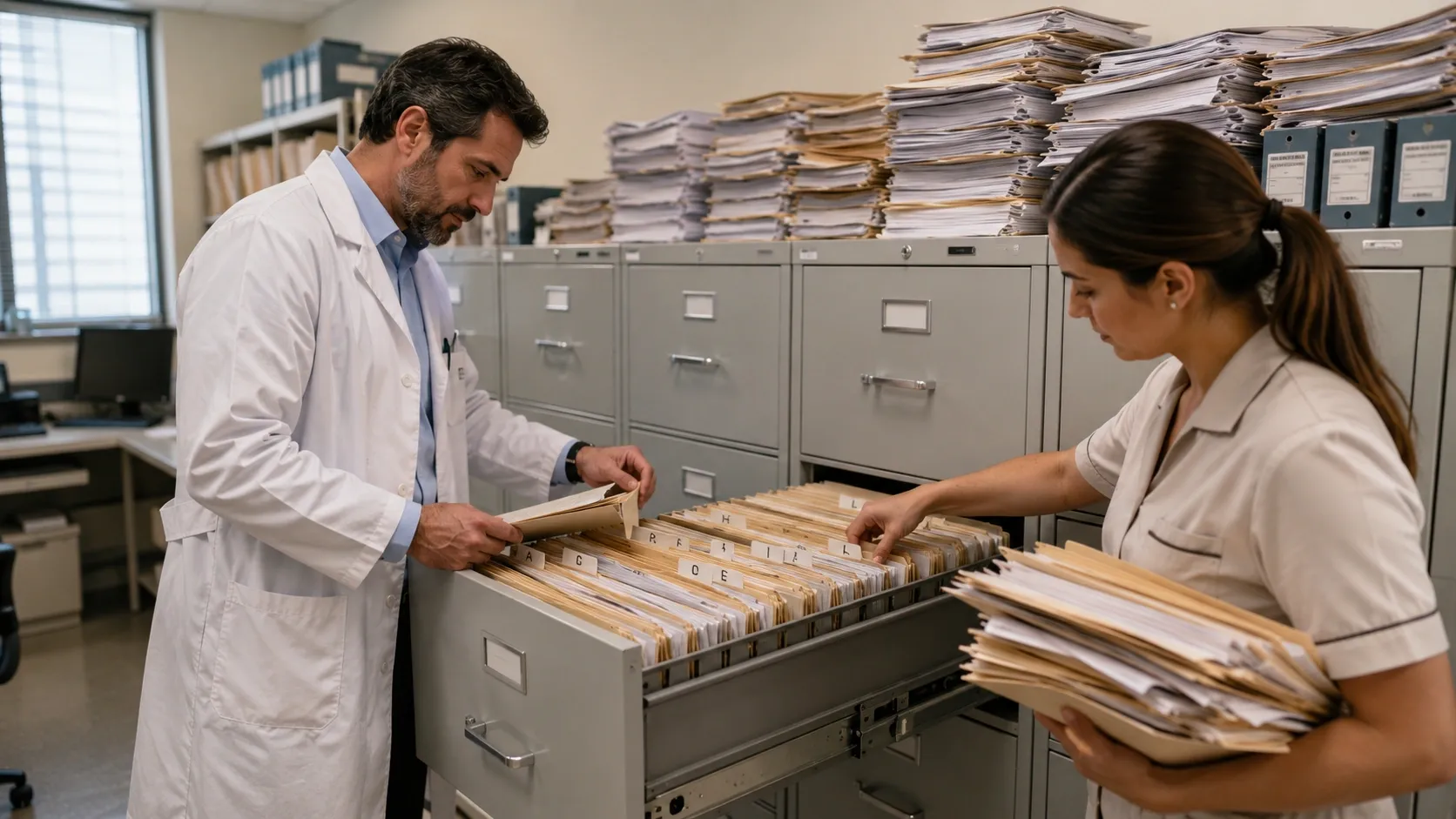
Each of these documents requires printing, completion, storage, and organization. When multiplied by the number of patients seen every month, paper consumption increases rapidly.
The consequences of paper accumulation in medical clinics
Beyond printing costs, staff spend valuable time locating documents, filing records, and managing the physical space required for storage.
For this reason, reducing paper use in medical clinics is about much more than saving paper. It means simplifying administrative processes and making the entire operation more efficient.
How does an online system reduce paper use in medical clinics?
The most effective way to reduce paper use in medical clinics is to create information digitally from the very beginning, eliminating the need for printing.
Instead of completing paper documents and later filing or entering the same information into a system, staff record everything directly within an online platform.
In practice, this allows documents such as electronic health records, forms, contracts, prescriptions, and patient registration records to exist entirely in digital format.
Besides significantly reducing paper consumption, implementing an online system in a medical clinic provides several additional benefits:
- eliminates manual steps;
- reduces rework;
- minimizes data entry errors;
- makes documents easier to locate;
- improves information security;
- lowers printing costs;
- frees up physical space previously used for archives.
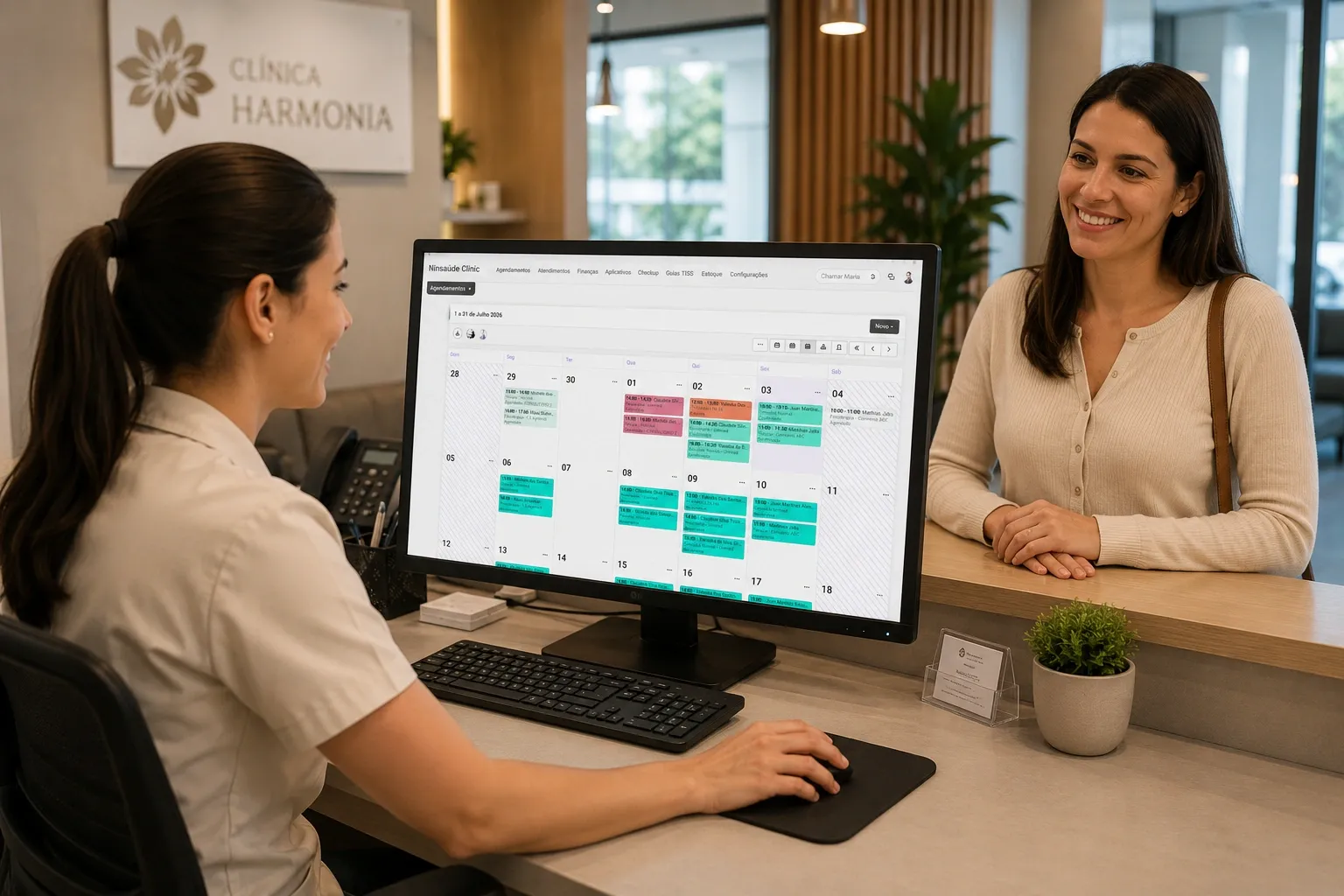
With Ninsaúde Clinic, these processes are centralized in a single platform, allowing physicians, receptionists, and managers to quickly access the information they need without relying on physical files.
How do electronic health records reduce paper use?
Electronic health records are one of the most effective tools for reducing paper use in medical clinics. Instead of relying on paper charts to document consultations, clinical notes, examinations, and patient history, all information is stored digitally.
In Ninsaúde Clinic, the electronic health record keeps the patient's complete clinical history in one place. This eliminates the need to print new documents for every appointment while supporting continuity of care.
Another important advantage is organization. Since all information is linked to the patient, staff can quickly locate previous records without searching through folders or storage boxes.
Electronic health records also reduce the risk of lost, damaged, or deteriorated paper documents, which remain common challenges for clinics that still rely on paper.
How do digital forms eliminate printing?
Many documents used every day can be completed digitally. Medical history forms, clinical assessments, customized forms, and protocols no longer need to be printed and instead become part of the patient's electronic health record.
With Ninsaúde Clinic, clinics can create customized form templates tailored to each specialty while maintaining consistent documentation across all healthcare professionals.
This provides several benefits:
- fewer printed documents;
- faster completion;
- standardized information;
- fewer errors;
- organized patient history;
- easier access during future appointments.
Because these forms are stored together with the electronic health record, there is no need for physical filing.
How does electronic prescribing replace printed documents?
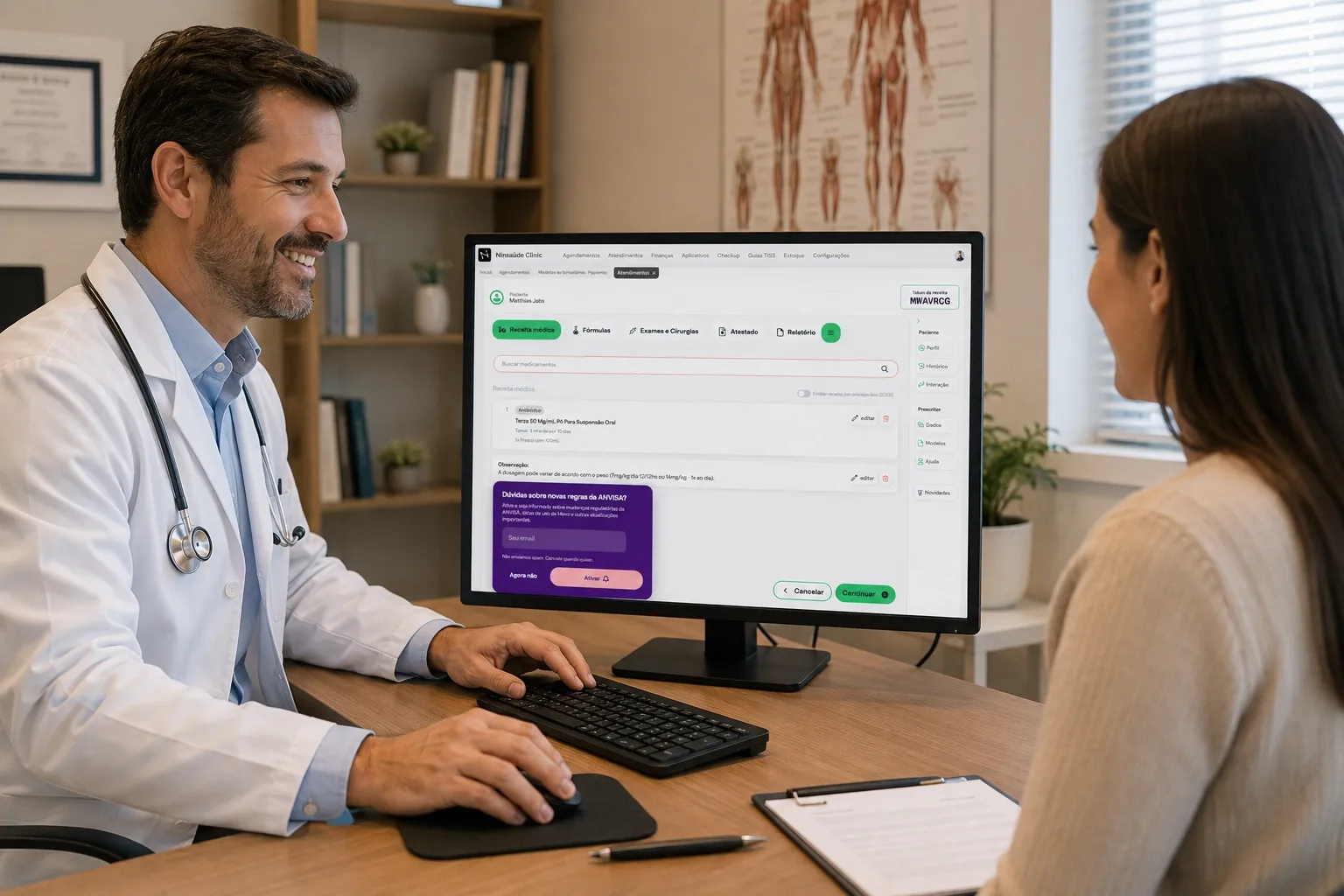
With electronic prescribing, healthcare professionals create prescriptions directly within the system, keeping the patient's medication history organized inside the electronic health record.
Ninsaúde Clinic includes integrated electronic prescribing, allowing prescriptions to be generated digitally during the appointment.
Besides reducing printing, this process offers several additional advantages:
- better organization of clinical history;
- easier access to previous prescriptions;
- reduced dependence on paper prescription pads;
- faster patient care.
Since each prescription remains linked to the patient's electronic health record, ongoing follow-up also becomes simpler.
How do electronic signatures eliminate paper documents?
Contracts, informed consent forms, medical reports, and many other documents are still printed every day in many clinics simply to collect signatures.
This increases costs, requires physical storage, and makes document management more time-consuming.
With Ninsaúde Sign, integrated into the Ninsaúde Clinic ecosystem, these documents can be signed electronically.
This means they can be sent, signed, and stored entirely in digital format.
The benefits include:
- eliminating printing;
- reducing archive space;
- digitally organized documents;
- greater administrative efficiency;
- easier retrieval of signed documents.
Besides reducing paper use in medical clinics, this approach makes document management significantly more efficient.
Why are digital documents also more secure?
Reducing paper use in medical clinics is not only an environmental or financial decision. It also improves information security.
Paper documents can be lost, misplaced, damaged, exposed to moisture, or accessed by unauthorized individuals.
An online system makes it possible to implement multiple security mechanisms, including access controls, audit logs, backups, and centralized storage.
With Ninsaúde Clinic, all information is stored in a secure digital environment, allowing authorized professionals to access records quickly while reducing the risks associated with physical document storage.
Another important advantage is traceability. Clinics can identify when information was created or modified, strengthening internal controls and improving document management.
Common questions about reducing paper use in medical clinics
How can a medical clinic reduce paper use?
The most effective approach is to replace paper-based processes with digital workflows. A system such as Ninsaúde Clinic allows clinics to use electronic health records, digital forms, patient check-in, electronic prescribing, and electronic signatures, significantly reducing the need for printing throughout daily operations.
Is it worth replacing paper-based processes with an online system?
In most clinics, yes. The greater the number of patient visits, the larger the volume of documents produced every day. Digitizing these processes reduces costs, improves organization, and allows staff to focus on more strategic activities.
Can electronic health records replace paper medical records?
Yes. Electronic health records store and organize all clinical information digitally. Besides reducing paper use, they make patient histories easier to access, improve organization, and reduce the risk of lost or damaged paper records.
Can electronic signatures replace printed contracts and consent forms?
Yes. Solutions such as Ninsaúde Sign allow contracts, medical reports, and informed consent forms to be signed electronically, reducing printing, streamlining administrative processes, and making documents easier to store and retrieve.

Did you find this information helpful?
Keep following our blog for more content about healthcare management, medical marketing, and healthcare innovation.
Are you a healthcare professional who hasn't discovered Ninsaúde Clinic yet? Learn how the platform can optimize your processes and help improve the quality of patient care.
