

Maintaining a clinic’s financial health does not depend solely on increasing the number of patients. In many cases, sustainable growth is directly linked to expense control, waste reduction, and improvements in internal processes.
Reducing costs does not mean lowering the quality of care. The goal is to make better use of available resources, eliminate unnecessary expenses, and improve the clinic’s operational efficiency.
Check out the following practical strategies to reduce costs and strengthen your clinic’s financial management.
How can you identify unnecessary expenses in a clinic?
The first step in reducing costs is understanding exactly where your money is going.
To do this, conduct a detailed analysis of all operational expenses. Organize costs into categories and, if necessary, subcategories.
Examples include:
- Staff
- Infrastructure
- Technology
- Administrative supplies
- Clinical supplies
- Outsourced services
After organizing the information, evaluate which expenses are essential and which can be reduced or eliminated.
In many cases, small recurring expenses go unnoticed and gradually affect the clinic’s profitability.
How does automation help reduce costs?
Process automation is one of the most effective ways to reduce operational costs in healthcare clinics.
Manual processes often lead to rework, delays, and administrative errors. They also require more staff time for repetitive tasks.
With a management system, it is possible to:
- Centralize information
- Organize schedules
- Manage payments and collections
- Track expenses
- Monitor financial indicators
- Automate administrative tasks
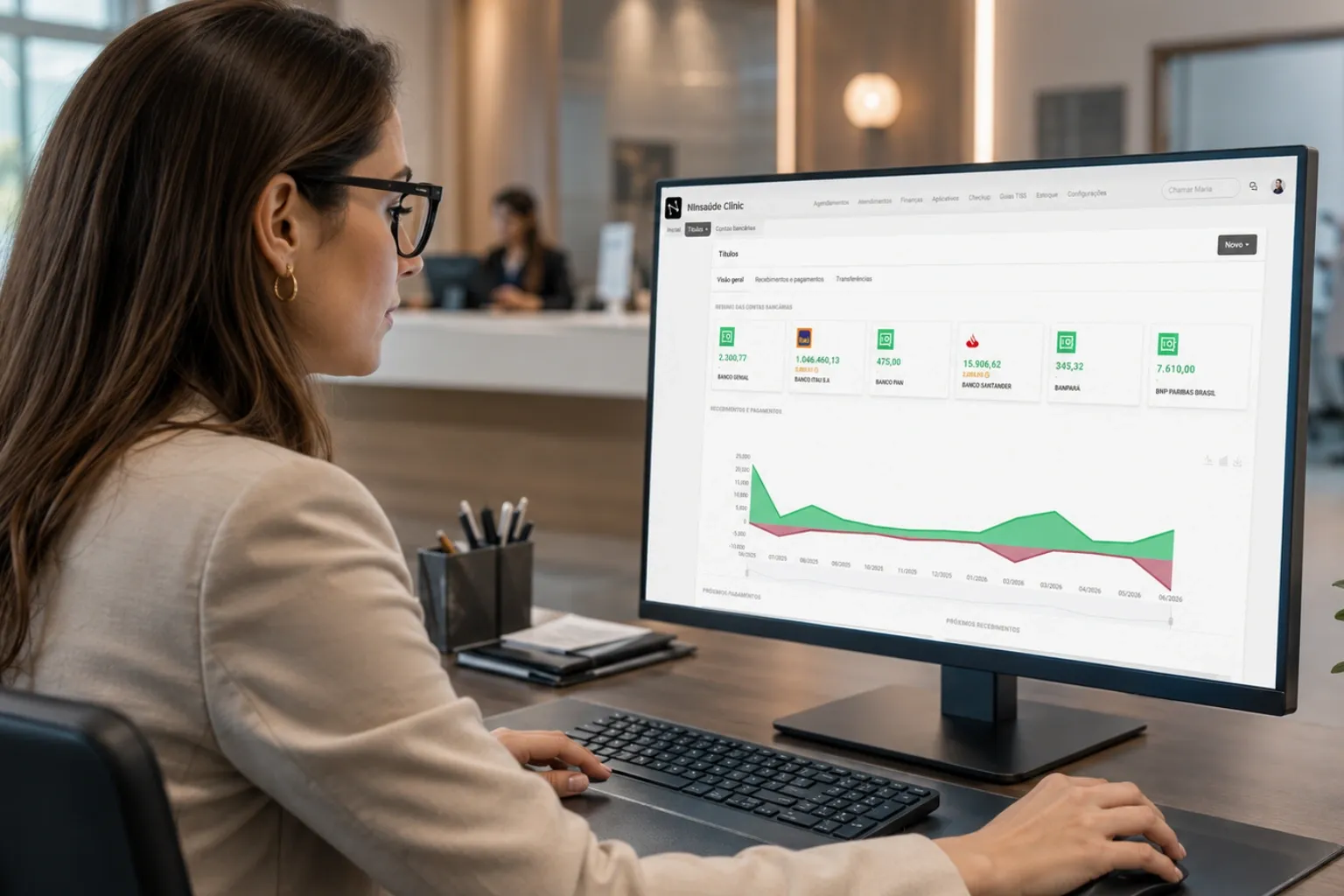
In addition to reducing costs, automation improves staff productivity and contributes to a more organized operation.
Solutions such as Ninsaúde Clinic help integrate different areas of the clinic, reducing waste and increasing operational efficiency.

How can you avoid expenses related to interest and penalties?
Late payments can generate unnecessary costs for a clinic.
Interest charges, penalties, and fees reduce profit margins and negatively affect financial planning.
For this reason, it is important to maintain strict control over due dates and continuously monitor cash flow.
Some best practices include:
- Scheduling payments in advance
- Organizing bills by due date
- Using automated reminders
- Monitoring incoming and outgoing cash flow
Whenever possible, also evaluate early payment opportunities, as many suppliers offer discounts for payments made before the due date.
When is it worth renegotiating with suppliers?
Maintaining a good relationship with suppliers is important, but that does not mean ignoring market alternatives.
Regularly reviewing prices and commercial terms can create opportunities to save money without compromising service quality.
When evaluating suppliers, consider:
- Price
- Product quality
- Delivery time
- Support provided
- Reliability

The cheapest option is not always the best choice. The goal is to find the right balance between cost and value.
This evaluation is especially important for medications, clinical supplies, and materials used directly in patient care.
What small changes can generate savings?
Not every cost reduction requires major investments.
Small changes in daily routines can generate significant results over time.
Simple actions include:
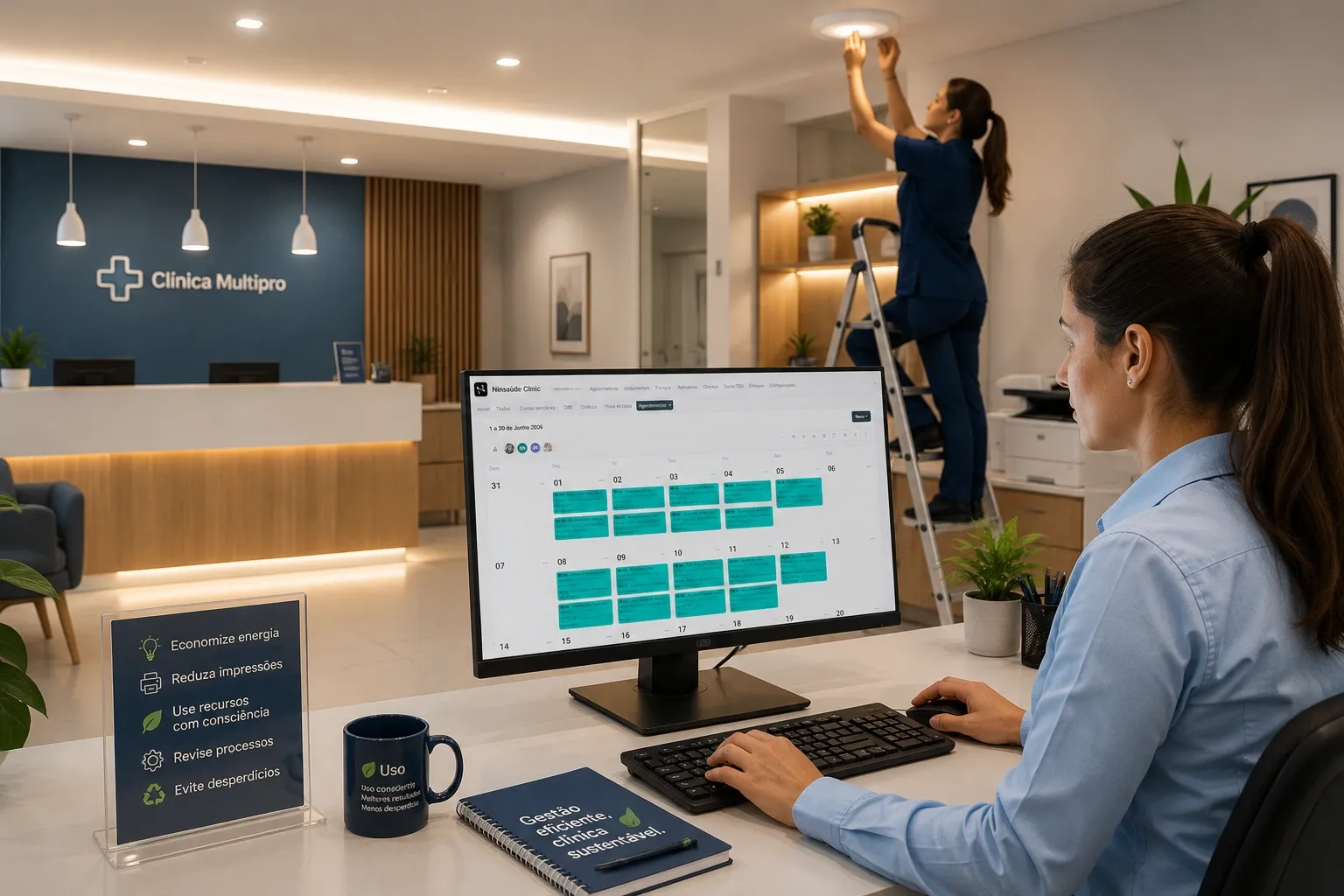
- Reducing unnecessary printing
- Minimizing the use of disposable materials
- Avoiding energy waste
- Reviewing administrative processes
- Encouraging responsible resource use
It is also worth evaluating the efficiency of the equipment used in the clinic.
An older air-conditioning unit, for example, may consume significantly more energy than newer models.
The same applies to lighting systems. LED lamps generally consume less energy and offer greater durability.
When consistently applied, these measures contribute to a more efficient and financially healthy operation.
Frequently Asked Questions About Cost Reduction in Clinics
How can a clinic reduce costs without compromising quality?
Reducing costs does not mean cutting essential resources. The focus should be on eliminating waste, automating processes, improving financial control, and making better use of available resources. This allows clinics to increase operational efficiency without negatively affecting patient experience or quality of care.
What is the first step in controlling clinic costs?
The first step is mapping all operational expenses. Categorizing costs helps identify where the largest expenses occur and which costs can be reduced. This analysis also improves financial planning and increases predictability.
How does automation help reduce costs in clinics?
Automation reduces manual tasks, minimizes administrative errors, and decreases rework. It also simplifies financial management, scheduling, and performance monitoring, allowing clinics to operate more efficiently and productively.
Is switching suppliers a good way to save money?
It depends on the cost-benefit analysis. The ideal approach is to compare prices, quality, delivery times, and support services. The cheapest option is not always the best. The goal is to find suppliers that help maintain service quality while offering the best overall value.
What types of expenses commonly generate waste in clinics?
Common sources of waste include late payment penalties, excessive energy consumption, improper use of materials, administrative rework, and manual processes. Identifying these issues can generate meaningful savings over time.
How can a management system help control costs?
A management system helps centralize financial information, track expenses, manage payments, and monitor key performance indicators. With greater visibility into operations, managers can make faster decisions and reduce waste more effectively.
Did you enjoy this information?
Keep following our blog for more content about healthcare management, medical marketing, and healthcare innovation.
Are you a healthcare professional and still unfamiliar with Ninsaúde Clinic? Discover how the platform can optimize processes and improve the quality of patient care.
Article updated on June 2, 2026
