
Managing a clinic with different medical specialties requires attention to processes that do not always follow the same standards. While some appointments take only a few minutes, others require procedures, examinations, or frequent follow-up visits.
In this article, you'll discover seven common challenges in managing multispecialty clinics, their operational consequences, and practical ways to make daily workflows more efficient.
Why is managing a multispecialty clinic more complex?
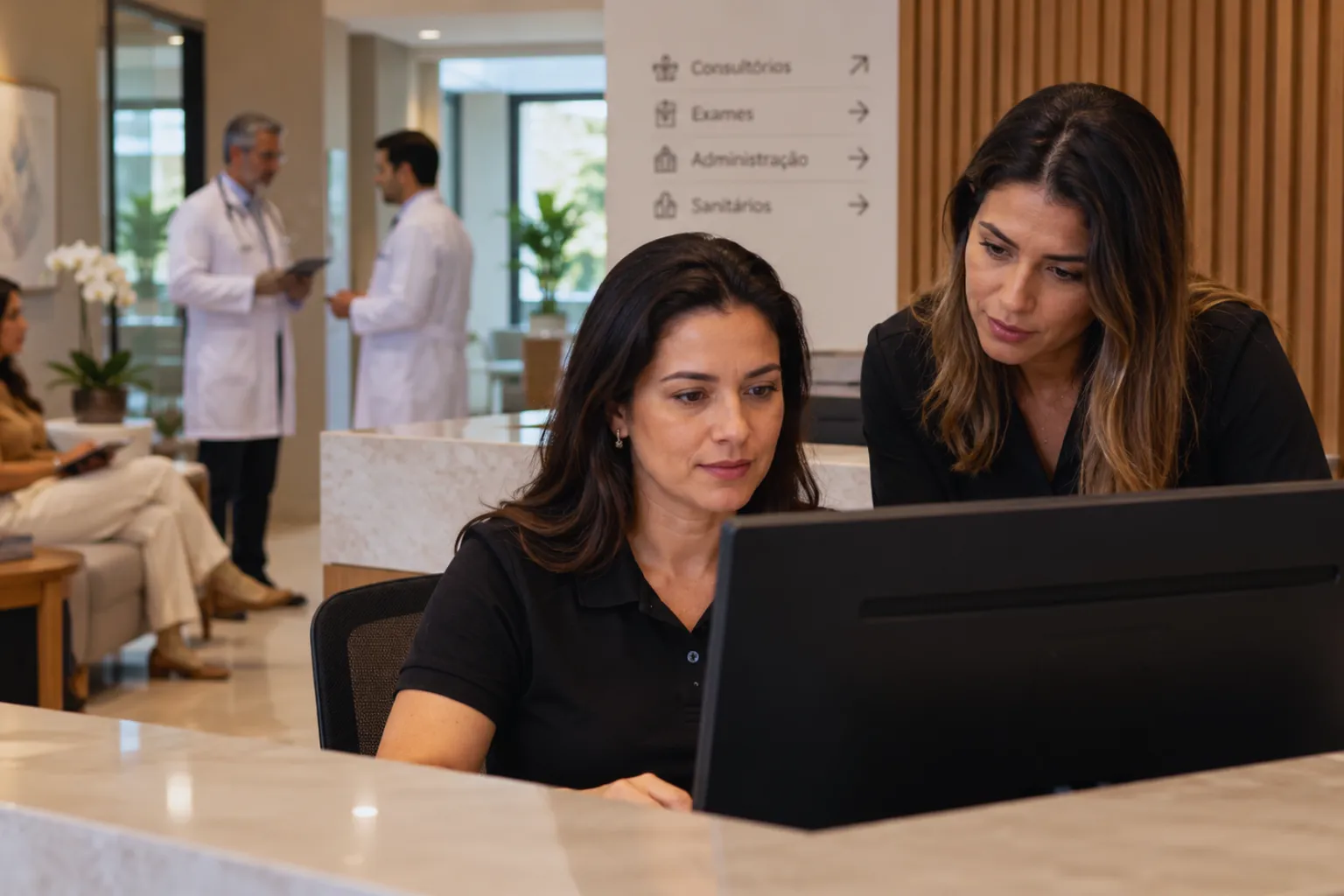
Imagine a receptionist who needs to schedule appointments of different lengths, confirm examinations, provide patients with preparation instructions, and manage last-minute bookings and cancellations. When this information is scattered across different systems, the likelihood of errors and duplicated work increases.
The challenge goes beyond the number of healthcare professionals. It lies in coordinating different clinical and administrative needs while maintaining operational efficiency and visibility.
7 management challenges in clinics with different medical specialties
1. Managing schedules with different appointment lengths and types
A follow-up appointment may require less time than an initial consultation. Similarly, certain procedures require specific rooms, equipment, or intervals between patients.
When all schedules follow the same rules, scheduling conflicts, delays, and unused appointment slots can occur.
How to improve
To prevent scheduling conflicts, it is important to establish specific durations for each type of appointment and centralize scheduling.
With Ninsaúde Clinic, you can manage multiple healthcare professionals within a single calendar, organize schedules, and configure services according to the clinic's workflow, making the reception team's job easier. Visit our website to learn more about the Ninsaúde Clinic appointment management system.
2. Standardizing processes while respecting each specialty's needs
A multispecialty clinic needs consistent administrative standards, but that does not mean every physician should use the same forms and clinical protocols.
In orthopedics, for example, patient monitoring may involve mobility assessments and imaging examinations. In cardiology, recording blood pressure and other health indicators may be part of the routine.
Without adaptable tools, healthcare professionals may resort to external documents or poorly structured records.
How to improve
Integrate electronic health records with customizable forms and protocols into daily operations, allowing each specialty to organize its documentation according to its clinical needs.
This way, the clinic can keep information centralized without requiring every professional to use identical templates.
3. Managing physician payments and different compensation models
Calculating physician payments can become one of the most time-consuming tasks for the finance department, especially when each professional has different contractual arrangements.
One physician may receive a percentage of self-pay consultations, while another receives fixed amounts per procedure. Insurance agreements, discounts, and payment dates introduce additional variables.
When these calculations rely exclusively on spreadsheets, reviewing payments takes longer and increases the risk of discrepancies.
How to improve
Establish payment rules based on each professional, procedure, or payment method, and use tools that connect completed appointments with their corresponding financial amounts.
With the Ninsaúde Clinic financial management module, clinics can organize physician payments according to different compensation rules and link payment amounts to completed appointments. This simplifies payment verification and reduces dependence on manual processes.
4. Maintaining communication between reception, medical staff, and administration
A patient cancels an appointment, but the physician is not informed. In another situation, the reception team confirms a procedure without knowing that a required piece of equipment will be unavailable.
These communication failures may seem minor, but they can disrupt patient care and lead to dissatisfaction.
In clinics with different specialties, communication must keep pace with daily operations, particularly when several professionals share rooms and resources.
How to improve
Establish clear communication workflows, keep information updated in a shared system, and define access permissions according to each team's responsibilities.

5. Monitoring the financial performance of each specialty
A clinic may experience revenue growth while still facing profitability challenges. This happens because appointment volume does not necessarily reflect the financial performance of each specialty.
Costs associated with supplies, equipment, healthcare professionals, and facilities can vary considerably.
Without segmented information, managers may struggle to identify which services perform best and where improvements are needed.
How to improve
Monitor revenue, expenses, costs, and financial results by specialty or cost center.
Systems with management reporting capabilities make it possible to evaluate performance more accurately and support decisions about investments, pricing, and expansion.
6. Ensuring continuity of care and organized medical records
In multispecialty clinics, the same patient may receive care from different healthcare professionals. When medical records are fragmented, patients may need to repeat information, while staff spend additional time searching for medical histories, examination results, and documents.
Beyond operational difficulties, inappropriate information sharing may put patient privacy at risk.
How to improve
Adopt a centralized electronic health record system with organized patient histories, document storage, and access controls based on professional responsibilities and applicable HIPAA requirements.
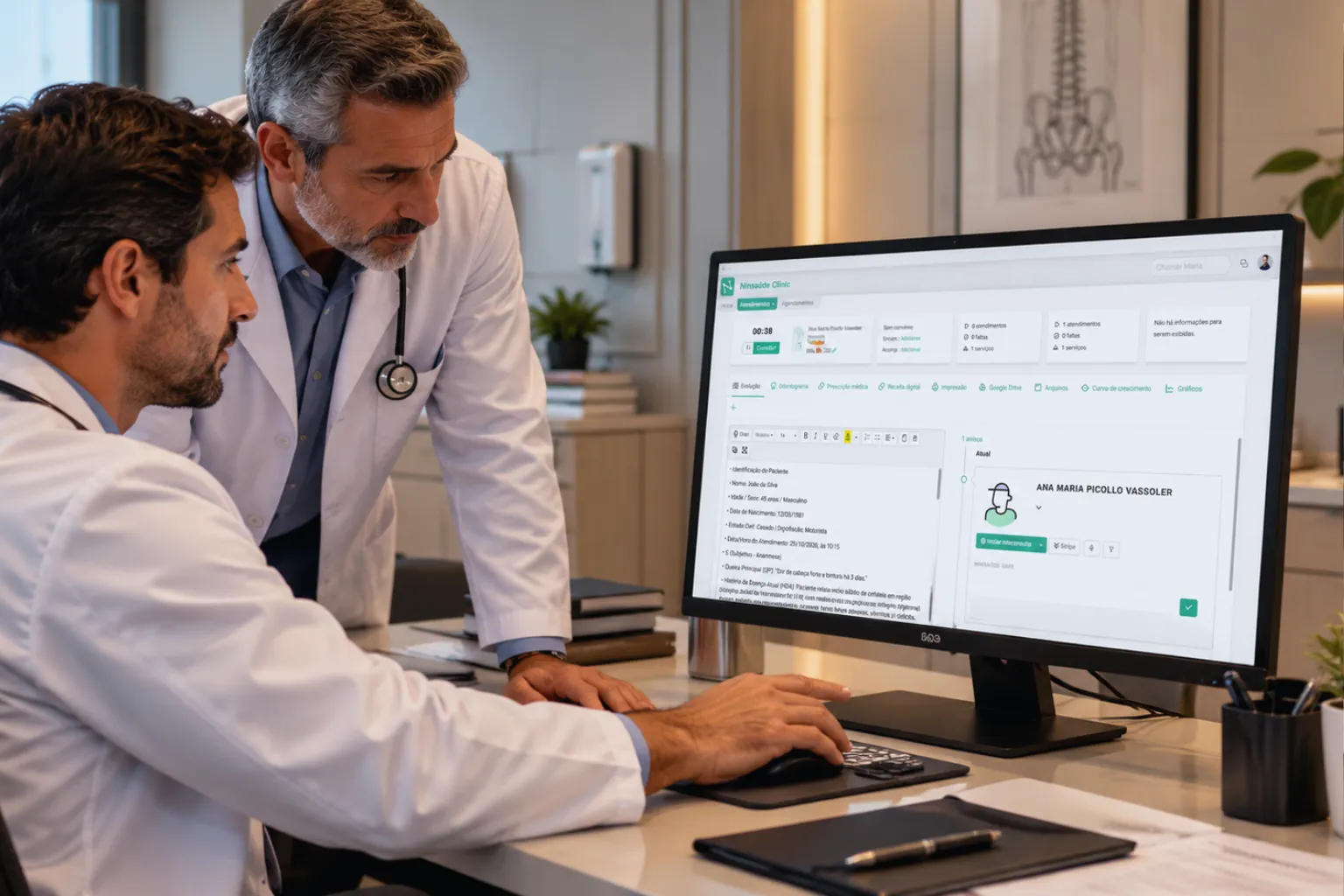
Artificial intelligence tools for transcribing and organizing consultation information can also streamline clinical documentation, provided the content is reviewed and validated by the responsible healthcare professional.
7. Growing without increasing operational disorganization
Hiring additional physicians or opening another location often represents an opportunity for growth. However, it also increases the number of schedules, financial transactions, and processes that must be managed.
A clinic that relies on disconnected systems may struggle to maintain the same standard of care as it expands.
Operations may grow, but managing them becomes considerably more difficult.
How to improve
Develop repeatable processes, establish performance indicators, and use a platform capable of supporting different healthcare professionals, specialties, and locations.
The goal is to enable predictable growth without requiring every new stage of expansion to be managed through improvised processes.
Does your clinic have the tools it needs to grow without compromising operational quality?
Addressing these challenges requires more than dedicated teams. The data generated through daily clinic operations must contribute to process organization and management decisions.
This is where solutions such as Ninsaúde Clinic can help. The platform integrates multi-provider scheduling, electronic health records, financial management, physician payments, and management reports.
The system also allows clinics to customize forms and protocols according to each specialty. It also offers Ninsaúde Safe, an additional solution that uses artificial intelligence to transcribe consultations and organize clinical information, making documentation easier for healthcare professionals.
With these tools, managers can monitor different operational areas within a single environment, reducing dependence on disconnected systems.

Did you find this information helpful?
Keep following our blog for more content about healthcare management, medical marketing, and healthcare innovation.
Are you a healthcare professional who hasn't discovered Ninsaúde Clinic yet? Learn how the platform can optimize your processes and help improve the quality of patient care.
