

Patient complaints in clinics usually come from the same place: high expectations and unstable processes. Patients don’t compare your clinic to yesterday — they compare it to the best experience they had this week.
For managers, physicians, and front-desk teams, the goal is simple: reduce friction across the journey and create consistency. When scheduling, reception, and post-visit workflows run on a standard, the patient experience in the clinic improves and patient satisfaction in the clinic rises.
Quick map (where complaints start)
- Flow and scheduling: appointment delays and waiting time.
- Reception and communication: poor service, the clinic doesn’t reply on WhatsApp, slow responses.
- Policies and billing: cancellations/rescheduling, incorrect charges, unclear estimates.
- Environment and data: cleanliness, privacy, registration errors.
- Measurement: patient satisfaction survey in the clinic, NPS in the clinic (Net Promoter Score), and patient satisfaction indicators.
Why patient complaints happen (and why they repeat)
Expectation vs. reality in the patient journey
Most top patient complaints are born when what was promised isn’t delivered: time, price, documents, follow-up, and guidance. Without standards, each team member “handles it their way” — and patients feel that inconsistency.
Where the patient experience in the clinic “breaks” (reception, scheduling, post-visit)
Three breaks are classic: arrival (no one explains the next step), during (the schedule runs late and no updates are given), and exit (post-visit guidance is unclear). A management system like Ninsaúde Clinic helps standardize routines and centralize data, reducing improvisation.
Appointment delays and waiting time in the clinic
Why appointments run late (common operational causes)
Delays often cascade: overbooking without buffer time, returns booked as full visits, procedures underestimated, unexpected cases without a plan, and slow check-in due to incomplete registration. For patients, the reason matters less than the feeling of lost control in patient service in the clinic.

How to reduce waiting time in the clinic (practical actions)
If the question is how to reduce lines in the clinic, use four levers:
- Planned buffers to absorb variation;
- Clear overbooking rules + fast triage;
- Pre-registration/check-in to speed up arrivals;
- Automated confirmations to reduce no-shows.
With Ninsaúde Clinic, the clinic centralizes scheduling, confirmations, and registration, reducing rework and front-desk bottlenecks.
Before we move on, one important note: if you manage a healthcare clinic and need better scheduling organization, a secure electronic health record, and centralized financial processes, Ninsaúde Clinic can streamline your daily operations. Get in touch to learn more.

Poor service in the clinic and front-desk issues
“Poor service” is usually overload + lack of scripts. To improve service in the clinic, the front desk needs a simple three-step standard: welcome, guide, and record. Welcome means acknowledging (“I’m here to help”). Guide means explaining the next step and expected timing. Record means logging the request and status so nothing gets lost.
For how to organize a clinic front desk, create an operational kit: ready-to-use phrases (delays, rescheduling, documents), an arrival checklist, and a shift lead for quick decisions. When the team has visibility into the schedule and pending tasks, the tone improves — and complaints drop.
Language and posture: details that become low ratings
Even on busy days, small behaviors change perception: using the patient’s name, explaining delays, offering options (“Would you like to reschedule?”), and closing with clear instructions. Train empathetic language and avoid blaming patients. When the standard is repeatable, the team feels safer — and patient dissatisfaction in the clinic decreases.

Communication failures (WhatsApp, follow-up, post-visit)
The clinic doesn’t reply on WhatsApp: why it becomes a complaint
WhatsApp has become an official channel. When the clinic takes too long, patients interpret it as neglect. The fix is process: an internal SLA (e.g., within 60 minutes), a priority queue, and message templates that include the next action and expected timeline.
Lack of follow-up: how to organize flows and deadlines
Follow-up includes results, authorizations, questions, and documents. Define: who receives it, where it’s logged, the default deadline, and when to escalate to the physician. With centralized data, the team responds confidently; that’s why tools like Ninsaúde Clinic help reduce failures and increase patient satisfaction in the clinic.
Disorganized scheduling, cancellations, and rescheduling
Appointment confirmation on WhatsApp (reduces no-shows and friction)
No-shows create two problems: empty slots and last-minute overbooking. WhatsApp confirmation with a reschedule option improves predictability and reduces pressure on the front desk, improving patient service in the clinic.
Clinic cancellation policy (clarity = less conflict)
Last-minute cancellations without alternatives are one of the top patient complaints. Keep a practical rule: notify early, offer options, and prioritize those impacted. Transparency here protects reputation.

Incorrect charges, price complaints, and unclear estimates
Lack of transparency: how to present prices and steps
Many “incorrect charge” complaints are actually surprises. Standardize what’s included, what can vary, and under which conditions additional costs apply. Repeat the agreement and document it — that prevents disputes.
Payment options, invoices, and reimbursement
Limited payment methods and unclear invoices also create friction. Define deadlines, channels, and standards. Connecting scheduling to billing reduces errors; Ninsaúde Clinic can support this by organizing charges and reducing mismatches.
Environment, comfort, and privacy (the space also drives complaints)
Clinic cleanliness and waiting room organization
Your environment signals quality. Use short per-shift routines to check restrooms, trash, seating, water, temperature, and noise. Small fixes eliminate many complaints.
Privacy in the clinic and accessibility (PWD)
Avoid discussing exam details at the front desk, protect screens, and train the team on sensitive data. Accessibility (priority service, space, ramps, and respectful support) also strongly affects the patient experience in the clinic.
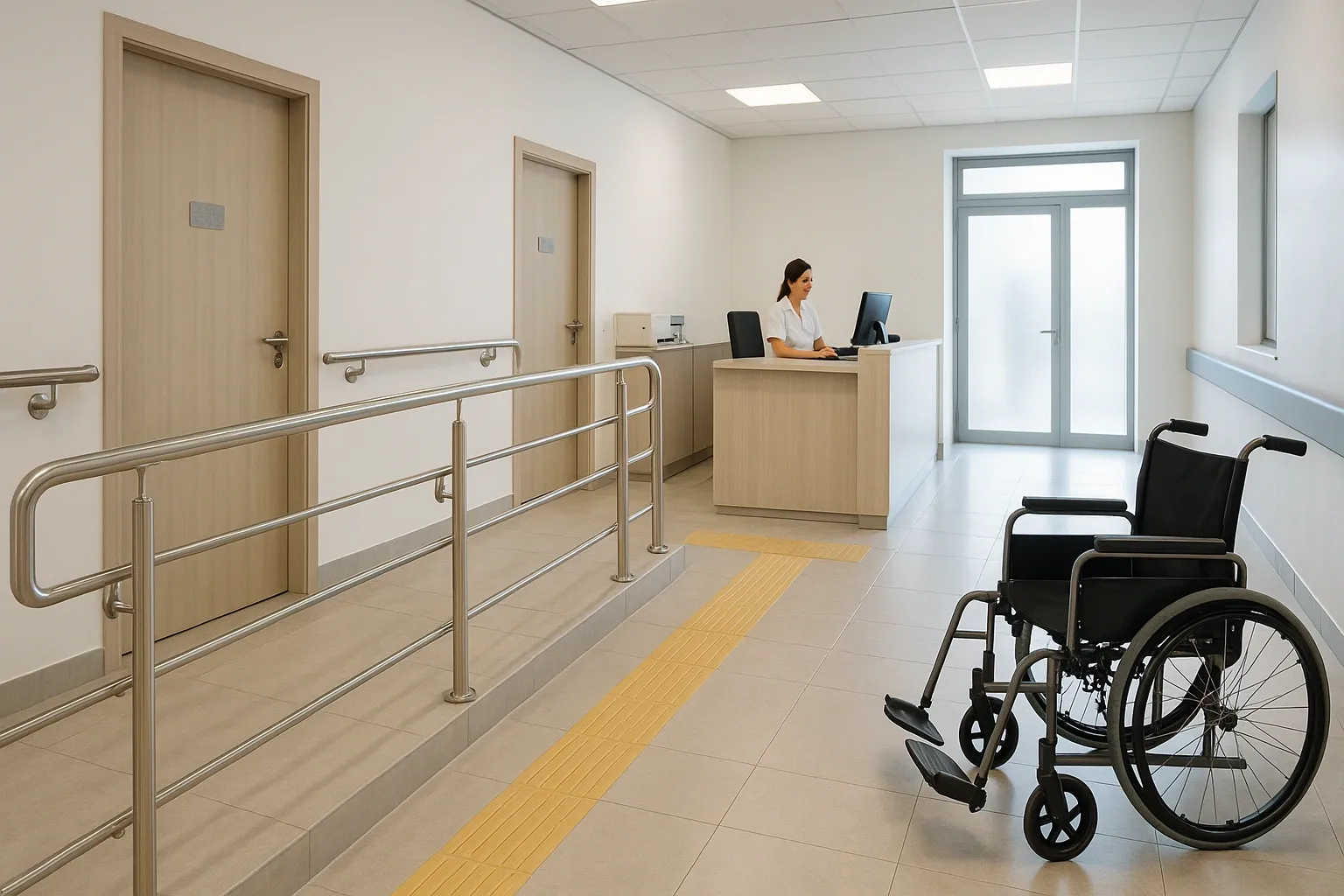
Registration errors and trust in data
Patient registration errors and front-desk rework
Wrong phone numbers, insurance details, or IDs quickly become “I already told you.” Validate critical fields, use required inputs, and do quick reviews. Pre-registration and guided check-in help reduce lines and rework.
Data privacy in the clinic (without fearmongering)
Privacy builds trust: individual logins, role-based access, and audit trails. Besides reducing risk, it signals professionalism. A system like Ninsaúde Clinic helps by offering permissions and tracking.
How to measure and reduce patient complaints continuously
Patient satisfaction survey in the clinic: questions that work
Keep the patient satisfaction survey in the clinic short and consistent (2 to 4 questions). Examples: “From 0 to 10, how likely are you to recommend the clinic?” and “Was the waiting time acceptable?”. Always include an open field: “What should we improve?”.
Patient satisfaction indicators + an improvement routine
Use NPS in the clinic (Net Promoter Score) as your thermometer and pair it with operational patient satisfaction indicators: average waiting time, no-shows, reschedules, and complaint reasons. Run a biweekly cycle: review, pick 1 improvement, update the script/process, and train the team. That’s patient experience management.

Top patient complaints are predictable — and therefore manageable. When you stabilize scheduling, reception, communication, transparency, and data, you reduce friction and improve service in the clinic without relying on “heroic effort.” With process and technology (like a management system such as Ninsaúde Clinic), the clinic can sustain patient satisfaction in the clinic long term.
FAQs
- Why does the clinic run late so often?
Because the schedule has no time buffer, there’s too much overbooking, visit times are underestimated, and check-in/registration is slow. - What should I do when my appointment is delayed?
Notify the patient early, give a realistic ETA, offer a reschedule option, and log the reason for the delay. - How can a clinic reduce waiting time?
Add time buffers, confirm appointments, use pre-registration/check-in, and standardize triage/front-desk flow. - How can we improve front-desk service in a clinic?
Train welcome scripts, define service standards, organize queues by priority, and give the team visibility into the schedule. - Why do patients complain when the clinic doesn’t reply on WhatsApp?
No response SLA, no clear owner, messages without next step/timeline, and replies coming from multiple people inconsistently. - How can we avoid last-minute cancellations and reschedules?
Confirm in advance, set clear policies, enable self-rescheduling, and keep a waitlist to fill open slots. - How can we reduce billing and estimate-related complaints?
Explain what’s included, confirm prices beforehand, detail steps, and document approvals/changes. - What are the most common complaints about the waiting room and facility?
Long waits with no updates, lack of comfort, insufficient cleaning, noise/crowding, and low privacy at the front desk. - How can we handle patient registration errors without friction?
Apologize, fix it fast, validate critical fields, and use a checklist/standard to prevent repeats. - How do we run a patient satisfaction survey and actually use the data?
Send a short post-visit survey (including NPS), track by period/reason, and turn insights into a biweekly action plan.
Enjoyed these insights?
Keep following our blog for more content on clinic management, medical marketing, and healthcare innovation.
Are you a healthcare professional who hasn’t tried Ninsaúde Clinic yet? Discover how the platform can streamline processes and elevate the quality of patient care.
