

The evolution of the healthcare market demands much more than clinical competence from medical professionals. In a competitive environment with increasingly demanding patients, it is essential for clinics and practices to adopt medical marketing strategies to expand their digital presence, strengthen their brand, and build lasting relationships with their audience. When well-planned and ethically executed, marketing can be one of the most effective tools for the sustainable growth of a healthcare service.
More than promoting services, medical marketing aims to educate, inform, and create value for the patient, positioning the professional as a reference in their specialty. The challenge, however, lies in balancing visibility strategies with the limitations imposed by the medical codes of ethics in each country. In this article, we will address medical marketing.
What is medical marketing and why is it important?
Medical marketing is a set of actions aimed at promoting the relationship between healthcare professionals or institutions and their patients, while respecting the ethical standards of the profession. This includes everything from building a visual identity to managing digital presence and using CRM tools.
The importance of medical marketing lies in its ability to build authority, attract new patients, and strengthen loyalty. By adopting empathetic, informative, and targeted communication, professionals can stand out, increase the predictability of their schedules, and maintain a steady flow of appointments. In addition, it contributes to public health education, combating misinformation and spreading reliable knowledge.

Ethical foundations of healthcare marketing
Medical boards and regulatory entities in each country establish clear rules about what is and isn’t allowed in medical marketing. Some prohibited practices include:
- Promising results or guaranteeing cures;
- Advertising prices or payment methods for procedures;
- Displaying "before and after" images without technical validation or scientific purpose;
- Participating in sensationalist or promotional campaigns.
Therefore, all strategies must be based on ethics and focused on patient education. Good medical marketing informs, clarifies doubts, and builds trust. It's also important to consider that each region may have its own specific guidelines that must be followed.
Before we move on, one important note: if you manage a healthcare clinic and need better scheduling organization, a secure electronic health record, and centralized financial processes, Ninsaúde Clinic can streamline your daily operations. Get in touch to learn more.

Essential channels for modern medical marketing
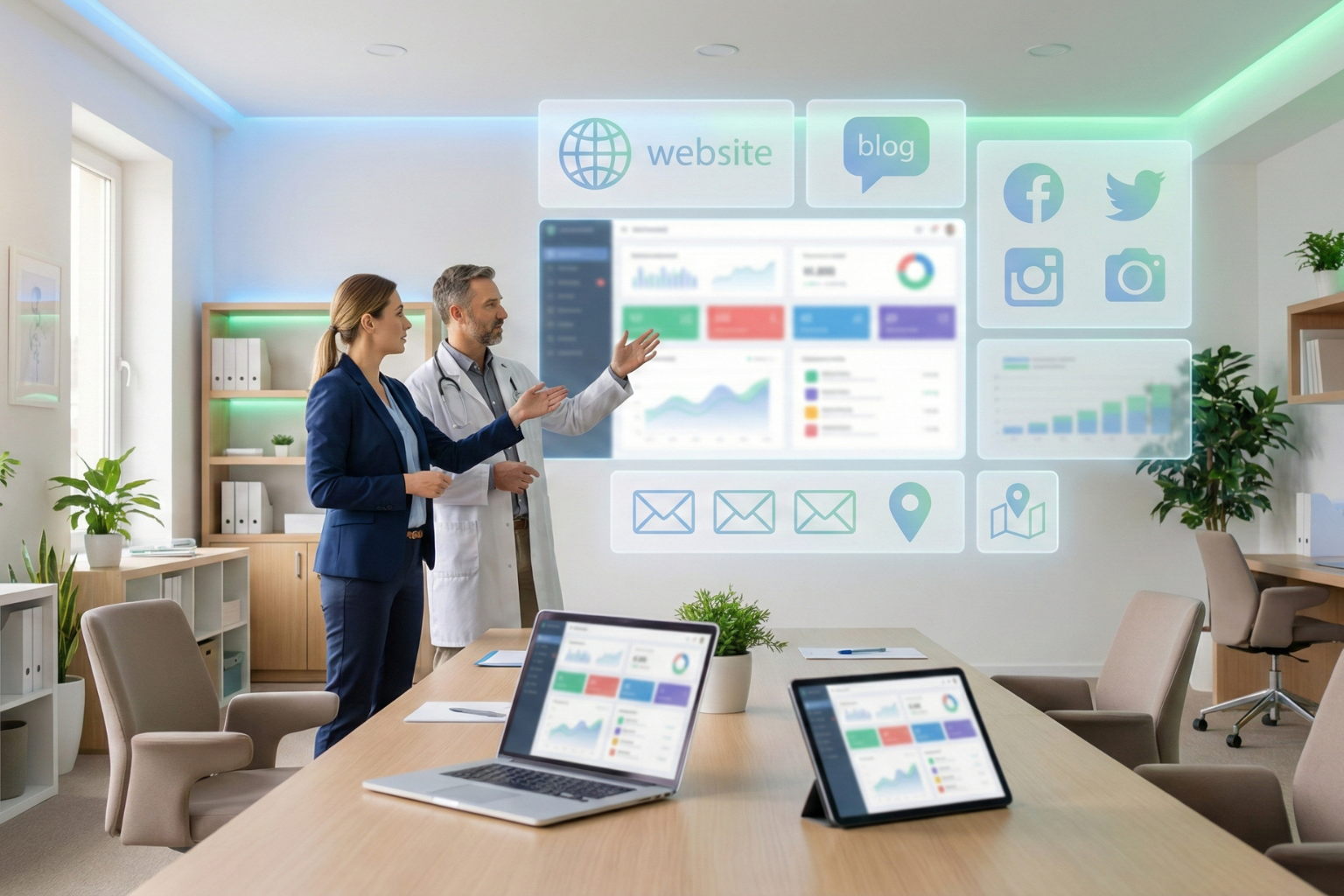
For an effective strategy, it is important to operate in an integrated way across the channels that deliver the most results. Key channels include:
1. Digital presence (website and blog)
A professional website builds credibility, facilitates contact, and allows information about specialties, services, and staff to be shared. A blog with original articles boosts SEO (Google ranking) and attracts qualified visitors. This channel can also act as a trustworthy information hub for patients.
2. Social media
Platforms like Instagram, Facebook, and LinkedIn help humanize care and bring professionals closer to the public. They should be used to share health tips, behind-the-scenes content, participation in events, and educational initiatives. Consistency and a well-defined visual identity are essential for recognition and engagement.
3. Google Business Profile
Essential for local clinics, this free tool allows you to appear in geo-targeted searches, display patient reviews, and provide contact information and business hours. It is one of the most powerful tools to attract nearby patients, especially when supported by positive ratings.
4. Email marketing and automation
Email tools are great for keeping patients informed about tests, follow-up appointments, or seasonal campaigns such as Breast Cancer Awareness Month or Men’s Health Month. They can also be used to send clinic news and updates.
5. Medical CRM
Customer Relationship Management (CRM) software helps organize contacts, track patient history, and automate communication with smart segmentation.
Ninsaúde Clinic, for example, offers an integrated CRM that enables the sending of personalized campaigns, automated follow-ups, and patient base segmentation, which facilitates both retention and reactivation of patients.
Value content: what to communicate to build authority
In medical marketing, content is one of the most important tools. It should educate, clarify, and demonstrate the professional's expertise. Effective formats include:
- Blog articles: covering topics of public interest, such as prevention, symptoms, and treatments;
- Live sessions and short videos: to explain procedures or answer frequently asked questions;
- Free e-books and guides: used as lead magnets for capturing contacts;
- Testimonials and clinical cases (with consent): showcase real experiences from other patients.
Additionally, it is essential to maintain clear, accessible language and a warm tone. Empathy should be present in all touchpoints. Even technical topics can be addressed in a didactic way to promote understanding and trust.
Metrics and results evaluation
Every medical marketing strategy must be measurable. Some important metrics include:
- Growth in online bookings;
- Increase in appointment attendance rate;
- Number of website visitors and time spent on the site;
- Email open and click-through rates;
- Reactivation of inactive patients.
With this data in hand, you can adjust campaigns, identify what works best, and optimize resources. Tools like Google Analytics and reports from management systems assist in monitoring and making informed decisions.

Patient loyalty and experience as an extension of marketing
Marketing does not end when the patient schedules an appointment. The care experience, both in-person and post-appointment, is part of the strategy.
Best practices include:
- Automated appointment reminders via SMS or WhatsApp;
- Pleasant and welcoming environments;
- Reduced waiting times and humanized care;
- Satisfaction surveys to identify areas for improvement.
Systems like Ninsaúde Clinic automate these processes, including appointment confirmations, digital check-ins, personalized reception call systems, and integration with the medical record—greatly enhancing the patient’s perception of value.
Engaged team: everyone's role in clinic marketing
An effective strategy depends on collective involvement. Receptionists, nurses, managers, and healthcare professionals must understand the clinic's proposal and maintain consistent communication and service standards.
Promoting internal training, aligning brand identity, and using service scripts are effective ways to ensure consistency and strengthen the clinic’s image. A patient-centered organizational culture should be reinforced daily.
How to maintain consistency without overloading the medical routine
One of the biggest challenges is maintaining regular publications and marketing actions without disrupting the healthcare routine. Some solutions include:
- Using post and email scheduling tools;
- Outsourcing execution to specialized agencies or healthcare marketing professionals;
- Creating a content library and following an editorial calendar;
- Investing in software that integrates CRM, scheduling, and electronic medical records.
With the right technology—such as Ninsaúde Clinic—medical marketing becomes a simple, automated task aligned with the clinic’s strategic objectives. This allows professionals to focus on what matters most: patient care.

Professionalism and empathy: the formula to win over patients
Medical marketing goes far beyond advertising. It is an integrated strategy that values the patient, enhances communication, and strengthens the clinic’s reputation. With planning, technology, and a focus on experience, it is possible to attract more patients, retain existing ones, and grow sustainably in the healthcare market.
Enjoyed these insights?
Keep following our blog for more content on clinic management, medical marketing, and healthcare innovation.
Are you a healthcare professional who hasn’t tried Ninsaúde Clinic yet? Discover how the platform can streamline processes and elevate the quality of patient care.
