

Unannounced patient absences are one of the main challenges faced by medical and multidisciplinary clinics. The so-called no-show directly impacts revenue, disrupts the medical schedule, overloads the front desk, and reduces financial predictability. For physicians and clinic managers, understanding how to reduce no-show with technology is no longer a competitive advantage — it is a strategic necessity.
In an increasingly competitive environment, where patient acquisition requires investment in healthcare marketing, paid traffic, and relationship building, losing appointments due to process failures means wasting revenue and team time. The good news is that the right technology, combined with a robust clinic management system, can completely transform this scenario.
What Is No-Show and Why Does It Harm Clinics?
No-show refers to a patient’s absence from a previously scheduled appointment without prior notice or cancellation. Although it may seem like a simple issue, its consequences are significant:
- Direct revenue loss
- Idle medical schedule
- Disruption in patient flow
- Negative impact on patient experience
- Difficulty closing cash flow
In clinics with a multi-provider schedule, the impact is even greater. A single empty time slot can create a domino effect, affecting metrics such as occupancy rate, average ticket value, and provider productivity.
Reducing missed medical appointments is therefore a strategic management decision.

Before we move on, one important note: if you manage a healthcare clinic and need better scheduling organization, a secure electronic health record, and centralized financial processes, Ninsaúde Clinic can streamline your daily operations. Get in touch to learn more.

The Root Cause: Communication Failure or Process Failure?
Many managers believe no-show is solely the patient’s responsibility. In reality, a large portion of missed appointments is linked to internal failures:
- Manual and inconsistent confirmations
- Lack of automated reminders
- Appointments scheduled far in advance without follow-up
- No clear cancellation policy
- Fragmented communication
Without an integrated online scheduling system, the clinic depends heavily on the front desk’s effort. This creates performance variability and increases the risk of oversight.
This is where healthcare technology becomes decisive.
Automated Appointment Confirmation: The First Step
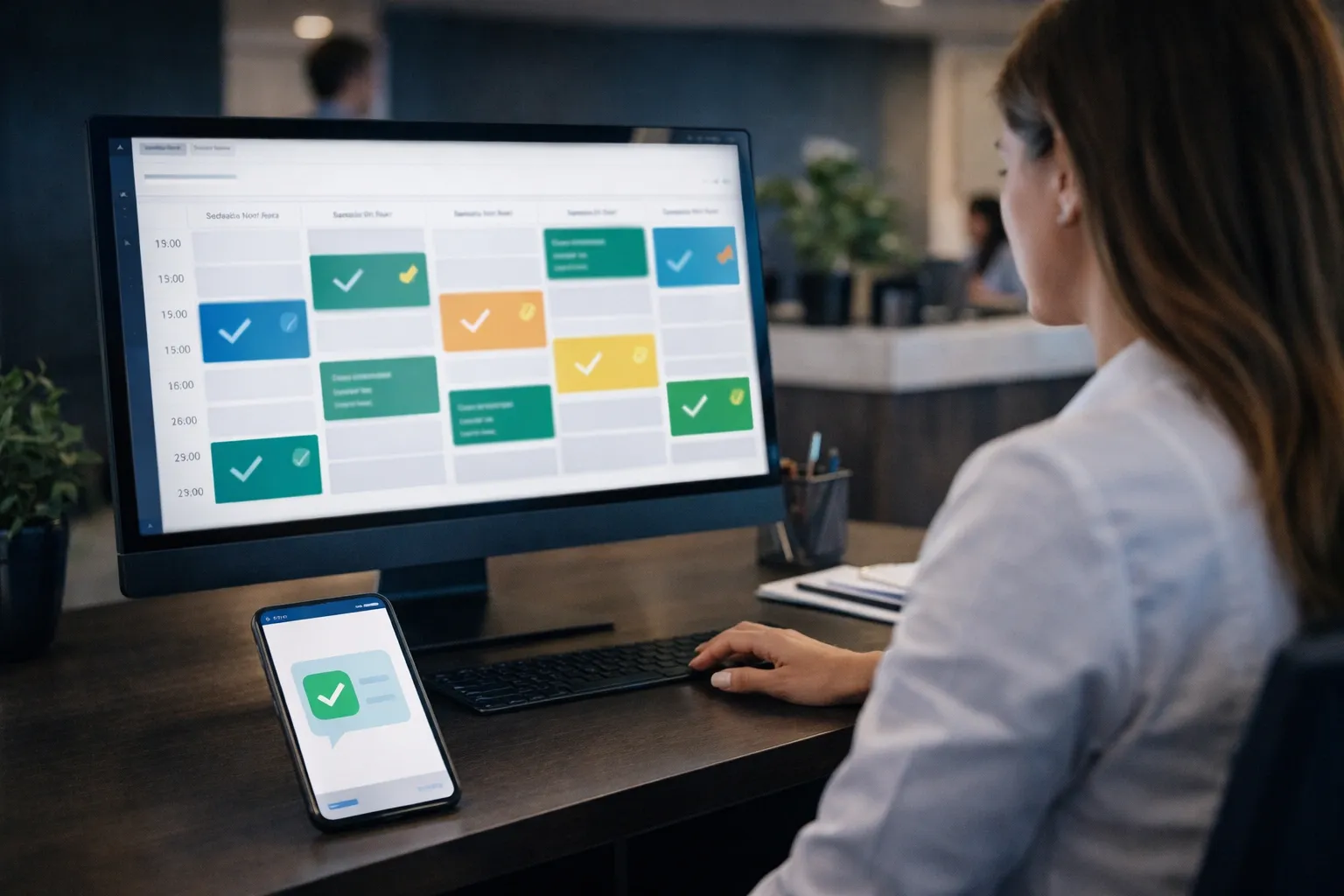
One of the most effective strategies to reduce no-show is automated appointment confirmation via SMS or WhatsApp.
When patients receive a structured reminder:
- They remember the commitment
- They can confirm in advance
- They can cancel if necessary
This simple action significantly reduces the no-show rate.
Modern management systems like Ninsaúde Clinic allow customized automated confirmations to be scheduled in advance. It is also possible to track who confirmed, who did not respond, and who canceled, enabling immediate action by the team.
Technology replaces improvisation with predictability.
Integrated Online Scheduling: Less Friction, More Commitment
Another factor influencing no-show is how the appointment is booked.
When scheduling is done by phone and recorded manually, the risk of misinformation increases. With an online scheduling system integrated into medical software, patients can:
- Choose date and time
- View clinic policies
- Receive automatic confirmation
- Have formal registration of their appointment
This increases the patient’s sense of responsibility for the reserved time slot.
For example, Ninsaúde Clinic offers an online scheduling link that can be embedded into the clinic’s website or social media, organizing the workflow directly within the multi-provider schedule.
Strategic Use of Data to Predict Absences
Reducing no-show is not only about reacting — it is about anticipating.
With a clinic management system that generates reports and performance indicators, managers can analyze:
- No-show rate per provider
- No-show rate per insurance plan
- Time slots with higher absence rates
- Patients with recurring no-show history
Based on this data, strategies may include:
- Reinforced confirmations for specific profiles
- Adjustments to critical time slots
- Differentiated policies for recurring absentees
Without structured data, decisions rely on perception. With data, they become strategic.

Digital Confirmation and Cancellation Policies
Technology also enables formal and transparent policies.
By integrating scheduling with digital terms and automated communication, clinics can:
- Inform minimum cancellation deadlines
- Require active confirmation
- Send reminders with quick cancellation options
This transparency reduces conflicts and improves patient experience.
Solutions like Ninsaúde Clinic help organize these workflows within the system itself, maintaining interaction history and traceability.
Prepayment as a Commitment Strategy
In some clinic models, especially private consultations or specific procedures, prepayment can effectively reduce missed appointments.
When patients pay before the appointment, attendance rates tend to increase significantly.
With features like Ninsaúde Pay integrated into the clinic management system, clinics can:
- Offer payment before the appointment
- Automatically record transactions in the financial module
- Improve revenue predictability
- Reduce delinquency
In addition to reducing no-show, this strengthens the clinic’s cash flow.
Automated Patient Journey
Reducing missed appointments also involves experience design.
A structured patient journey includes:
- Immediate confirmation after scheduling
- Reminder days before the appointment
- Reminder close to appointment time
- Clear arrival instructions
When patients perceive organization, perceived value increases.
A complete medical software solution centralizes these steps, integrating scheduling, communication, and electronic health records, preventing the front desk from juggling multiple tools.

Reducing No-Show in Multidisciplinary Clinics
Clinics with more than 20 providers face even greater challenges. A multi-provider schedule requires synchronization between:
- Front desk
- Healthcare professionals
- Finance department
- Clinical coordination
Without technology, growth generates operational disorder.
Ninsaúde Clinic was designed specifically for medium and large clinics, offering a unified view of the schedule, automated confirmations, financial control, and strategic reporting.
This transforms expansion into structured growth rather than operational overload.
Humanized Communication Supported by Technology
Automation does not mean depersonalization.
Technology should support humanized care, not replace it. Personalized messages, appropriate tone, and correct timing make a difference.
A well-configured system allows message segmentation, communication adaptation by patient profile, and consistent quality standards.
The result is reduced no-show without losing patient connection.
Key Indicators to Monitor
To ensure continuous improvement, essential indicators include:
- Monthly no-show rate
- Automated confirmation rate
- Average time between scheduling and appointment
- Revenue lost due to absences
- Schedule occupancy rate
With integrated financial reports, managers can clearly see the direct impact of no-show on revenue.
Technology without monitoring is underutilized. Monitoring without technology is unsustainable.
Technology as a Driver of Financial Predictability
When clinics reduce no-show:
- Schedules become more predictable
- Revenue stabilizes
- Team stress decreases
- Financial management gains clarity
A clinic management system that integrates scheduling, finance, CRM, and communication provides a strategic business overview.
Reducing missed appointments is not just about optimizing schedules — it is about protecting revenue.
Key Takeaways for Reducing No-Show with Technology
Reducing no-show with technology requires a structured approach. The main takeaways include:
- Automated confirmations reduce forgetfulness
- Online scheduling increases patient commitment
- Reports enable data-driven decisions
- Prepayment strengthens attendance rates
- Automated patient journeys improve experience
- Performance indicators ensure continuous improvement
- An integrated clinic management system is essential
Technology may not eliminate missed appointments entirely, but it drastically reduces their impact when properly implemented. For physicians and managers seeking sustainable growth, investing in comprehensive medical software like Ninsaúde Clinic transforms the schedule into a strategic asset rather than a vulnerability.
Enjoyed these insights?
Keep following our blog for more content on clinic management, medical marketing, and healthcare innovation.
Are you a healthcare professional who hasn’t tried Ninsaúde Clinic yet? Discover how the platform can streamline processes and elevate the quality of patient care.
