

Running a multidisciplinary clinic means juggling multiple schedules, different licensed professionals, overlapping workflows, and a patient journey that changes by specialty. In clinics that provide ABA services and care for autistic patients, complexity goes up fast: ongoing treatment plans, frequent documentation, constant caregiver communication, and a real need for standardization.
Most legal exposure doesn’t come from one dramatic mistake. It builds through small, repeated gaps: incomplete notes, weak consent documentation, inappropriate access to information, missing protocols, and improvisation that spreads as the team grows. The good news: most of it is preventable with governance, repeatable workflows, and a clinic management system that pulls everything into one place.
Know Where Legal Risk Really Starts
To reduce legal risk in a clinic, begin by mapping the most common exposure points:
- Documentation gaps: missing dates/times, missing signatures/attestations, vague rationale, conflicting notes across disciplines
- Weak consent workflows: missing proof of consent, outdated forms, incomplete acknowledgements
- Privacy and HIPAA: over-sharing, broad access, unsecured storage, and lack of auditability
- Communication with caregivers: guidance given through personal channels, inconsistent messaging, no traceability
- Staffing and accountability: unclear role ownership, inconsistent training, undefined responsibilities
- Billing and payer friction: denials, documentation mismatches, and disputes that escalate into complaints

From here, the goal is a practical compliance routine focused on prevention and proof: reducing risk while creating evidence of good practice.
Before we move on, one important note: if you manage a healthcare clinic and need better scheduling organization, a secure electronic health record, and centralized financial processes, Ninsaúde Clinic can streamline your daily operations. Get in touch to learn more.

Standardize the Electronic Health Record and the Clinical Timeline
In a multidisciplinary clinic, the EHR is more than a record. It’s your organized proof that care was delivered appropriately, consistently, and at the right time. To prevent legal issues, your electronic health record should function as a reliable timeline with:
- Clear provider identification and documentation of clinical responsibility
- Objective notes with clinical reasoning, interventions, and next steps
- Standardized templates by discipline, especially for ABA-related documentation
- Secure file storage with role-based access
- Audit history that shows when and how records were updated
This reduces future disputes about what was explained, what was done, and why.
A system like Ninsaúde Clinic can support this by centralizing the EHR, enabling standardized forms and templates across specialties, and organizing documentation by patient, provider, and encounter. That’s how you move from improvisation to process.

Turn Informed Consent Into a Workflow, Not a Form
Many clinics increase legal exposure by treating consent as paperwork instead of a repeatable process. In ABA-focused care—where treatment is ongoing and decisions are shared with caregivers—consent should be revisited and documented with consistency.
Create a minimum set of forms and acknowledgements, such as:
- Consent for treatment and information-sharing across the care team
- Service-specific consents where applicable
- Caregiver participation guidelines (when present during sessions)
- Attendance, cancellation, and make-up session policies
- Communication preferences and authorizations for reminders and updates
The key isn’t just having the document. It’s being able to prove the caregiver received it, understood it, and accepted it—tied to a date and connected to the patient record.
With Ninsaúde Clinic, clinics can operationalize this using integrated electronic signatures through Ninsaúde Sign, keeping the signed documents organized and linked to the clinical record. That helps prevent missing forms, outdated versions, and consent that can’t be verified.

HIPAA: Privacy Protection Starts in the Back Office
In the U.S., HIPAA compliance is often discussed as “technology,” but most risk comes from daily habits: shared passwords, front desk staff accessing clinical details they don’t need, providers viewing records outside their caseload, and sensitive files living in unsecured folders.
To reduce HIPAA risk, implement three pillars:
- Minimum necessary access
Each role should only access what’s required to do their job. Front desk staff typically should not see detailed clinical notes. Providers shouldn’t access patients outside their assigned care. - Auditability and traceability
Maintain logs of who accessed what, when, and why. If a complaint happens, you need evidence—not assumptions. - Centralized, controlled storage
Avoid storing sensitive documents on personal devices or unofficial channels. Define one secure source of truth.
Ninsaúde Clinic can contribute by enabling role-based permissions and helping keep documentation centralized, which reduces the chance of inappropriate access and unmanaged data sprawl.
Use Protocols to Reduce Human Error Across Disciplines
When a multidisciplinary clinic grows without protocols, misalignment becomes inevitable. Misalignment becomes risk: one clinician documents one way, another communicates differently, and caregivers interpret something else entirely. In ABA services, consistency is part of care—so standardization also becomes legal protection.
Build simple, repeatable protocols for:
- Initial evaluations, periodic re-evaluations, and plan updates
- Case conferences and documentation of interdisciplinary decisions
- Session notes and minimum required elements for each discipline
- Escalation flow for incidents and safety concerns
- Follow-up and caregiver alignment steps
Protocols don’t need to be bureaucratic. They need to be repeatable.
Systems with configurable templates and a library of forms—like Ninsaúde Clinic—help turn protocols into everyday execution through structured fields and checklists that reduce omissions.
Training and Accountability: Legal Safety Starts at Onboarding
Many clinic legal issues begin because new hires don’t understand “how we do things here.” That problem grows when hiring is frequent.
Create mandatory onboarding with a checklist covering:
- EHR documentation standards
- Communication rules with patients and caregivers
- Consent workflows and where forms live
- Incident response and escalation steps
- HIPAA expectations and practical do’s/don’ts
- Case conference cadence and handoff documentation
Also define role ownership in writing: clinical leadership, ABA supervision, treating clinicians, front desk, billing, and IT. Clear accountability prevents gaps where no one “owns” the risk.

Stop Relying on Scattered Messages With Caregivers
In autism care and ABA settings, caregiver communication is frequent. Risk rises when the clinic relies on personal texting, disconnected voice notes, and informal updates with no consistent record.
To reduce exposure:
- Define official channels and what can be discussed where
- Document clinically relevant guidance inside the EHR
- Standardize messages for preparation, cancellations, make-ups, and follow-ups
- Ensure significant changes and decisions are recorded consistently
The goal is simple: if a complaint happens, your clinic doesn’t depend on memory or screenshots. It depends on a complete clinical record.
When Appropriate, Recording Can Strengthen Documentation
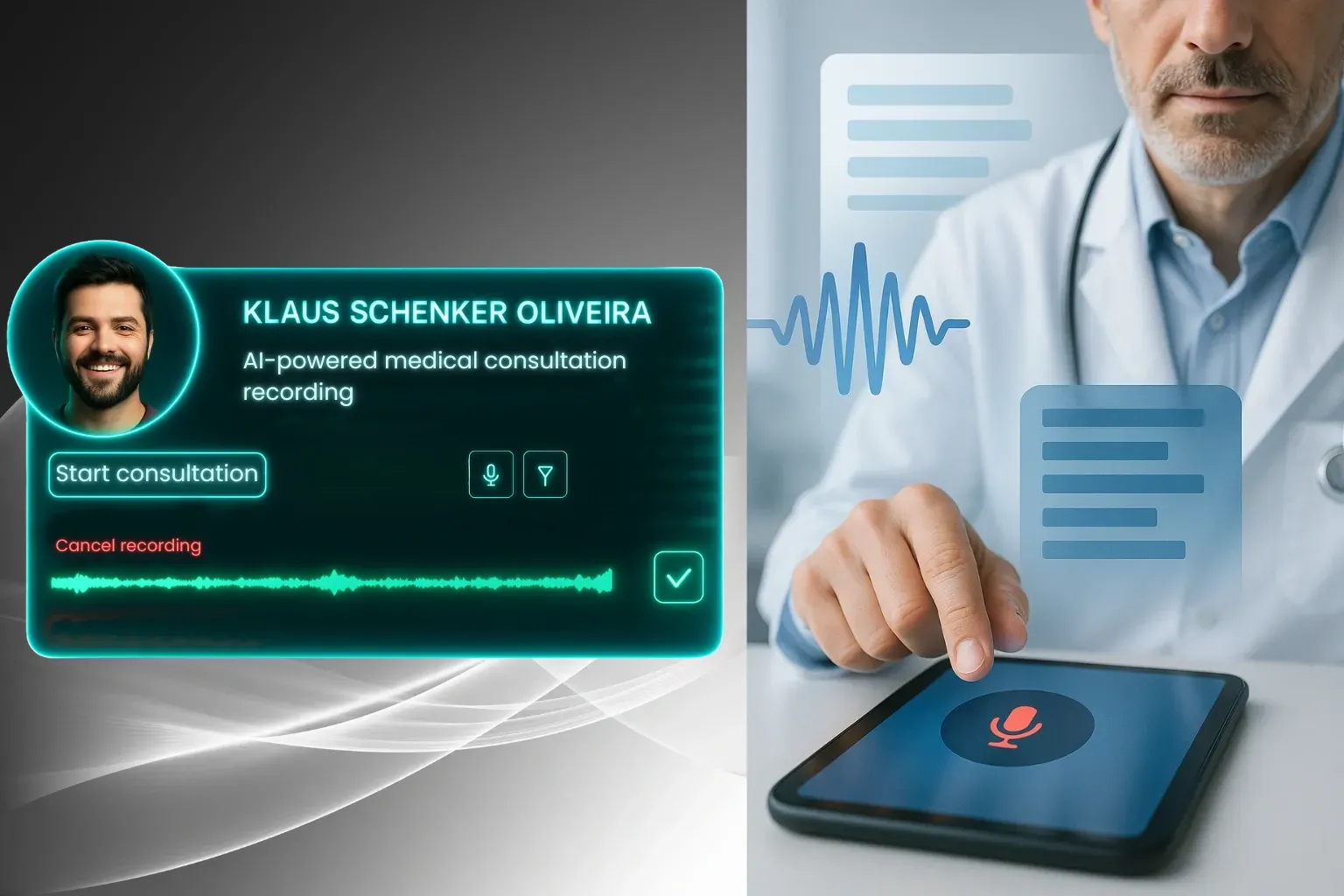
In certain situations, recording critical decisions and instructions can help reduce “he said/she said” disputes—if it’s done with proper consent, clear policy, and secure storage.
Ninsaúde Safe, for example, supports clinics by enabling audio recording tied to risk management and traceability, helping reduce exposure to disputes or legal claims based on conflicting versions of what was said.
Contracts and Vendor Access: Organize What’s Usually Messy
Legal risk also lives outside the therapy room: contractor agreements, vendor access, payer relationships, and third-party systems. In multidisciplinary clinics, it becomes a web quickly.
Practical checklist:
- Updated agreements for clinicians and contractors with scope, responsibilities, and confidentiality
- Service terms aligned to your care model and policies
- Business Associate Agreements (BAAs) where required under HIPAA
- Rules for IT access, integrations, and maintenance
- Document retention rules, version control, and renewal deadlines
As you scale, document governance becomes non-negotiable. Electronic signatures and centralized storage prevent lost contracts and outdated versions.
Monthly Internal Audits: The Habit That Prevents Crisis
If you want to prevent legal problems, don’t wait for a complaint to discover weaknesses. Build a simple monthly audit using a small sample of cases:
- Notes complete, timely, and properly attributed
- Consents and policy acknowledgements present and linked to the record
- Plan updates documented when clinically indicated
- Permissions reviewed and staff access aligned to roles
- Incidents documented and escalations recorded appropriately
This is inexpensive, improves quality, and builds operational maturity. Operational maturity is what reduces legal exposure.
Enjoyed these insights?
Keep following our blog for more content on clinic management, medical marketing, and healthcare innovation.
Are you a healthcare professional who hasn’t tried Ninsaúde Clinic yet? Discover how the platform can streamline processes and elevate the quality of patient care.
