

Dissatisfied patients are part of the reality of any clinic. What sets mature operations apart is the ability to respond with a method, reduce friction, and turn complaints into continuous improvement. Most of the time, dissatisfaction is not born from the clinical act itself, but from the experience: waiting time, communication gaps, unclear rules, scheduling failures, and lack of follow-up.
For managers, handling dissatisfaction well means protecting the brand, preventing rework, and keeping the team aligned. When patients feel heard and see a consistent solution, the clinic reduces the risk of negative reviews and increases the likelihood of loyalty. In this article, we will cover How to Handle Dissatisfied Patients in the Clinic
1) Why patients become dissatisfied
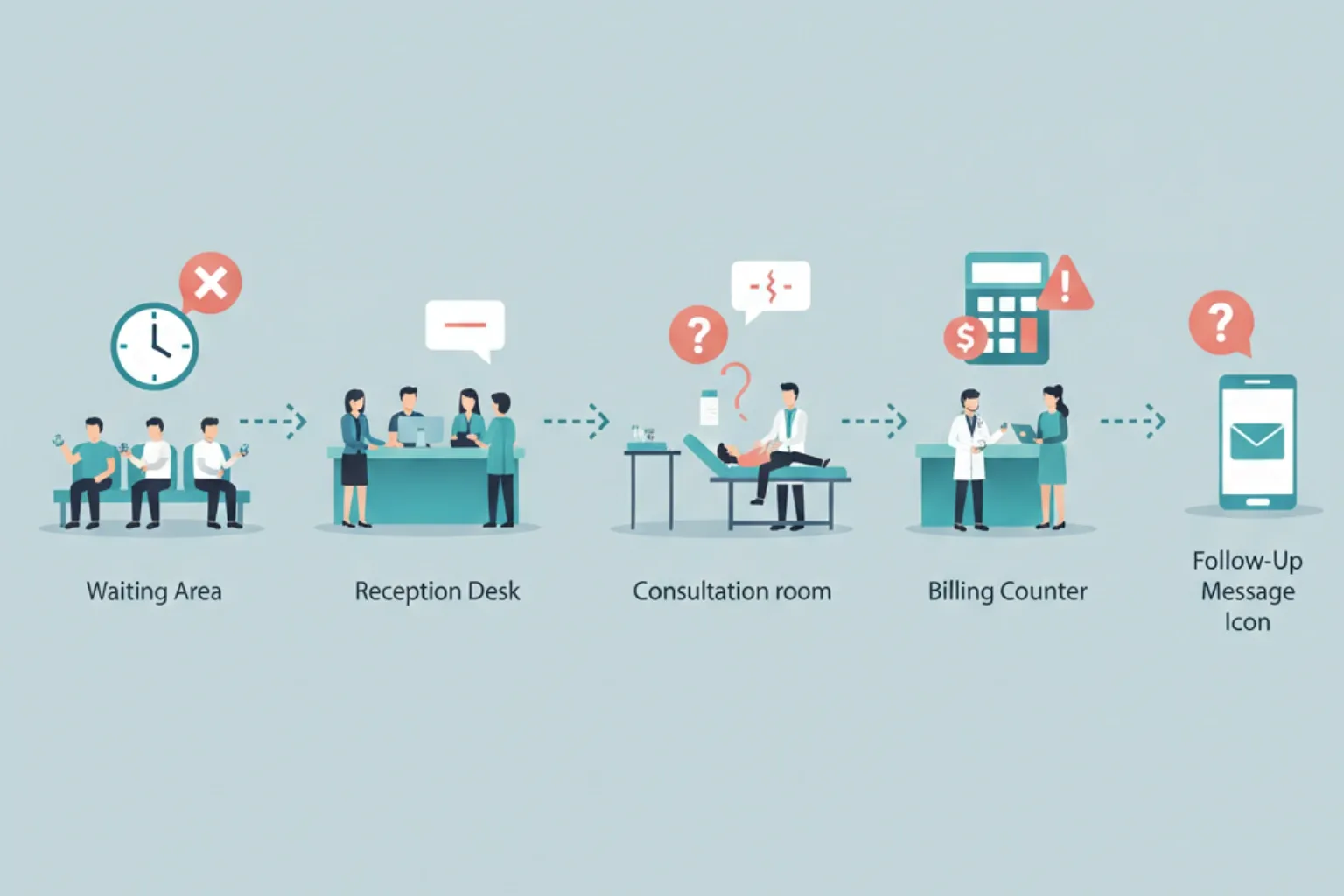
Before “putting out fires,” map the most frequent causes. Management improves when the clinic can separate operational problems (process) from misaligned expectations (communication).
Main triggers of dissatisfaction:
- Waiting time and cascading delays (overbooked schedules, too many walk-ins, unrealistic time per procedure).
- Poor communication (confusing instructions, overly technical language, little clarity about plans and timelines).
- Front-desk experience (inappropriate tone, lack of empathy, bureaucracy without explanation).
- Unclear rules and charges (return-visit policy, cancellations, fees, insurance vs. self-pay).
- No structured post-visit follow-up (no reminders, no organized return plan, doubts piling up).
Management tip: categorize complaints into 4 groups (scheduling, service/experience, billing, clinical) and track recurrence. This shows where to act first.
Before we move on, one important note: if you manage a healthcare clinic and need better scheduling organization, a secure electronic health record, and centralized financial processes, Ninsaúde Clinic can streamline your daily operations. Get in touch to learn more.

2) The hidden cost of ignoring a complaint
A poorly handled complaint rarely ends at the front desk. It can become a public review, treatment abandonment, and operational rework.
Most common impacts:
- Loss of future revenue (fewer follow-ups and referrals).
- Rework (rescheduling, refunds, calls, and internal explanations).
- Team burnout (defensive culture and lower productivity).
- Reputational risk (Google, social media, and word of mouth).
The goal is not to “win the argument,” but to restore trust quickly and consistently.
3) A practical protocol to resolve complaints safely
A simple protocol prevents improvisation and emotional responses. It also standardizes how the front desk, coordination, and clinicians act.
Triage: urgency, severity, and ownership
At first contact (WhatsApp, phone, front desk, or social media), focus on facts and expectations:
- What happened (objective description, no judgment).
- Impact on the patient (time, cost, distress, embarrassment).
- What they expect as a solution (explanation, priority slot, refund, follow-up).
- Who decides (front desk? coordinator? manager? physician?).
Practical rule: the higher the clinical, emotional, or legal risk, the faster the escalation should be.

Active listening: phrases that de-escalate conflict
Acknowledging is not agreeing; it is showing respect and commitment.
- Validate the experience: “I understand how that could be frustrating.”
- Commit to action: “I’ll document this and get back to you with a plan.”
- Avoid blame: replace “you were late” with “let’s understand how the schedule got tight and how we can adjust.”
When the patient feels cared for, they are more likely to share information and accept balanced solutions.
Documentation and traceability: what must be recorded
A complaint without documentation turns into noise and comes back bigger. Standardize what to record:
- date/time and channel;
- objective description;
- area/professional involved;
- decision and return deadline;
- owner responsible for follow-through;
- outcome.
When the clinic centralizes scheduling, patient history, and interactions, it becomes easier to retrieve context and respond with confidence.
Resolution: fast, fair, and consistent
The best resolution fixes the issue without creating risky exceptions. Options that work well:
- Priority rescheduling when the failure was operational.
- Clarification follow-up (physician/coordinator) when there is a clinical doubt.
- Billing review when the policy was poorly communicated.
- Action plan when the cause is systemic (e.g., recurring delays).
If the clinic cannot meet the request, explain transparently and offer a feasible alternative. A well-founded “no” is often better accepted than a “yes” that is not delivered.
Follow-up: the step that prevents negative reviews
After resolving, check in within 24–72 hours:
- “Is everything okay with what we agreed?”
- “Is there anything still pending?”
This simple touchpoint reduces the chance the patient seeks public validation and reinforces continuity of care.

4) Prevention: how to reduce repeat dissatisfaction
Solving complaints is essential; prevention is what improves margin and reputation over time.
Communication before the appointment
Many complaints come from unclear expectations. Send clear, standardized guidance:
- preparation and required documents;
- cancellation, return-visit, and late-arrival policy;
- pricing, insurance vs. self-pay, and payment methods;
- the official channel for questions.
Automation here saves time and reduces back-and-forth. Automatic confirmations and reminders decrease no-shows and front-desk rework.
Better schedule design to reduce delays
Cascading delays are a major source of conflict. Adjust the schedule with operational rules:
- realistic time per procedure (including final guidance);
- buffers at peak times;
- limits on walk-ins per time block;
- monitoring delays by clinician and reason.
When scheduling is integrated into the clinic workflow, managers see bottlenecks and can intervene before they become complaints.
Billing transparency and frictionless documentation
Billing disputes and “lack of information” usually come from surprise and missing records. To reduce friction:
- standardize scripts for insurance and self-pay;
- document estimates and return/cancellation policies;
- keep receipts and proof easily accessible;
- use terms and consent forms when needed.
Here is the logic: the manager’s pain (noise and disputes), the solution (process + records), and a practical example. When payments and documents are integrated into the visit flow, the clinic responds faster and with fewer errors. In Ninsaúde Clinic, for example, features such as payment links/Pix and electronic signatures for forms help create traceability and reduce arguments caused by unclear information.

Post-visit follow-up that creates value (and reduces drop-off)
Many dissatisfactions show up later: uncertainty about the plan, no return appointment, a “missing” patient who comes back upset. A simple post-visit flow helps:
- reminders for follow-ups and exams;
- educational messages by patient profile;
- a short satisfaction pulse;
- reactivation of inactive patients.
CRM and automation tools help segment the patient base and maintain ongoing communication. In Ninsaúde CRM, for example, you can filter patients by insurance plan, profile, or time since last visit and trigger targeted campaigns in a few clicks.
5) How to reply to negative reviews (Google and social media)
A good response is crisis management. The goal is to show professionalism without exposing sensitive data.
Best practices:
- keep it brief, human, and professional;
- do not disclose health information (privacy/LGPD);
- invite the patient to an official private channel and say you will investigate;
- mention process improvements when appropriate.
Adaptable template:
- “We’re sorry about your experience. Our commitment is to listen and resolve. To better understand what happened and correct what’s necessary, please contact us through our official private channel.”
6) Metrics and cadence to learn from every case
Without measurement, the clinic repeats the same problems. Track a few metrics with discipline:
- Response SLA (time to first reply and to resolution);
- complaints per 100 visits;
- top 5 reasons (monthly ranking);
- rework generated (reschedules/refunds);
- post-resolution satisfaction (simple question: “Was it resolved?”).
Recommended cadence:
- biweekly 30-minute meeting with front desk + coordination;
- review critical cases and root causes;
- define one corrective action per cycle;
- share learnings with the team.

Quick checklist for the team (pocket standard)
Keep this checklist visible at the front desk and with coordinators to standardize the response:
- listen without interrupting and validate;
- document facts, channel, time, and people involved;
- assess urgency and escalate if needed;
- define a feasible solution and deadline (SLA);
- communicate clearly, without blame;
- execute the agreed action;
- follow up in 24–72 hours;
- record the outcome and root cause.
When dissatisfaction is well managed, it becomes trust (and a competitive advantage)
Every clinic faces friction: delays, doubts, billing, and strong emotions. The differentiator is having process, training, and documentation to respond quickly, resolve consistently, and learn from every case.
When the clinic combines a clear protocol with technology that organizes scheduling, patient history, and communication—and strengthens pre-visit and post-visit care—dissatisfaction stops being a threat and becomes a management thermometer. The result is predictable: less conflict, more trust, and a safer experience for patients and teams.
Enjoyed these insights?
Keep following our blog for more content on clinic management, medical marketing, and healthcare innovation.
Are you a healthcare professional who hasn’t tried Ninsaúde Clinic yet? Discover how the platform can streamline processes and elevate the quality of patient care.
