

Identifying patients who have stopped returning to your clinic is one of the most effective ways to improve patient retention and recover missed appointment opportunities.
In many cases, a patient attends a consultation, exam, or procedure and does not return for follow-up care. Sometimes they believe their issue has already been resolved. In other situations, they simply forget to schedule a return visit.
In this article, we show how to use Ninsaúde Clinic’s patient prospecting reports to identify these patients and strengthen your relationship with them.
Why do patients stop returning to the clinic?
A patient's absence does not necessarily indicate dissatisfaction with the care received. In many cases, patients simply lose contact with the clinic over time.
Some common situations include:
- Forgetting a follow-up appointment recommended by the healthcare professional;
- Interrupting long-term treatments;
- Changes in routine or relocation to another city;
- Lack of follow-up communication from the clinic;
- Feeling that the problem has already been resolved;
- Difficulty finding available appointment times.
Regardless of the reason, patients who stop returning represent opportunities that can often be recovered through relationship-building efforts.
That is why identifying these patients is the first step toward increasing retention and supporting the clinic’s growth.

How do patient prospecting reports help improve patient retention?
Patient retention depends on continuous follow-up. When a clinic can identify which patients have interrupted treatment or stopped returning, it becomes possible to develop more targeted strategies to reconnect with them.
Patient prospecting reports are designed specifically for this purpose.
Using these reports, clinics can:
- Identify patients who have not returned;
- Contact patients by phone, WhatsApp, or email;
- Reinforce the importance of continuing treatment;
- Run patient relationship campaigns;
- Increase return visit rates;
- Improve appointment schedule utilization.
This process becomes even more effective when managed through a clinic management platform such as Ninsaúde Clinic, which centralizes patient information and makes it easier to generate strategic reports for decision-making.
How to access patient prospecting reports
The reports are available through the following menu:
Appointments → Reports
After opening the reports screen:
- Select the Patients option.
- Under Report type, choose one of the available prospecting reports.
Each report serves a specific purpose and can support different patient relationship strategies.
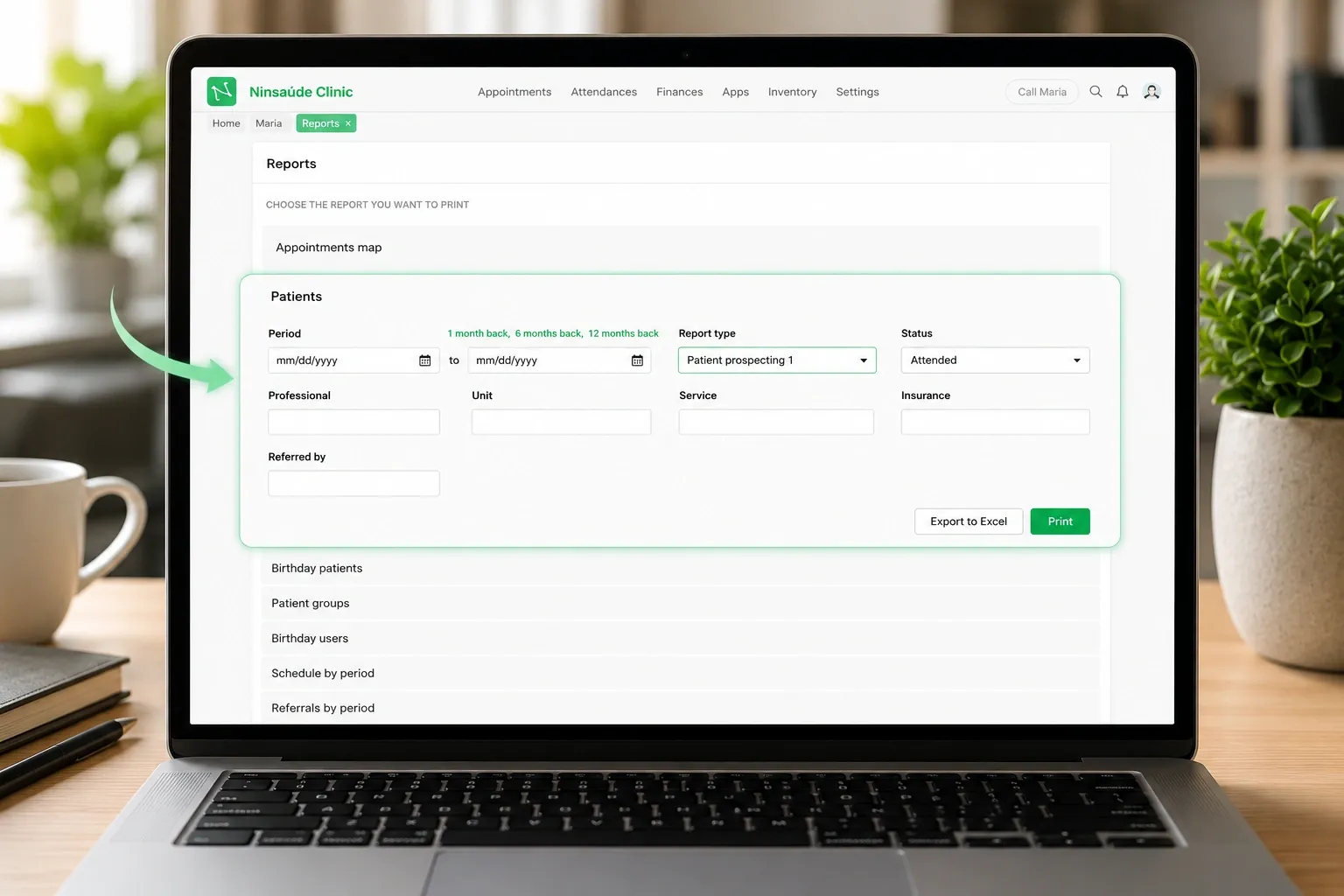
Patient prospecting report 1
Patient Prospecting Report 1 displays patients who had only one appointment at the clinic and did not return afterward.
This report is useful for identifying patients who had an initial interaction with the clinic but did not continue their care.
In addition to identifying these patients, the report can display valuable information for patient outreach activities, including:
- Patient name;
- Phone number;
- Email address;
- Referring source;
- Last healthcare professional who provided care;
- Last service performed;
- Amounts paid.
When should this report be used?
This report is especially useful for clinics that want to monitor first-time patients and develop strategies to improve return visit rates.
By quickly identifying patients who did not return after their first appointment, the team can conduct personalized outreach and create targeted campaigns to encourage new bookings.
Patient prospecting report 2
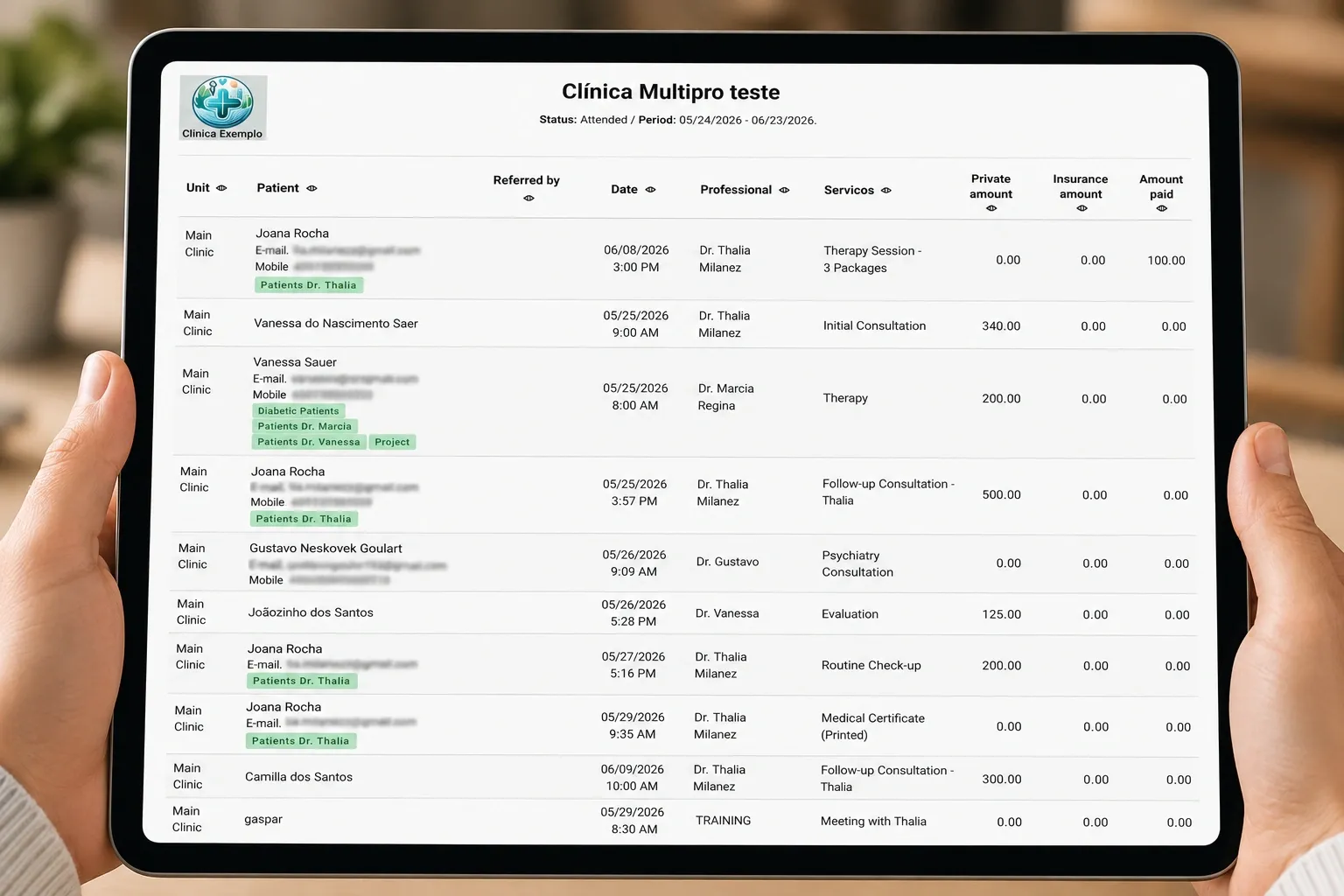
Patient Prospecting Report 2 takes a different approach.
Instead of showing only patients who visited the clinic once, it identifies patients who attended the clinic during a specific period but do not have any future appointments scheduled from the current date onward.
This makes it possible to identify patients who have visited the clinic multiple times but have interrupted their follow-up care.
This report can be especially valuable for clinics that provide ongoing treatments, periodic follow-up appointments, or long-term care programs.
When should this report be used?
Patient Prospecting Report 2 helps identify patients who already have a history with the clinic but have stopped scheduling new appointments.
This allows the team to act proactively, helping prevent treatment abandonment and improving patient retention.
What do the private, insurance, and amount paid columns mean?
In Patient Prospecting Report 2, there are three financial value columns:
- Private;
- Insurance;
- Amount paid.
The Private and Insurance fields represent the clinic’s standard pricing for a specific service or appointment.
The Amount paid column shows the amount actually paid by the patient.
This information is important because discounts may sometimes be granted during the appointment.
By reviewing this history, the commercial or patient relationship team can conduct future negotiations in a more informed and personalized way.
How do these reports support clinic management?
Patient prospecting reports do more than simply identify patients who have not returned.
The information provided can also help managers identify behavioral patterns and opportunities to improve clinic processes.
By reviewing these reports regularly, it becomes possible to answer questions such as:
- Which services have the lowest return rates?
- Which healthcare professionals achieve the highest patient retention?
- During which periods do treatment interruptions occur most frequently?
- How many patients fail to return after their first appointment?
These insights help clinics make more strategic decisions, improve patient relationship processes, and identify growth opportunities that might otherwise go unnoticed in daily operations.

Did you enjoy this information?
Keep following our blog for more content about healthcare management, medical marketing, and healthcare innovation.
Are you a healthcare professional and still unfamiliar with Ninsaúde Clinic? Discover how the platform can optimize processes and improve the quality of patient care.
Article updated on June 23, 2026
