

HIPAA compliance isn’t just a legal requirement in US healthcare—it’s day-to-day operations. As practices grow across providers, locations, and patient touchpoints, PHI moves quickly through scheduling, intake, EHR documentation, imaging, e-prescribing, billing, and patient communications. Without disciplined workflows and a privacy-and-security-ready clinic management system, the risk goes beyond penalties to reputation loss, patient churn, staff burnout, and avoidable downtime.
The most reliable approach is to make HIPAA routine execution: limit access by role, document permissions and disclosures, control exports, and maintain clear auditability around PHI. This guide covers the must-have processes and platform features to support that, using Ninsaúde Clinic as a practical example of a system that strengthens internal workflows while enabling HIPAA-aligned controls.
1) What HIPAA requires in daily clinic operations
HIPAA is primarily about protecting PHI through administrative, physical, and technical safeguards. In day-to-day practice operations, the most practical requirements map to a small set of repeatable controls:
- Minimum necessary access to PHI
- Role-based access control across staff functions
- Activity logging and audit trails
- Secure transmission and storage of PHI
- Policies, procedures, and workforce training
- Incident response and breach readiness
- Business Associate Agreements (BAAs) with vendors that handle PHI
Many clinics struggle because they rely on informal processes: shared logins, printed documents, uncontrolled exports, personal email, or loosely managed messaging. A centralized EHR and clinic management platform reduces those workarounds by moving routine tasks inside controlled workflows.
Before we move on, one important note: if you manage a healthcare clinic and need better scheduling organization, a secure electronic health record, and centralized financial processes, Ninsaúde Clinic can streamline your daily operations. Get in touch to learn more.

2) Map your PHI data flow before changing any settings
Most clinics underestimate how many places PHI is created and copied. The EHR is only one part. A clean HIPAA program starts with a simple map of where PHI is collected, processed, shared, and stored.
Map by stage:
- Patient acquisition and scheduling (website, phone, messaging)
- Registration and intake (demographics, insurance, forms)
- Clinical care and EHR documentation (notes, orders, results, imaging)
- Billing and revenue cycle workflows (claims, invoices, statements)
- Patient communications (reminders, follow-ups, portals)
- Storage, retention, and disposal (documents, backups, archiving)
This map identifies your highest-risk handoffs. A system like Ninsaúde Clinic helps reduce blind spots by unifying scheduling, EHR workflows, documents, and operational routines in one environment, which makes it easier to enforce consistent safeguards.
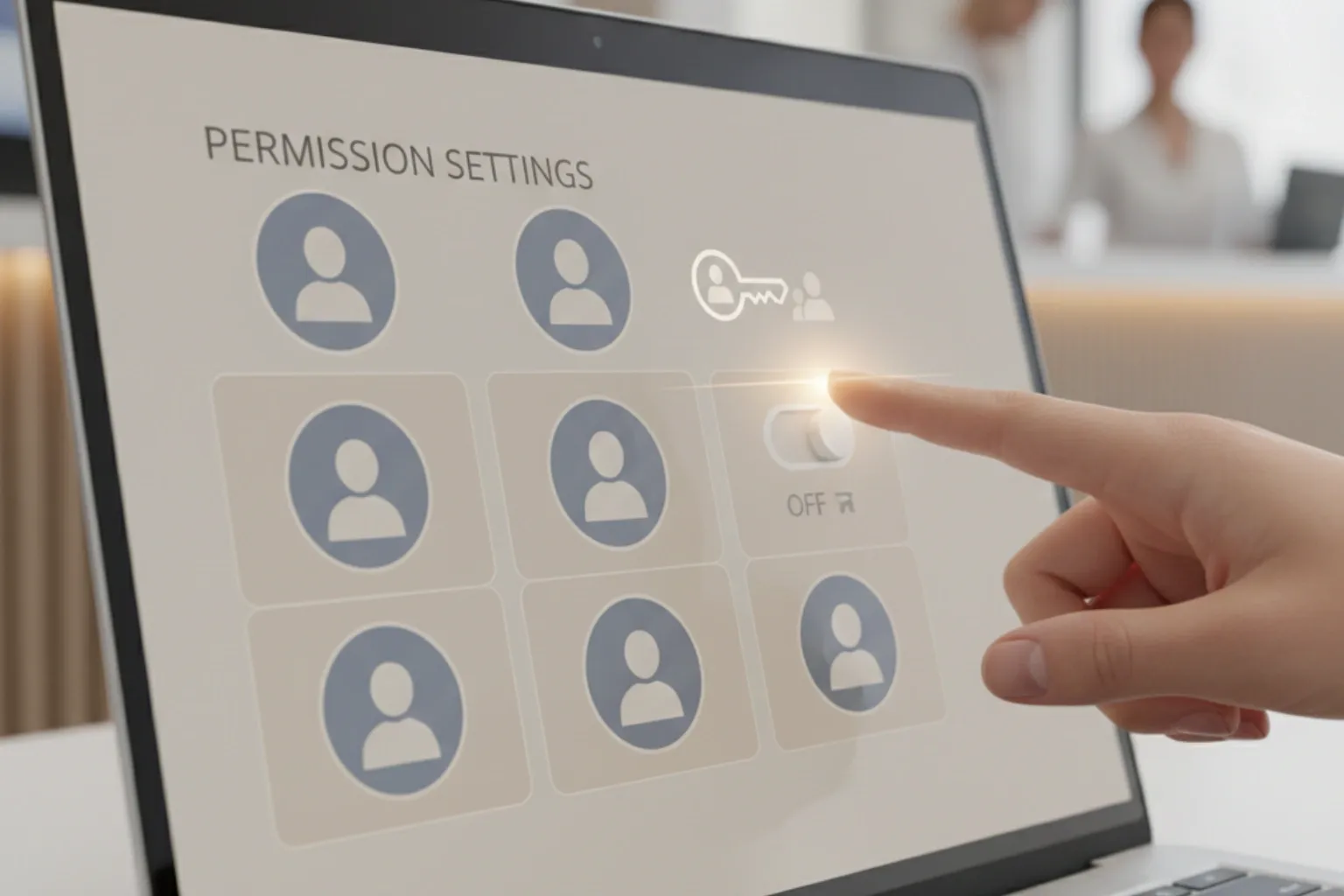
3) Role-based access control and the minimum necessary standard
The most common HIPAA failure mode is not an external hacker. It is internal overexposure: staff viewing more PHI than they need, accessing the wrong patient record, or keeping broad permissions long after a role changes.
Your clinic management system should support:
- Permissions by role (physician, nurse, front desk, billing, admin)
- Least-privilege access aligned to job duties
- Restrictions by location, unit, or care team when applicable
- Rapid offboarding and access revocation on termination
- No shared credentials and clear user accountability
When a platform supports granular permissions and clean user lifecycle management, you reduce the chance of inappropriate access and you reduce operational friction. Ninsaúde Clinic is a useful example in this context because it supports structured workflows and access restriction concepts that make it easier to run a predictable operation at scale.
4) Audit logs and traceability: if it is not logged, it is hard to defend
In HIPAA, accountability matters. When a patient asks who accessed their records or when leadership needs to investigate an incident, you need evidence quickly.
Key logging capabilities to require:
- Access logs (user, time, record accessed, action performed)
- Change history for clinical documentation
- Tracking for exports, downloads, printing, and sharing actions
- Reporting for unusual patterns (high-volume access, after-hours access)
Audit logs are not only compliance. They are operational intelligence. They reveal training gaps, workflow problems, and risky behavior before it becomes a reportable incident.

5) Encryption, backups, and infrastructure controls that reduce real-world risk
HIPAA does not prescribe one vendor architecture, but it expects reasonable protections. In practice, clinics should focus on three fundamentals:
- Encryption in transit for PHI moving between devices and systems
- Secure storage and controlled access to documents and images
- Backups with defined retention and tested recovery procedures
The biggest practical improvement many clinics can make is eliminating PHI stored locally on desktops, shared drives, or USB devices. Centralize files inside your clinic management system. Reduce reliance on personal email for document exchange. Standardize how imaging and reports are attached to the patient record.
A platform approach like Ninsaúde Clinic supports this kind of centralization, which reduces the number of uncontrolled PHI copies created by the workforce.
6) Vendor management and BAAs: the most overlooked HIPAA requirement
Even if your internal workflows are strong, HIPAA exposure increases when vendors touch PHI: EHR vendors, billing services, transcription providers, cloud storage, analytics tools, and integration partners.
Operational checklist:
- Identify vendors that create, receive, maintain, or transmit PHI
- Ensure a Business Associate Agreement is in place where required
- Verify security expectations contractually and operationally
- Limit vendor access to minimum necessary
- Require secure integration methods and authentication
If you integrate systems, prefer governed integrations over ad hoc exports. Use controlled APIs and authenticated workflows rather than manual file sharing. This reduces the number of places PHI can leak.
7) Standardize front-desk routines: the #1 PHI leakage zone
Front-desk and scheduling are where PHI leaks most often because this is where volume and speed collide with human pressure. The solution is not more rules. It is fewer, clearer routines supported by the system.
High-impact routines:
- Avoid speaking PHI out loud at the counter
- Verify identity before releasing documents
- Reduce paper notes and parallel spreadsheets
- Standardize intake fields so staff do not improvise
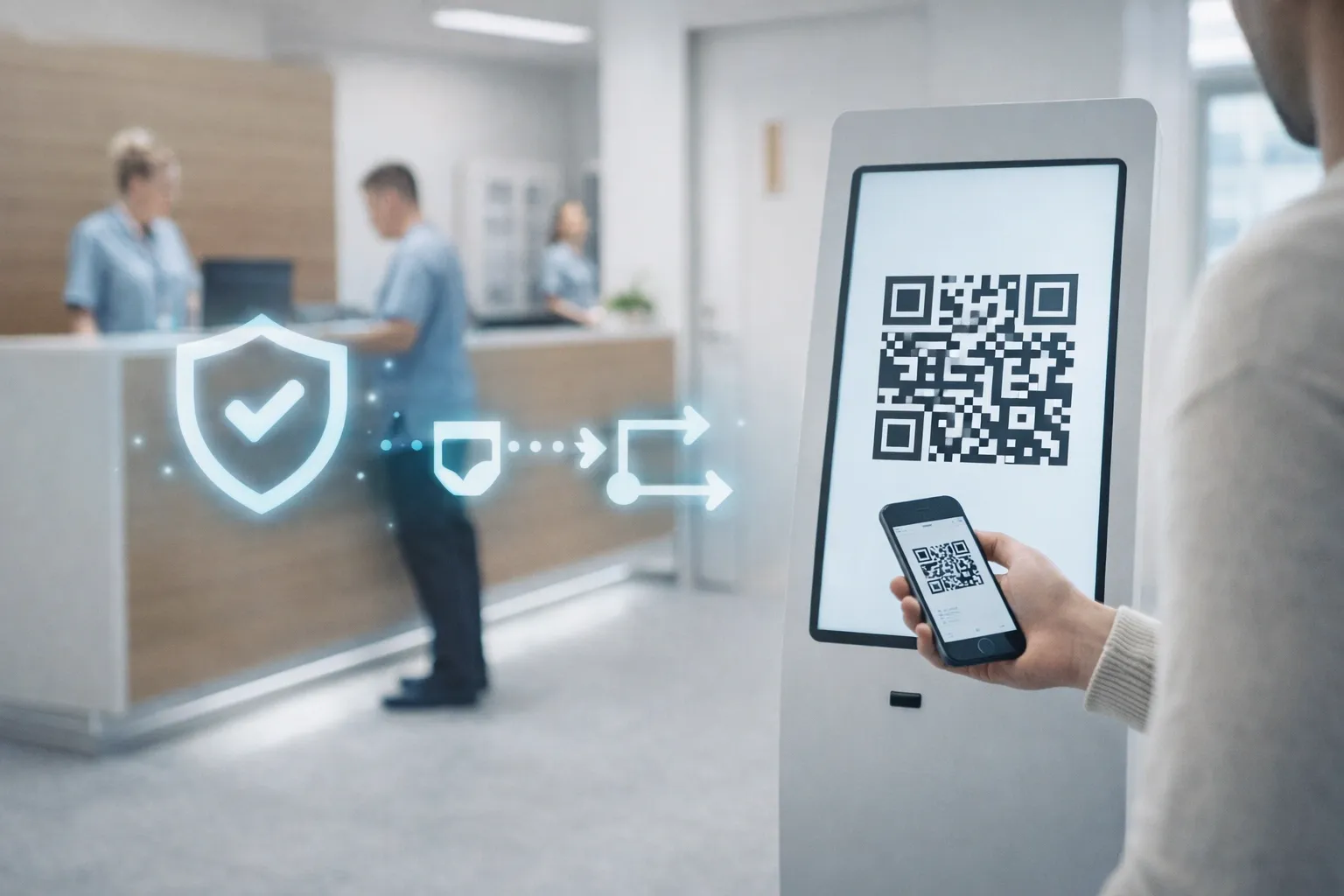
- Use digital check-in and structured forms when possible
When the clinic runs these workflows inside a single platform like Ninsaúde Clinic, the team handles fewer manual handoffs, fewer duplications, and fewer uncontrolled copies of PHI, which improves both compliance and throughput.
8) Documents, imaging, and sharing controls that prevent uncontrolled PHI spread
Files are where many practices lose control: PDFs, imaging reports, photos, scanned IDs, consents, referral letters. HIPAA-aligned operations require you to standardize storage and sharing.
Your system should enable:
- Centralized document storage tied to the patient record
- Role-based permissions for sensitive document types
- Controlled sharing and clear disclosure workflows
- Limits on exporting and downloading by role
- Traceability for who accessed and shared what
If your practice uses multiple locations or specialties, the case for centralization is even stronger. Fragmented storage leads to staff workarounds, and workarounds create compliance gaps.
9) Policies, training, and workforce discipline: what software cannot do alone
Technology is not enough. HIPAA compliance requires:
- Assigned responsibility (privacy officer and security officer, formal or functional)
- Written policies and procedures (access, devices, passwords, retention, disclosures)
- Workforce training on hire and at least annually
- Sanction policy for repeated violations
- Periodic risk analysis and risk management actions
The clinic management system makes compliance easier by reducing the number of places PHI lives, but culture closes the gap. Training should be scenario-based and tied to daily workflows: scheduling, intake, EHR use, billing, and patient communications.

10) Incident response and breach readiness: speed beats perfection
Incidents happen: misdirected messages, improper disclosure, lost devices, suspicious logins. A mature practice responds fast and documents everything.
A practical incident response flow:
- Identify and contain (disable access, revoke sessions, stop sharing)
- Document the event (what happened, who was involved, what PHI)
- Assess impact (scope, sensitivity, likelihood of compromise)
- Correct the cause (training, permissions, workflow, system configuration)
- Execute notification duties when required under HIPAA breach rules
Platforms with audit logs, access controls, and centralized records accelerate every step because you can locate evidence and limit exposure quickly.
Key takeaways for HIPAA compliance with your clinic system
- HIPAA compliance is operational: access control, auditability, and standardized workflows
- Map your PHI flow from scheduling through billing, retention, and disposal
- Enforce role-based permissions and minimum necessary access across the workforce
- Require audit logs, change history, and export tracking to support accountability
- Centralize documents and EHR workflows to reduce PHI spread across side channels
- Manage vendors with BAAs where required and govern integrations tightly
- Train staff with real scenarios and reinforce policy with repeatable routines
- Use a robust clinic management platform such as Ninsaúde Clinic to improve internal process consistency while supporting HIPAA-aligned safeguards
Enjoyed these insights?
Keep following our blog for more content on clinic management, medical marketing, and healthcare innovation.
Are you a healthcare professional who hasn’t tried Ninsaúde Clinic yet? Discover how the platform can streamline processes and elevate the quality of patient care.
