
Mozambique’s healthcare system faces important structural challenges, but it has also been undergoing significant transformation in recent years. The growth of the private healthcare sector has contributed to the emergence of new medical clinics, especially in major cities, expanding access to specialized care and healthcare services.
In this context, many physicians have also taken on administrative responsibilities within their own clinics. In addition to caring for patients, these professionals must organize teams, manage medical schedules, monitor financial performance, and ensure that internal processes operate efficiently. In this article, we explore how doctors manage clinics in Mozambique, the main challenges involved, and how technological solutions can support more structured clinic management.
The growth of private clinics in Mozambique
In recent years, the private healthcare sector in Mozambique has gained prominence as a complement to the public system. Private clinics have emerged mainly in urban centers such as Maputo, Matola, Beira, and Nampula, offering specialized consultations, diagnostic services, and faster access to medical care.
This growth has led many physicians to become healthcare entrepreneurs. Opening a clinic involves responsibilities that extend far beyond clinical care.
These responsibilities typically include:
- Structuring the medical schedule
- Hiring and managing staff
- Monitoring the clinic’s finances
- Organizing patient medical records
- Planning the strategic development of the clinic
Clinic management therefore requires administrative capabilities. Even clinics with strong patient demand may struggle operationally if their processes are not properly organized.

Before we move on, one important note: if you manage a healthcare clinic and need better scheduling organization, a secure electronic health record, and centralized financial processes, Ninsaúde Clinic can streamline your daily operations. Get in touch to learn more.

The physician as a clinic manager
In many Mozambican clinics, the physician also plays the role of manager. Unlike large hospitals that have structured administrative departments, smaller clinics often rely directly on the organization of the physician who owns or leads the practice.
This means physicians must divide their time between patient care and business management.
Common responsibilities handled by physician managers include:
- Supervising administrative and healthcare staff
- Managing the consultation schedule
- Monitoring patient flow
- Overseeing clinic payments and expenses
- Ensuring proper documentation of patient records
This reality requires leadership and organizational skills. Many physicians develop these competencies gradually as their clinics grow and demand more structured processes.
Challenges in organizing patient information
One of the most common challenges in managing medical clinics in Mozambique is organizing patient clinical information.
In many clinics, paper records are still widely used. While this method can work in small practices, it becomes difficult to manage as the number of consultations increases.
Common problems associated with paper records include:
- Difficulty quickly locating patient history
- Risk of lost or misplaced documents
- Lack of standardized clinical documentation
- Difficulty sharing information between professionals
These issues can affect continuity of care and reduce the efficiency of clinical appointments.
For this reason, many clinics are moving toward electronic health record systems that allow structured and secure storage of patient information.

Digitalization and clinic management systems
Digital transformation has become an important trend in healthcare management across many African countries, including Mozambique. Digital systems help centralize information and automate administrative processes.
A clinic management system can integrate different operational areas within a single platform, making daily work easier for healthcare teams.
Typical features include:
- Digital medical scheduling
- Electronic health records
- Patient registration
- Financial reports
- Appointment management
Solutions such as Ninsaúde Clinic help physicians and healthcare managers better organize their operational workflows. A structured system can reduce administrative errors and improve overall clinic efficiency.
A real-world example of this digital transformation is the Kidz Kare Centro Médico Infanto Juvenil, a clinic in Mozambique that uses the Ninsaúde Clinic software to support internal organization and improve patient care management.
Organizing the medical schedule
The medical schedule is one of the pillars of efficient clinic management. When schedules are poorly organized, delays and appointment conflicts can negatively impact both staff and patients.
In many clinics, appointment booking is still handled manually, which can lead to scheduling errors or difficulties tracking follow-up visits.
A well-structured schedule helps clinics:
- Reduce delays in consultations
- Organize patient flow more effectively
- Manage follow-up appointments
- Improve communication between reception and medical staff
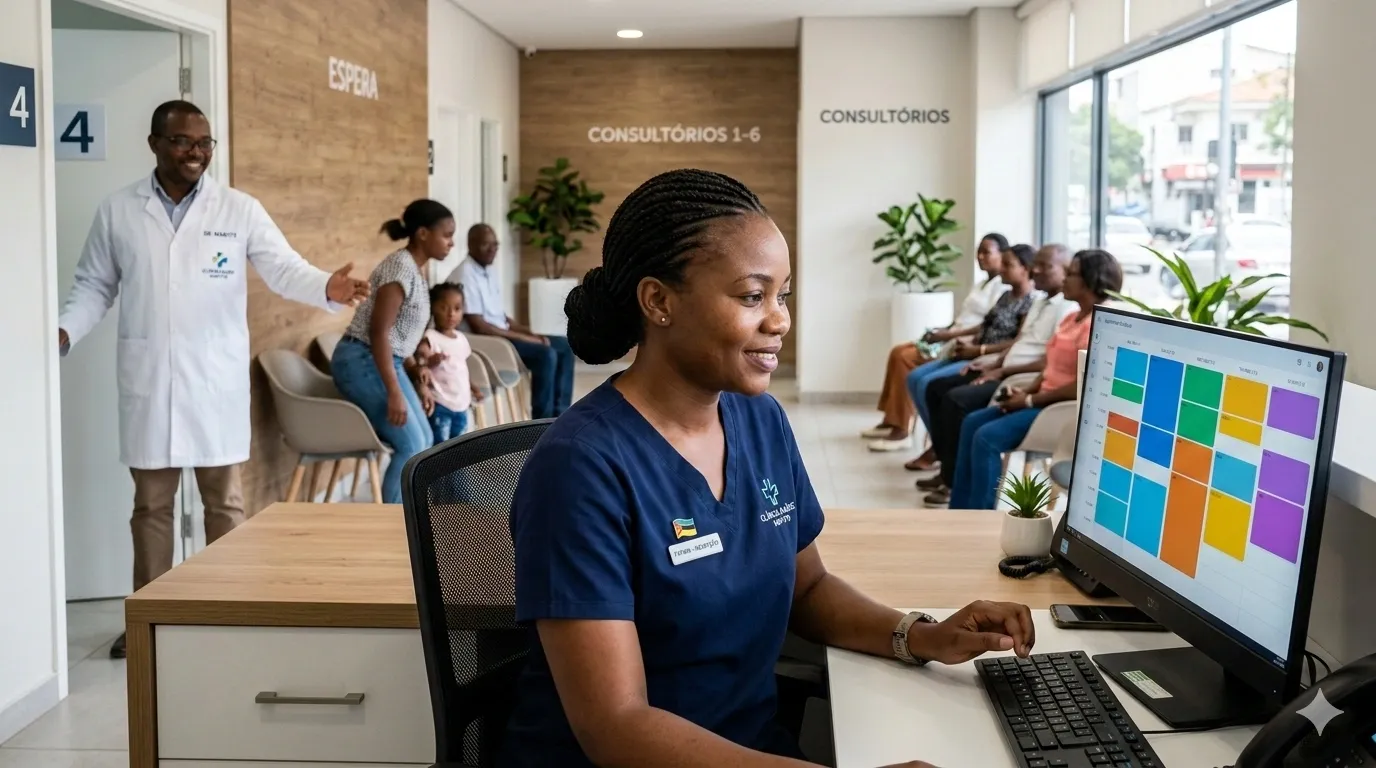
Clinic management systems allow staff to visualize available time slots, avoid scheduling conflicts, and monitor appointment flow more efficiently.
Platforms like Ninsaúde Clinic support multi-professional scheduling and help clinics maintain better control over consultation times.
Financial management and clinic sustainability
Financial management is another key component of running a medical clinic. Many physicians start clinics with a strong focus on patient care but quickly realize that financial organization is essential for long-term sustainability.
Common financial responsibilities include:
- Tracking revenue from consultations and procedures
- Paying staff and suppliers
- Maintaining medical equipment
- Managing operational expenses
- Planning the clinic’s growth
Without clear financial reports, it becomes difficult to understand the clinic’s financial health or make strategic decisions.
Clinic management systems help organize financial data and generate reports that support decision-making.
Solutions like Ninsaúde Clinic provide integrated financial management tools, allowing clinic managers to monitor cash flow and maintain a clearer understanding of financial performance.
Team management and process organization
A clinic’s success depends not only on skilled healthcare professionals but also on an organized administrative team.
Receptionists, technicians, and support staff must follow structured workflows to ensure the clinic operates smoothly.
Important processes that require organization include:
- Registering new patients
- Confirming appointments
- Managing patient queues
- Recording clinical information
- Archiving documents
When these processes are standardized, clinics can reduce operational errors and improve the overall patient experience.
Clinic management systems help structure these workflows and organize each stage of the patient journey, from scheduling to documentation.
Data-driven clinic management
Modern clinic management increasingly relies on data to support decision-making.
Clinics that track operational indicators can identify opportunities for improvement and plan their growth more effectively.
Important indicators include:
- Number of consultations by specialty
- Patient return rates
- Average consultation time
- Revenue by service
- Overall financial performance
Without structured data, many management decisions are based only on intuition or personal experience.
Clinic management systems generate automated reports that allow managers to monitor these indicators and make more informed decisions.

Future trends in clinic management in Mozambique
Clinic management in Mozambique is likely to continue evolving as healthcare providers increasingly adopt digital technologies.
Electronic health records, digital appointment scheduling, and administrative automation are becoming more common in healthcare environments.
These developments align with global trends in healthcare management modernization. Clinics that invest in organization and technology can improve operational efficiency and provide better patient experiences.
Examples such as Kidz Kare Centro Médico Infanto Juvenil, which uses Ninsaúde Clinic, demonstrate how adopting a clinic management system can help healthcare institutions structure their processes and support sustainable growth.
Key insights about clinic management in Mozambique
Managing a medical clinic in Mozambique involves much more than delivering quality patient care. Physicians often take on managerial responsibilities, organizing schedules, supervising staff, managing finances, and maintaining structured patient records.
Among the most common challenges are organizing patient information, structuring appointment schedules, and maintaining financial control. Digital transformation has become an important tool to address these challenges.
Clinic management systems help centralize information, automate administrative processes, and support better decision-making. Platforms such as Ninsaúde Clinic illustrate how technology can help physicians and healthcare managers run clinics more efficiently.
As Mozambique’s private healthcare sector continues to grow, clinics that invest in structured management and digital tools will likely be better positioned to expand and deliver high-quality healthcare services.
Enjoyed these insights?
Keep following our blog for more content on clinic management, medical marketing, and healthcare innovation.
Are you a healthcare professional who hasn’t tried Ninsaúde Clinic yet? Discover how the platform can streamline processes and elevate the quality of patient care.
