

When we talk about legal risk in healthcare, many practices still associate a “valid contract” with paper, blue ink and a handwritten signature in front of a notary. As more of the patient journey moves online — telehealth, portals, online intake, remote payments — one question keeps coming up: are digital contracts and electronic signatures with patients really legally binding in the USA?
The short answer is yes. Under U.S. laws such as the ESIGN Act and UETA (Uniform Electronic Transactions Act), electronic signatures and digital contracts can be fully enforceable, as long as certain requirements around identification, consent and record-keeping are met. That includes informed consent forms, treatment agreements, payment plans, therapy packages, aesthetic and dental contracts, behavioral health documentation and more.
In this article, you’ll learn how digital patient contracts work in practice, the difference between a digital signature and an electronic signature, which precautions are crucial in healthcare, and how platforms like Ninsaúde Clinic, with its e-signature automation feature Ninsaúde Sign, help clinics and group practices streamline this process while protecting both providers and patients.
What is a digital patient contract in practice?
Before talking about legal validity, it helps to clarify the concept. A digital patient contract is simply an agreement between the clinic/provider and the patient that is created, presented and signed electronically instead of on paper.
That digital contract might be:
- A PDF signed through an e-signature tool;
- A document generated directly inside your practice management software;
- An electronic consent form sent by e-mail or text message for the patient to sign;
- A digital intake or consent form that the patient signs on a tablet, smartphone or computer.
The key is not the file type itself, but whether three core elements are present:
- Identification of the parties – it’s clear who the provider/clinic is and who the patient or legal representative is;
- Manifestation of intent – the patient is clearly agreeing to the terms and conditions of that document;
- Reliable record of the consent – you can actually prove what was shown, when, to whom, and how it was signed.

When these elements are present and properly recorded, you have a digital contract or consent form with strong legal enforceability, even if no physical paper ever exists.
Digital signature vs. electronic signature in U.S. healthcare
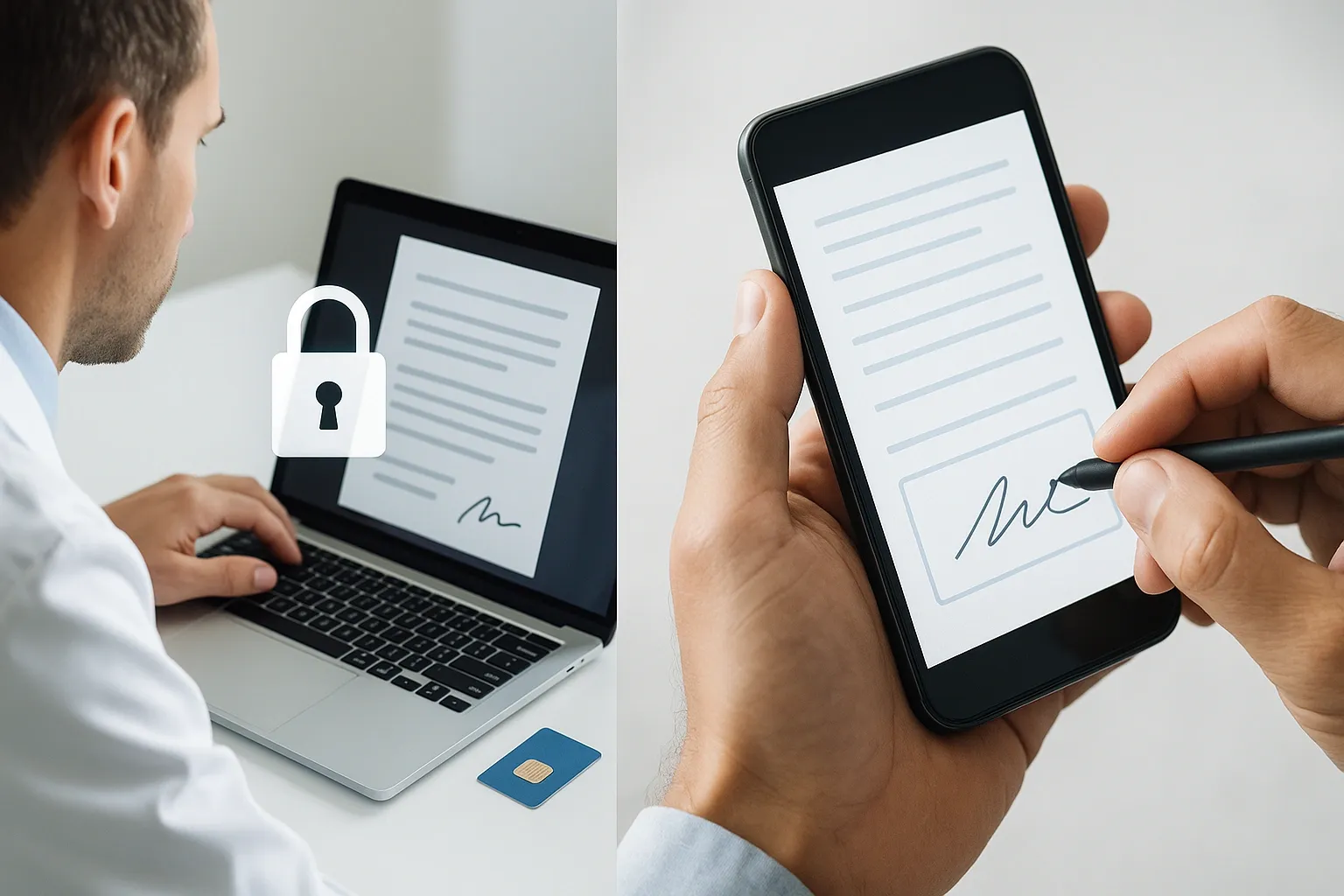
A common source of confusion is the difference between a digital signature and an electronic signature (e-signature). Many people use the terms interchangeably, but they’re not exactly the same from a technical standpoint.
What is a digital signature?
- A digital signature is a specific type of electronic signature that uses cryptographic certificates (PKI) to protect the document and authenticate the signer.
- It offers a high level of security and integrity, since the certificate is tied to a specific person or organization and can be validated.
- In healthcare, it’s often used to add strong protection to Electronic health records (EHRs), prescriptions and clinical documents.
In the context of Ninsaúde Clinic, digital signatures help ensure that clinical documents are securely linked to the provider’s identity and protected against tampering.
What is an electronic signature (e-signature)?
- An electronic signature is any electronic process that indicates a person’s intent to sign: clicking “I agree”, typing a name, drawing a signature on a screen, entering a code received via SMS or e-mail, etc.
- E-signatures are widely used for informed consent forms, financial agreements, intake documents and internal policies.
- The legal strength of an e-signature depends on the evidence package: IP address, date and time, audit trail, link to the patient record, and so on.
In practice, both digital signatures and e-signatures can be legally binding in the U.S., as long as they’re used appropriately and backed by a platform that captures and stores the necessary evidence.
Before we move on, one important note: if you manage a healthcare clinic and need better scheduling organization, a secure electronic health record, and centralized financial processes, Ninsaúde Clinic can streamline your daily operations. Get in touch to learn more.

Are digital patient contracts legally binding in the USA?
Yes. In general, digital patient contracts and electronic consent forms are legally valid in the United States. Federal law (ESIGN) and state laws (UETA, adopted by most states) recognize that an electronic signature has the same legal effect as a handwritten signature for most types of agreements.
For healthcare organizations, this means that:
- Informed consent forms can be presented and signed electronically;
- Service agreements for medical, dental, aesthetic and therapy services can be executed digitally;
- Authorizations to use patient images, treatment plans, packages of sessions and internal policies can be accepted via e-signature, as long as the process is well documented.
What actually strengthens the enforceability of a contract is not the presence of paper, but your ability to prove that the patient had access to the information, understood it and agreed to it. That’s why using a structured, healthcare-ready system is far safer than relying on random PDFs, screenshots and e-mail threads.
Key benefits of using digital contracts with patients
Beyond legal validity, digital patient contracts bring a series of operational and strategic benefits for clinics, group practices and outpatient centers.
1. Faster, more efficient workflows
Instead of printing, walking forms to the waiting room, collecting signatures, scanning and filing, your team can send forms directly to the patient at the front desk, in the exam room or even before the visit.
The patient reads and signs in a few clicks on their own phone, tablet or computer — streamlining check-in and reducing bottlenecks at the reception.
2. Better organization and traceability
When you use a practice management system with integrated e-signatures, all documents are stored in the Electronic health record or patient profile, with:
- Date and time of signatures;
- Who sent the document;
- Which version was signed;
- A complete audit trail.
This makes internal audits, payer reviews and legal responses much easier, because everything is searchable and traceable in one place.
3. Less paper, lower operating costs
Printing, scanning and filing are not just annoying — they cost real money and space. With digital patient contracts, you reduce:
- Paper and ink usage;
- Physical storage needs;
- Time spent on manual archiving and retrieval.
At the same time, your practice can show a stronger commitment to sustainability, which many patients increasingly value.
4. Better patient experience
From the patient’s perspective, e-signatures feel like a modern, frictionless experience. They don’t have to sign stacks of paper or worry about losing their copy of a consent form.
Instead, they can:
- Review documents calmly on their own device;
- Receive digital copies via e-mail;
- Perceive your clinic as organized, secure and technology-driven.
5. Seamless integration with telehealth and digital care journeys
In telehealth and hybrid care models, digital contracts and electronic consent forms are essential. They enable:
- Telehealth visits with proper documented consent;
- Remote care programs and membership plans;
- Chronic care management with clear terms for follow-up, communication and responsibilities.
Without digital contracts, delivering a fully online or hybrid experience becomes far more complicated and risky.

How Ninsaúde Clinic and Ninsaúde Sign support compliant e-signatures
This is where solutions like Ninsaúde Clinic, a practice management system for clinics and group practices, and its built-in e-signature automation feature, Ninsaúde Sign, become especially valuable.
With Ninsaúde Clinic, your organization can:
- Create standardized templates for contracts and informed consent forms, ready to use across multiple specialties and locations;
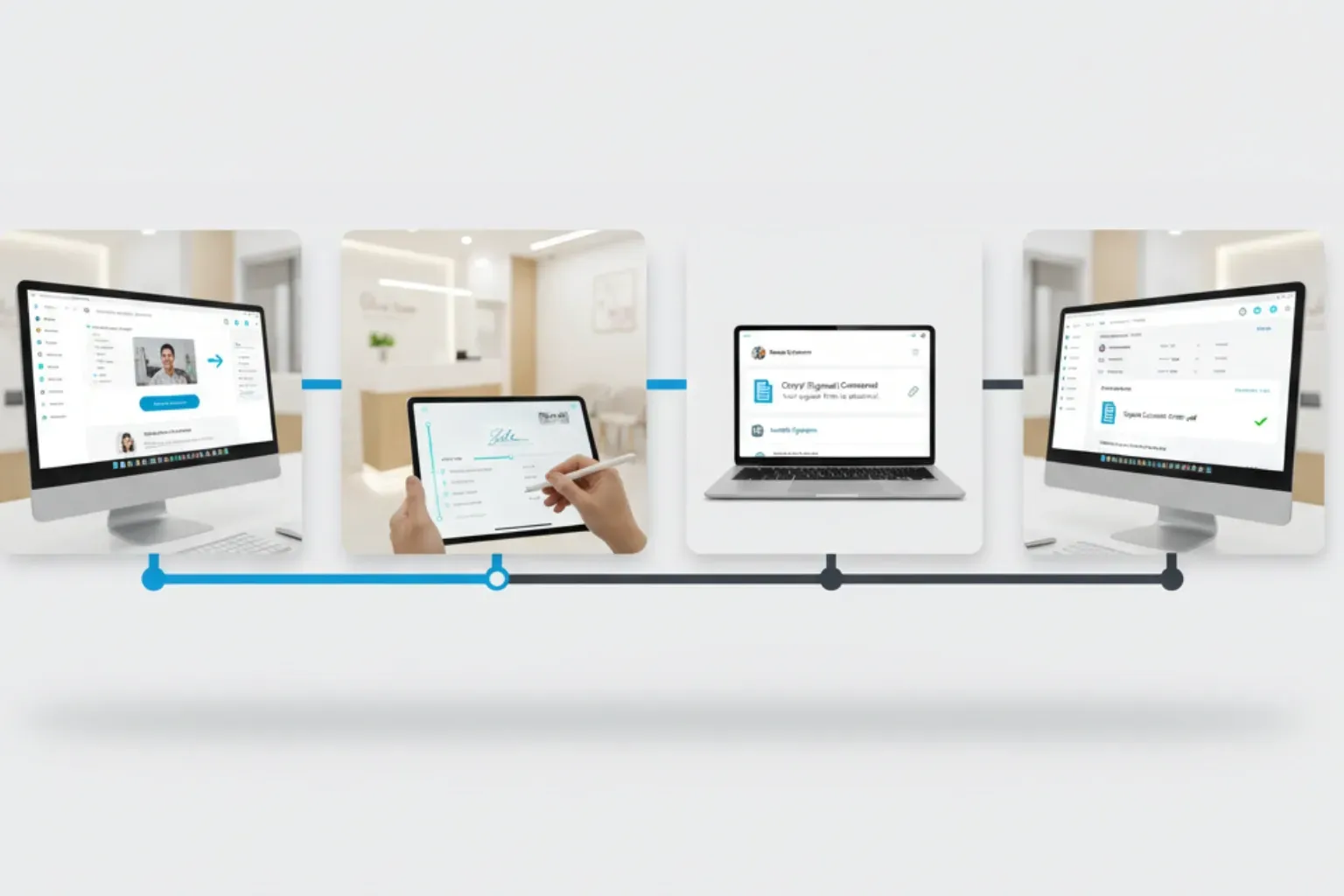
- Send those documents for electronic signature directly from the platform, automatically linking each one to the patient’s Electronic health record;
- Use Ninsaúde Sign to collect the patient’s e-signature quickly and securely, with audit trails and automatic logging;
- Capture the provider’s signature when clinically or legally required;
- Deliver signed copies by e-mail to both the patient and the organization, improving transparency and access;
- Automate key workflows, such as:
- “Patient purchases a package of sessions → send treatment agreement for signature”;
- “First visit for elective surgery → trigger pre-operative informed consent form.”
Instead of relying on spreadsheets, disconnected tools and paper folders, your clinic works with digital contracts that are organized, standardized and fully traceable, reducing legal exposure and saving time for the team.
When does it make the most sense to use digital contracts with patients?
In daily practice, digital contracts and electronic patient consent forms can be used at multiple touchpoints in the patient journey. For example:
- Enrollment in chronic care or long-term programs (diabetes, obesity, rehab, mental health);
- Packages of sessions in physical therapy, speech therapy, behavioral health, nutrition and multidisciplinary care;
- Aesthetic and dental procedures with multiple stages, such as implants, orthodontics, cosmetic surgeries and injectables;
- Telehealth visits and remote monitoring, including terms that cover communication channels, response times and limitations;
- Authorizations for use of images in educational, scientific or marketing materials (where permitted by policy and regulation);
- Cancellation, rescheduling and no-show policies, clarifying fees, deadlines and expectations.
The more recurring, complex or sensitive the service is, the more strategic it becomes to have a formal digital agreement or consent form tied to the patient’s EHR.
Do you need a notary for a digital patient contract to be valid?
This is one of the most common questions clinics have. In most everyday private healthcare scenarios in the U.S., there is no general legal requirement for a patient contract or consent form to be notarized in order to be valid when signed electronically.
What your clinic really needs to focus on is:
- Ensuring the patient can access and understand the document;
- Collecting consent through a trusted e-signature process with a solid audit trail;
- Storing all signed documents and evidence in an organized, secure system like Ninsaúde Clinic.
Notarization may be required in very specific cases or under certain institutional or payer policies, but it is not the default rule for patient contracts and consents. When in doubt about a particular situation, always consult your legal or compliance team.
By combining clear documentation, robust e-signature workflows and a healthcare-ready platform like Ninsaúde Clinic with Ninsaúde Sign, your organization can safely embrace digital patient contracts — strengthening legal protection, improving operational efficiency and delivering a smoother, more modern experience for patients across the United States.
Enjoyed these insights?
Keep following our blog for more content on clinic management, medical marketing, and healthcare innovation.
Are you a healthcare professional who hasn’t tried Ninsaúde Clinic yet? Discover how the platform can streamline processes and elevate the quality of patient care.
